
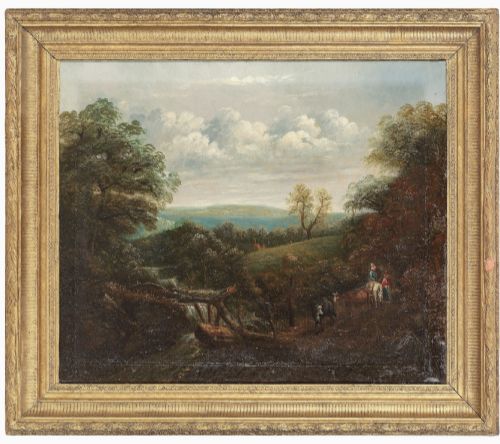
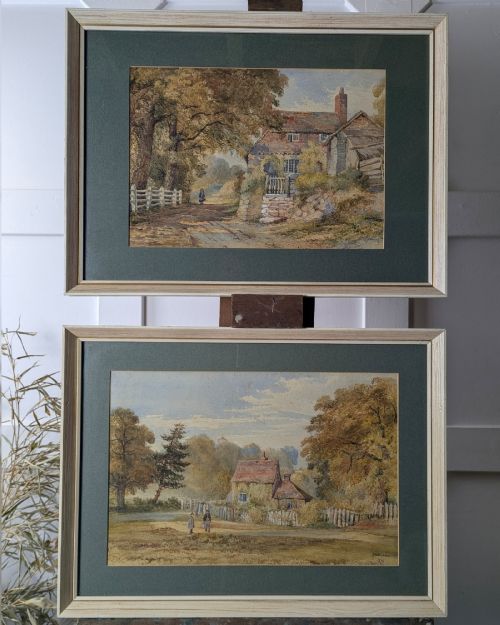
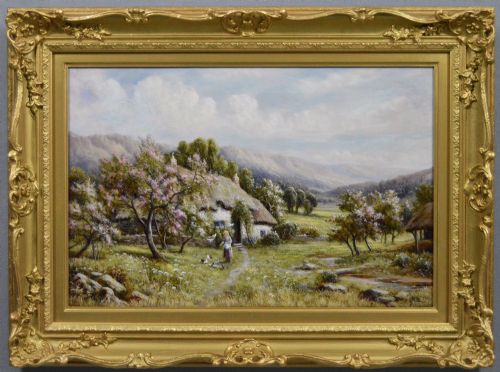
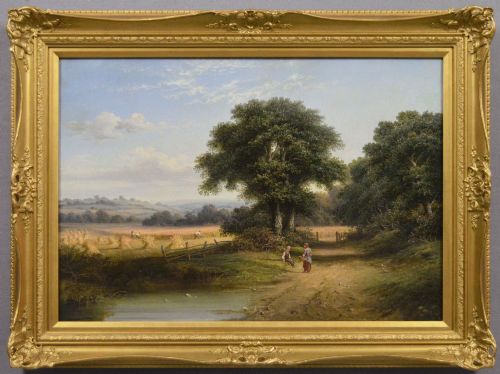
Rural Country Landscape
Rural country landscape watercolours and oils capture agricultural life, quiet villages, and open fields across the nineteenth and twentieth centuries.
Rural Country Landscape
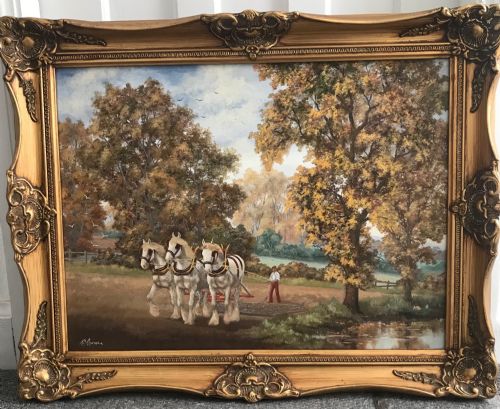
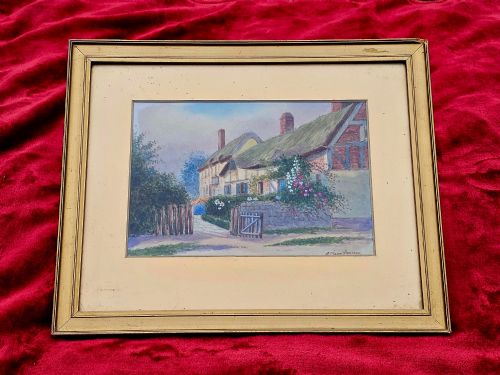
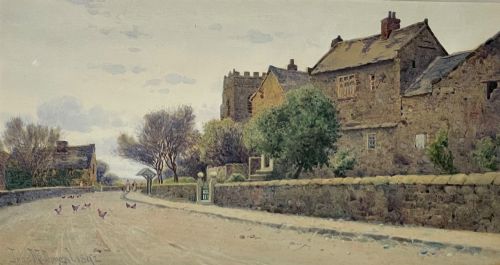
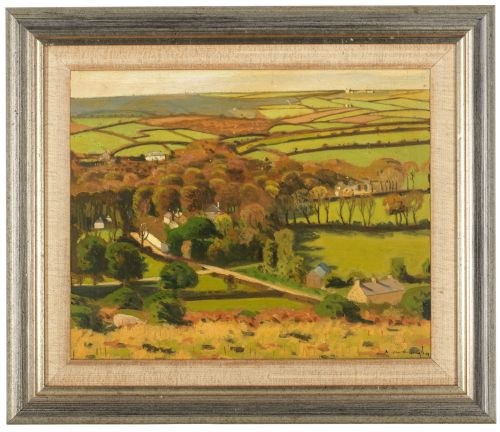
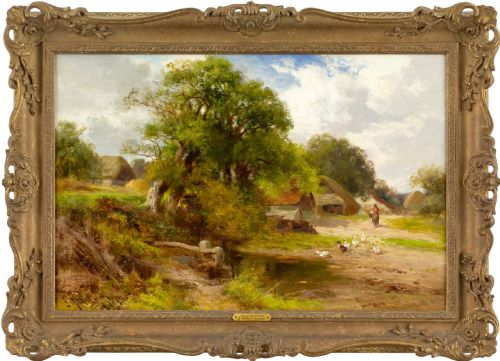
A rural country landscape transports the viewer to traditional pastoral scenes, featuring thatched cottages, harvest fields, working horses, and winding country tracks. These works span the Victorian, Edwardian, and mid-century periods, reflecting shifting artistic interpretations of British and European countryside life.
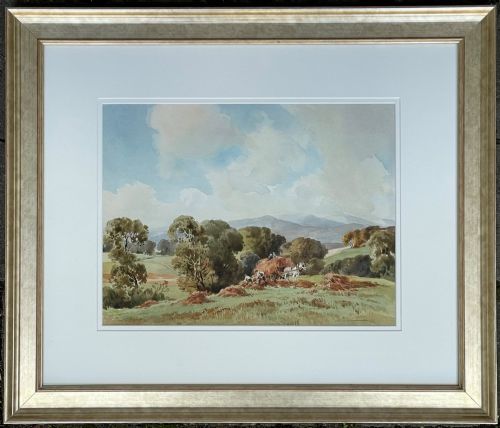
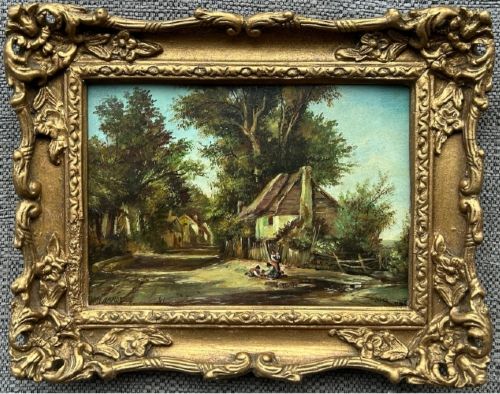
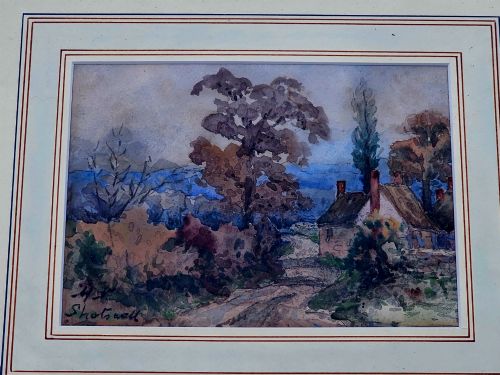
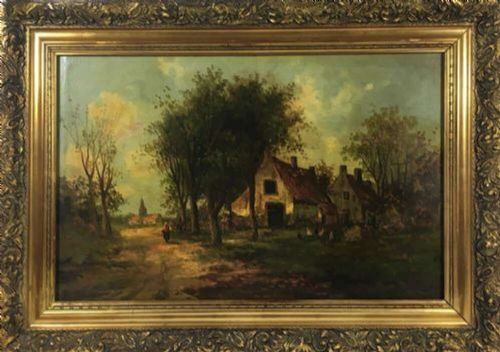
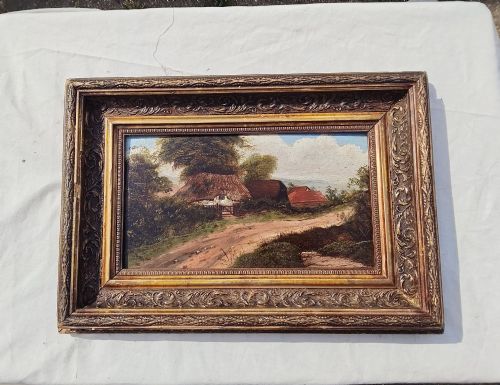
The most common formats on this page are oil paintings on canvas or panel and delicate watercolours on paper, often presented in period gilt wood frames. Subjects range from quiet streams and moorland paths to bustling farmyards with figures and livestock.
Pieces frequently emerge from regional traditions such as the Norwich School or British Impressionism, alongside continental works like Barbizon school farmyards. Buyers encounter everything from intimate watercolour sketches to large signed gallery canvases.
Materials and technique
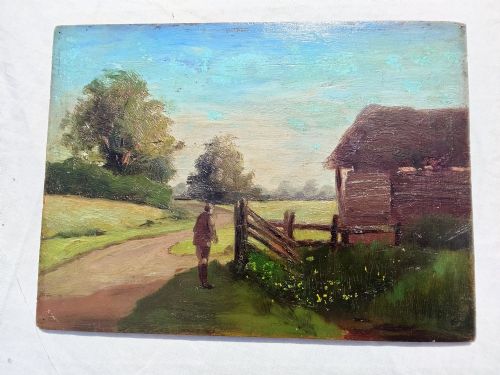
Painters utilised oil paint on canvas, wood panels, or card to build rich textures and deep colour harmonies in their rural scenes. Watercolours on paper offered artists the flexibility to capture transient light effects and atmospheric washes in the open air.
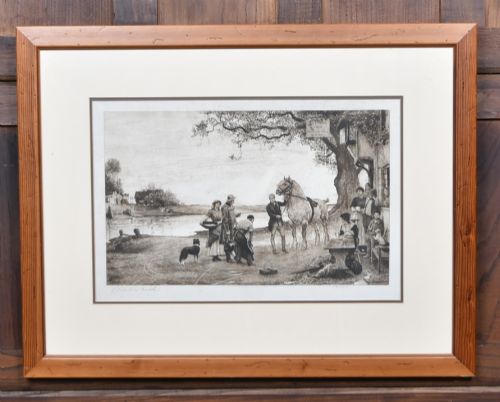
Pigments were worked with brushes and palette knives to delineate foliage, earth, and sky, while etchers used fine metal plates to press detailed linear impressions. Frames of gilt wood provided structural support and completed the presentation of these artworks.
Listings feature works spanning the Victorian, Edwardian, and mid-twentieth-century periods, created in oil, watercolour, and pastel.
Assessing quality
Quality rests upon the artist's command of light, shadow, and atmospheric perspective, transforming a standard view into an engaging visual narrative. Superior works display confident brushwork and precise anatomical drawing in figures and animals, whereas lesser examples rely on formulaic compositions.
The choice of support and medium also dictates the finished character, with deeply layered oils on panel offering enduring richness compared to faded watercolours. Original period framing contributes significantly to the overall integrity and visual impact of the piece.
Percy Lancaster·William Howard Hardy·John McDougal·Robert Morson Hughes·Robert John Hammond·Walter Heath Williams·John Horace Hooper·Frederick James Kerr·Miles Birkett Foster·George Morland·Johannes de Haas·Sydney Yates Johnson·Owen Bowen·Edgar Woollatt·Harry Freckleton·Thomas Sidney Cooper·Ernest Higgins Rigg·Henry John Yeend King·John Hobson Nicholson·David Bates
The Rural Country Landscape Glossary
- Oil on Canvas
- A painting medium where pigments suspended in drying oils are applied to stretched fabric. This technique allows for rich colour blending and textured impasto surfaces.
- Watercolour
- A painting method where fine pigment powders are mixed with water-soluble binders and applied to paper. It relies on the white of the paper to provide luminosity through transparent washes.
- Barbizon School
- A mid-nineteenth-century French art movement dedicated to naturalistic landscape painting. Artists rejected academic formulas to paint directly from nature in forest and farm settings.
- Norwich School
- The first provincial art movement in Britain, flourishing in the early nineteenth century. Its members drew inspiration from the Norfolk countryside and Dutch landscape traditions.
Rural Country Landscape: Frequently Asked Questions
How do I date a rural country landscape?
Dating relies on stylistic clues, clothing styles of any figures depicted, and the type of canvas or paper support utilised. Signatures, artist registry dates, and framing styles also help establish the decade of creation.
Comparison with documented works by the same artist or regional school provides further chronological accuracy. Inscriptions on the reverse of panels often record specific locations and years.
Where should I hang an oil painting?
Select an interior wall away from direct sunlight and excessive moisture to protect the pigment and canvas. Stable room temperatures prevent the wooden stretcher and panel from warping over time.
Ensure the artwork is hung at eye level to appreciate the brushwork and composition properly. Adequate indirect lighting enhances the depth of the oil colours without causing glare.
How do I care for antique watercolours?
Keep watercolours behind glass and out of direct sunlight to prevent the delicate pigments from fading. Acid-free mounts protect the paper from discolouration and deterioration over decades of display.
Maintain moderate humidity levels in the room to avoid paper buckling or foxing spots developing. Professional framing conservation ensures the longevity of works on paper.
What defines British Impressionism?
British Impressionism emerged in the late nineteenth and early twentieth centuries, influenced by Frenchplein-air techniques. Artists focused on capturing spontaneous effects of light and weather in rural and coastal scenes.
Palettes became brighter and brushstrokes looser, moving away from rigid academic studio traditions. This style documented the changing British countryside with fresh immediacy.