


Cattle in Landscape Painting
Explore cattle in landscape painting, capturing rural pastoral scenes and riverbanks from British, Dutch, and European artists across the eighteenth, nineteenth, and early twentieth centuries.
Cattle in Landscape Painting
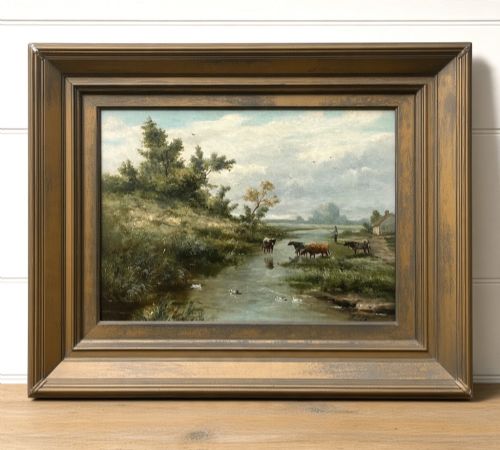
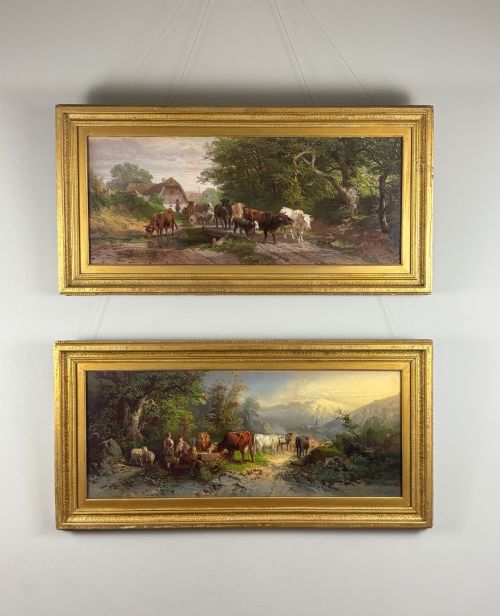
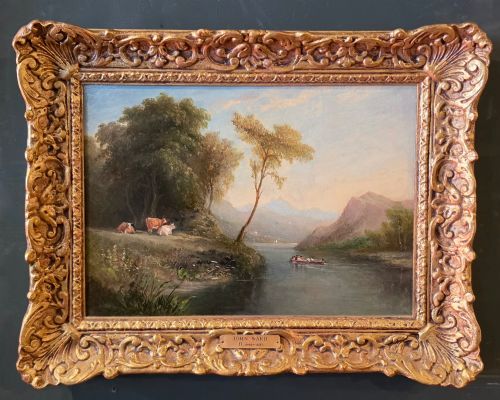
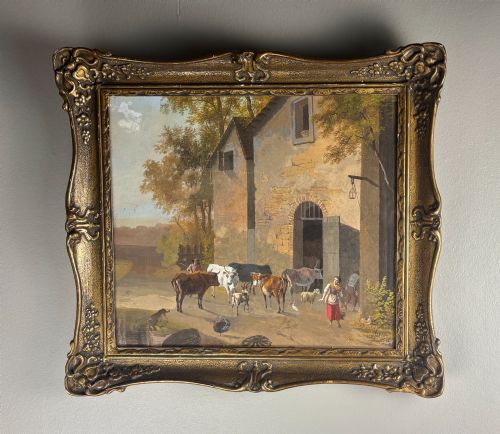
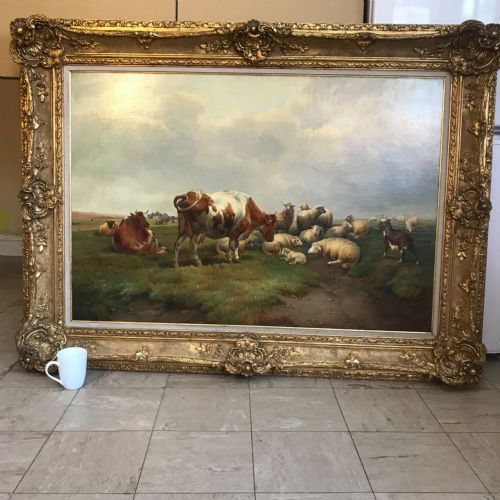
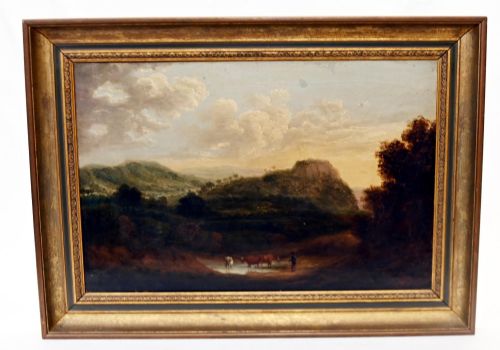
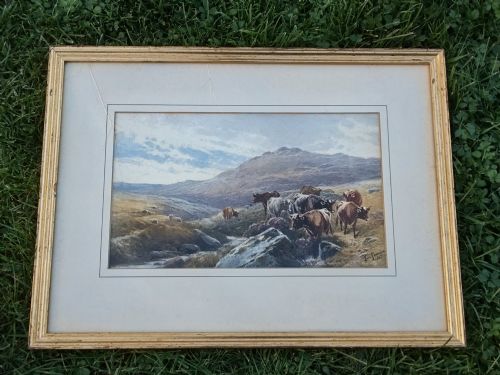
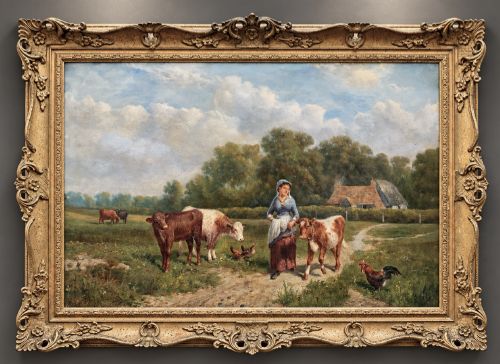
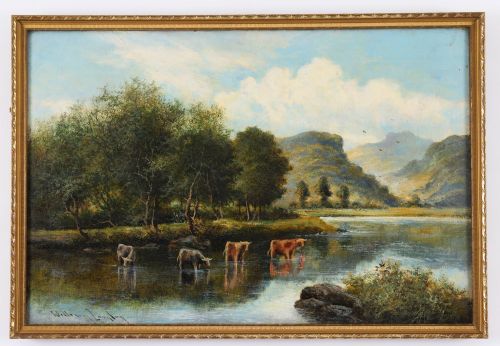
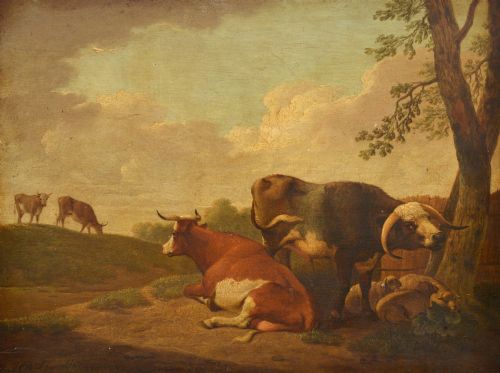
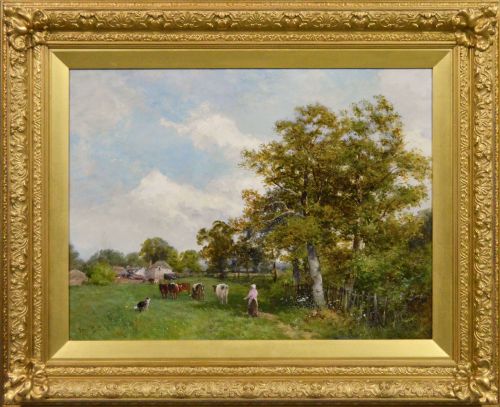
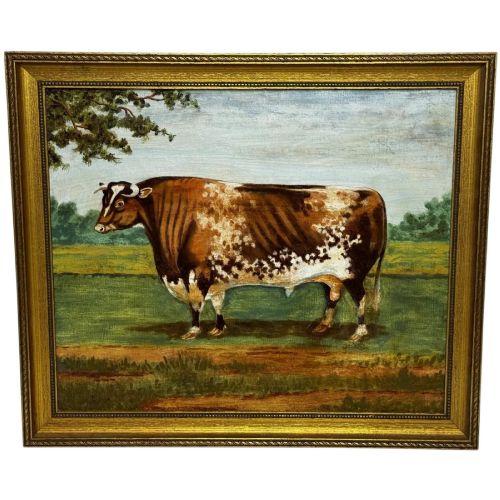
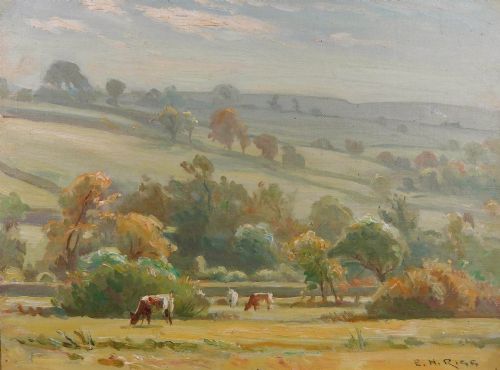
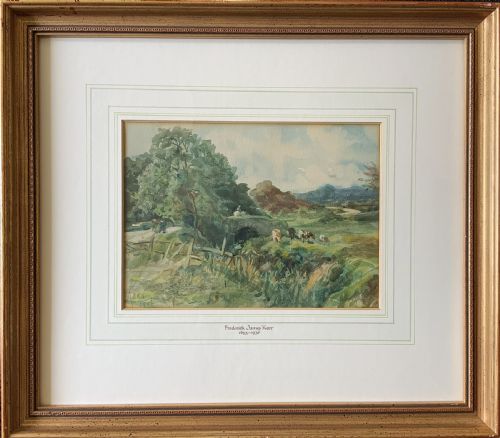
A cattle in landscape painting portrays farm animals, bulls, cows, or Highland cattle grazing, watering, or resting within pastoral, woodland, river, or mountain settings. These works encompass British pastoral scenes, Scottish lochs, and continental countryside views.
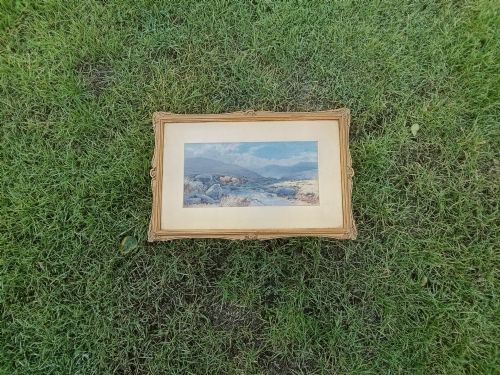
The selections on this page span the eighteenth century, the Victorian era, the Edwardian period, and the early twentieth century. Most pieces take the form of framed oil paintings on canvas or panel, alongside detailed watercolours on paper.
Buyers encounter pastoral compositions by named nineteenth-century specialists as well as atmospheric works by the British, Dutch, and continental schools. Alongside framed canvases, the category occasionally includes decorative objects such as spill vases.
How They Were Made
Artists built these works primarily using oil paint on stretched canvas, wood panels, or milk glass, whilst others worked in watercolour on paper. Canvases were frequently set within original carved gilded wooden frames or gesso surrounds.
Makers applied traditional brushwork techniques to capture natural light across fields, riversides, and Highland mists. Mixed-media approaches and works on paper also appear alongside foundational oil and canvas pieces.
Cattle in Landscape Painting Retail Price Guide 2026
Typical asking prices for cattle in landscape painting among the pieces listed under this phrase on Sellingantiques today, from the lower quarter to the upper quarter. They describe what is for sale here now, not the wider market.
Pigs and geese occasionally wander into the background of these pastoral cattle scenes.
What Varies in Quality
Quality rests in the fidelity of the animal anatomy, the handling of light across the landscape, and the expressive depth of the pastoral setting. Master works achieve a harmonious balance between the herds and their surrounding terrain.
The preservation of the original paint surface and the character of the period giltwood frame contribute significantly to the standing of an individual piece.
Hendrik Willem Schweickhardt·Thomas Sidney Cooper·Ernest Higgins Rigg·Frederick James Kerr·Henry H Parker·Robert Watson·William Watson Jnr·Robert Cleminson·Johann Friedrich Voltz·T C Hofland·Johannes de Haas·A M Gauci·Oswald Garside·Henry Robinson Hall·Henry Hillier Parker·Frederick Septimus Lewis·Ernest Pile Bucknall·Samuel Joseph Clark·William Sydney Cooper·Thomas Hunn·George Vicat Cole·Andre de Moller·Sidney Richard Percy·Frederick James Knowles·Robert Thorne Waite
The Cattle in Landscape Painting Glossary
- Pastoral
- A genre of art depicting the rural countryside, farms, and agricultural life. These scenes often feature shepherds, drovers, and grazing herds.
- Giltwood
- Wood that has been coated with a thin layer of gold leaf or gold paint. Frames from the Victorian and earlier periods frequently utilise this finish.
- Gesso
- A plaster-like mixture applied to wooden frames or panels to prepare a smooth surface for gilding or painting. It allows for intricate moulded decorative details.
- Watercolour
- A painting method where pigment is suspended in a water-based solution on paper. Many nineteenth-century sketching traditions rely on this medium.
Cattle in Landscape Painting: Frequently Asked Questions
What periods do these paintings date from?
The works span from the eighteenth century through the Victorian and Edwardian eras up to the early twentieth century. Many date specifically from the mid-nineteenth century to the 1930s.
Artists during these periods continually returned to pastoral themes, capturing changing rural landscapes across Britain and continental Europe.
What materials were used to create them?
Artists painted primarily with oil on canvas, wood panels, or milk glass, whilst others worked with watercolour on paper. Giltwood and gesso frames frequently house these artworks.
Some pieces incorporate mixed media to achieve specific textures within the skies and foliage of the landscape.
Where were these scenes typically set?
Settings range from English river valleys and farmland to Scottish lochs featuring Highland cattle. Continental riverbanks and pastoral fields also appear frequently.
Artists often painted en plein air or developed detailed studies of livestock grazing by streams, woodland edges, and mountain passes.
How should I display a framed oil painting?
Display paintings away from direct sunlight and steady heat sources to protect the canvas and the original giltwood frame. Proper wall placement preserves both the paint pigments and the underlying wooden support.
Allow sufficient clearance for the frame depth and ensure the hanging fixings match the weight of the gilded timber surround.