



William Greaves Landscape
A William Greaves landscape captures the quiet beauty of northern pastoral scenes through the brush of a skilled hand.
William Greaves Landscape
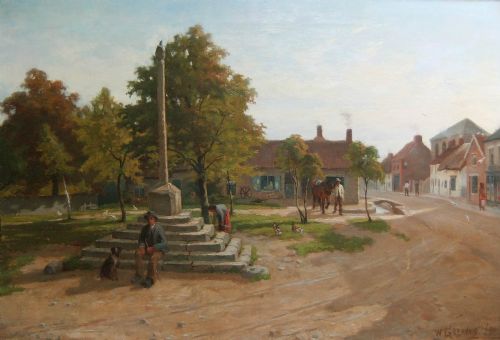
A William Greaves landscape brings familiar northern views directly into view, recording places such as Yorkshire villages, local rivers and coastal spots. These works capture specific local geographies, from Otley Chevin to Filey Brigg, anchoring the viewer in identifiable countryside.
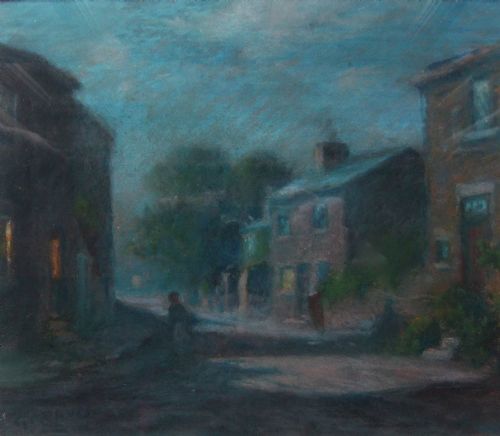
The version most commonly met on this page is an oil painting on canvas or wood panel, often depicting rural life, rivers or woodland. Pastel drawings on paper also appear occasionally, offering a softer register of the same regional scenery.
Dating ranges from the late nineteenth century into the early decades of the twentieth century, bridging Victorian realism and British Impressionism. The subject matter consistently returns to the countryside, farms, churches and coastal towns of northern England.
How they were made
Oil paint applied to canvas, wood panels or board forms the primary method of execution across these works. Pigments build up texture on the surface, capturing light on water, fields and stone structures.
Pastel on paper provides an alternative medium for capturing softer atmospheric conditions, particularly in evening scenes. Both methods rely on direct observation of northern light and rural topography.
William Greaves Landscape Retail Price Guide 2026
Typical asking prices for william greaves landscape among the pieces listed under this phrase on Sellingantiques today, from the lower quarter to the upper quarter. They describe what is for sale here now, not the wider market.
Materials across the listings include canvas, wood, pastel, paper and oil paint, spanning the late nineteenth century to the 1930s.
What varies in quality
The strength of composition and the handling of light set individual pictures apart. Stronger examples use confident brushwork and tonal variation to evoke the atmosphere of a specific hour, such as evening or the close of day.
The specificity of the subject and the level of detail in the surrounding landscape influence the visual impact of each piece. Works that incorporate figures, livestock or architectural elements often present a more engaging narrative than simpler pastoral views.
William Greaves
The William Greaves Landscape Glossary
- Canvas
- A heavy woven fabric stretched across a wooden frame to serve as a support for oil paint. It provides a textured ground that holds pigment securely over generations.
- Pastel
- A medium consisting of powdered pigment combined with a binder and shaped into sticks. It produces velvety surfaces with rich colour intensity on paper.
- British Impressionism
- An art movement that developed in the late nineteenth and early twentieth centuries, focusing on light, colour and everyday subjects painted outdoors. It influenced how artists recorded British scenery and changing weather.
- Victorian Realism
- A style focused on depicting subjects truthfully and without idealisation, prevalent during the nineteenth century. This approach prioritised accurate representation of everyday rural life and identifiable local geography.
William Greaves Landscape: Frequently Asked Questions
Who was William Greaves?
William Greaves was an artist whose work chronicled the landscapes, villages and coastal views of Yorkshire and surrounding regions.
His paintings record local scenes from the late nineteenth century through to the early twentieth century, capturing rural life and topography.
What subjects appear most often?
Northern landscapes dominate the available works, featuring rivers, mills, village churches and coastal views.
Scenes frequently include specific locations such as East Keswick, Filey and various spots around Leeds and Yorkshire.
How do I date a painting?
Dates are often inscribed directly by the artist alongside titles on the work or frame, pointing to periods between the late Victorian era and the 1930s.
Stylistic shifts from Victorian realism towards British Impressionism also help place a work within this timeline.
Where should I hang these?
These pastoral scenes suit traditional living spaces, studies or hallways where the warm tones of oil paint on canvas can complement wooden furniture.
Keeping them away from direct sunlight protects the pigments and the canvas from fading over time.