




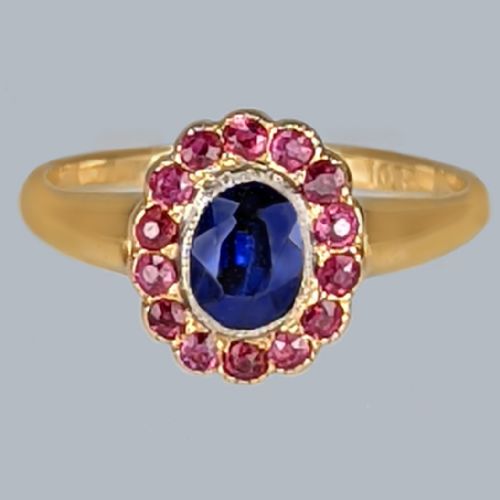
Ruby Halo Cluster Ring
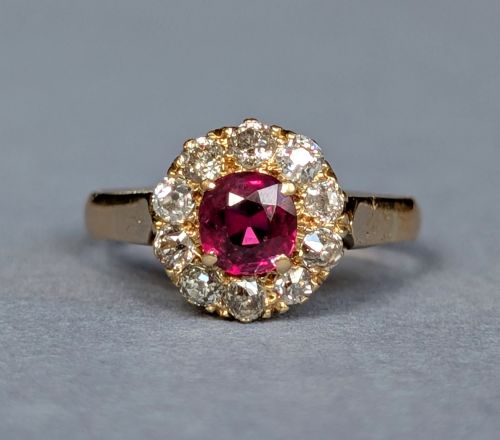
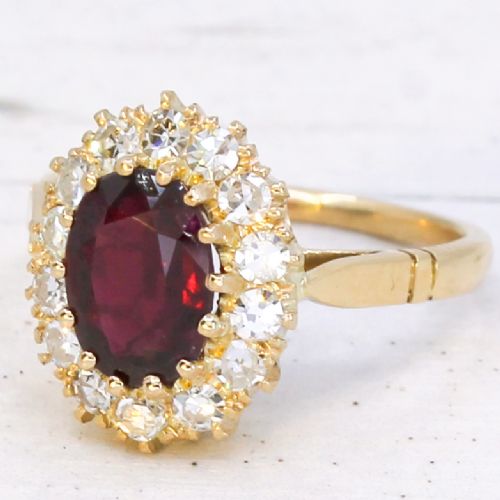
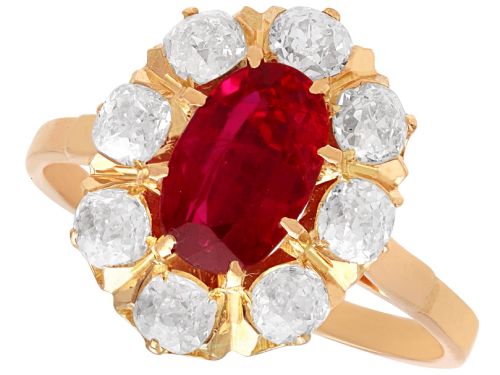
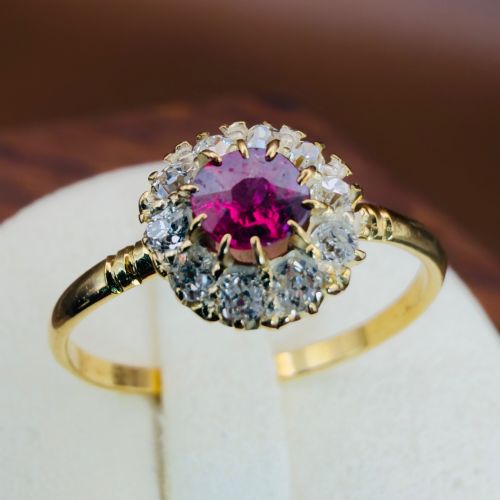
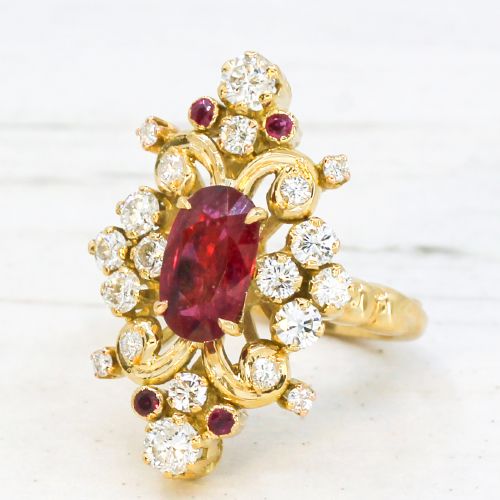
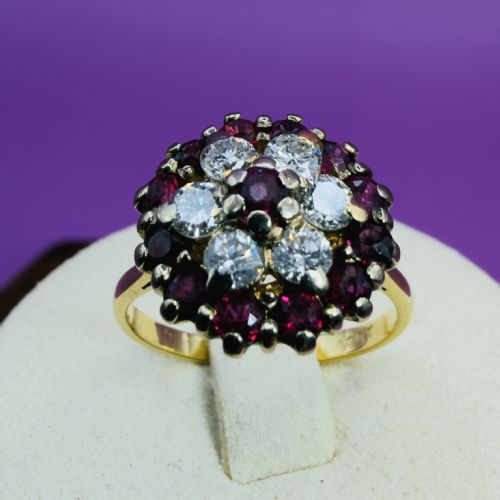
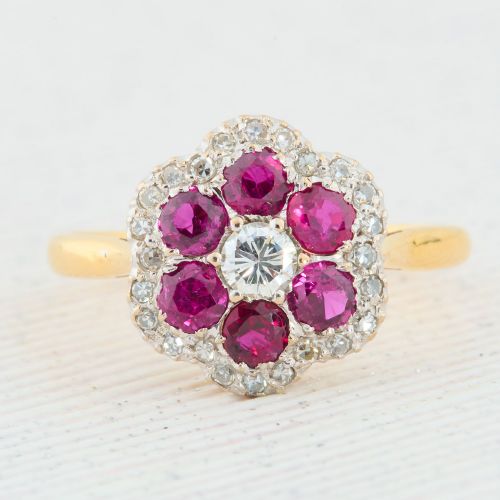
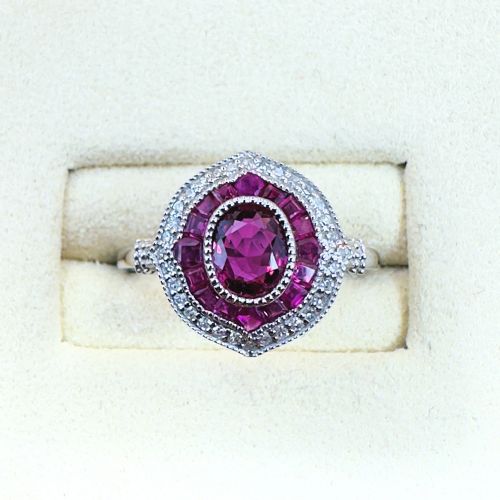
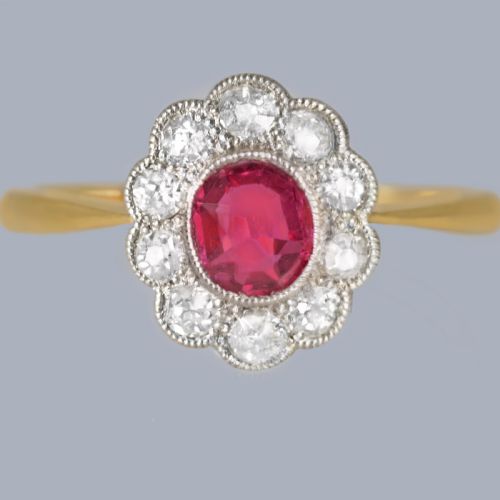
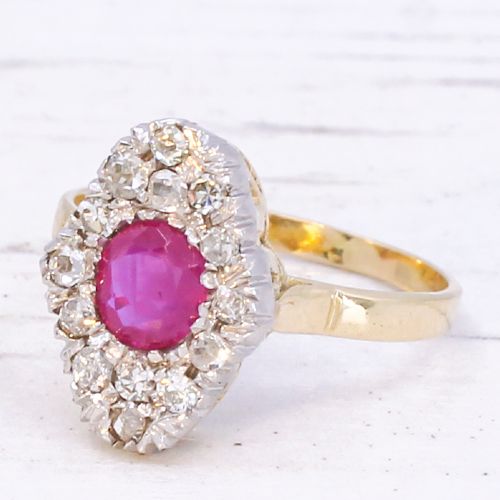
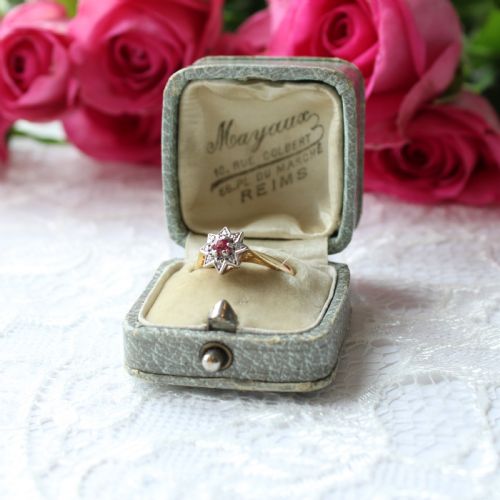
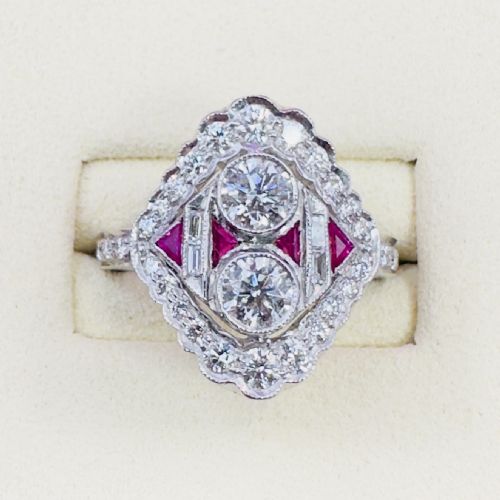
A ruby halo cluster ring brings together a vivid central red stone encircled by sparkling diamonds.
Ruby Halo Cluster Ring
When you examine a ruby halo cluster ring, you are looking at a central red corundum gemstone bordered by smaller white diamonds set upon a precious metal band. These pieces span from Georgian and Victorian eras through Edwardian, Art Deco, and mid-century periods, capturing centuries of evolving lapidary tastes.
You will most frequently encounter mid-century examples alongside Art Deco and Victorian pieces on this page. These configurations typically arrange round, oval, cushion, pear, or marquis cut stones in floral, geometric, or traditional cluster silhouettes.
The materials record precious metals including 18ct yellow gold, 18ct white gold, platinum, and occasionally 15ct or 22ct gold alongside natural and synthetic stones. Such rings serve as enduring symbols of devotion or statement dress pieces worn across generations.
How they were made
Craftsmen built these jewels using durable precious metals such as 18ct gold and platinum to secure central rubies and surrounding diamond accents. Metalwork ranges from weighty yellow gold bands to crisp white gold and platinum settings designed to enhance the brilliance of the white stones.
Gemstones were shaped into distinct cuts including old cuts, cushion cuts, navette profiles, and oval facets before being hand-set into tight cluster arrangements. Jewelers utilised claw, bezel, and flush mounting techniques to anchor the central ruby firmly within its diamond border.
Ruby Halo Cluster Ring Retail Price Guide 2026
Typical asking prices for ruby halo cluster ring among the pieces listed under this phrase on Sellingantiques today, from the lower quarter to the upper quarter. They describe what is for sale here now, not the wider market.
Materials recorded across the selection include 18ct yellow gold, 18ct white gold, platinum, and diamonds accompanying natural and synthetic rubies.
What varies in quality
Quality in these rings is determined by the origin, treatment, and saturation of the central ruby, with untreated Burmese stones commanding particular regard. The presence of gemmological reports often confirms stone provenance and heating status, adding verifiable context to the piece.
The grade, cut precision, and carat weight of the surrounding diamonds also differentiate examples, alongside the integrity and fineness of the metal mounting. Hand-finished detailing in older mountings contrasts with the structural geometry found in Art Deco and mid-century work.
The Ruby Halo Cluster Ring Glossary
- Halo
- A concentric ring of smaller diamonds set around a larger central gemstone to enhance its visual presence. This setting style maximises light return across the entire face of the ring.
- Cluster
- An arrangement of multiple smaller stones grouped tightly around a dominant centre stone. It creates a bold silhouette without requiring a single massive gem.
- Navette
- A boat-shaped or marquise gemstone setting that tapers to pointed ends at both sides. This elongated profile flatters the finger.
- Corundum
- The mineral species encompassing both rubies and sapphires, valued for its exceptional hardness. Only diamond exceeds it on the Mohs scale of mineral hardness.
- Old cut
- A hand-faceted diamond cut predating modern brilliant standards, characterised by a smaller table and high crown. These stones exhibit distinctive broad flashes of candlelight reflection.
Ruby Halo Cluster Ring: Frequently Asked Questions
How do I care for my ruby halo cluster ring?
Clean your ring regularly using warm soapy water and a soft brush to remove everyday oils from beneath the stone settings. Avoid harsh ultrasonic cleaners if the piece contains treated stones or antique components.
Store the ring separately in a fabric-lined box to prevent the diamonds from scratching softer gold bands or adjacent jewellery. Periodic professional checks ensure the claws holding the ruby and diamonds remain secure.
Were these rings worn as engagement rings?
Victorian, Edwardian, and later examples often served as engagement rings, as coloured stones held deep sentimental meanings in historical periods. Diamond borders were selected to symbolise enduring commitment while highlighting the rich red centre.
Many pieces also functioned purely as fashionable dress rings for gala events or daily wear. Their versatile designs bridge the gap between historic ceremony and contemporary styling.
How can I tell an Art Deco ring from a Victorian one?
Art Deco rings favour geometric lines, platinum settings, and symmetrical arrangements that reflect 1920s and 1930s modernism. The metalwork often feels crisp, architectural, and streamlined.
Victorian pieces lean towards warmer yellow gold, heavier bezels, and romantic floral or star motifs. Their craftsmanship emphasises organic curves and traditional hand-carved details.
What is the significance of Burmese rubies?
Rubies originating from Myanmar, historically known as Burma, are celebrated for their natural fluorescence and deep saturation. These stones often display a vivid red hue prized by collectors.
Gemmological reports frequently specify Burmese origin when testing confirms specific trace element characteristics. This provenance adds distinct historical and collector interest to the piece.