


Ruby Diamond Target Ring
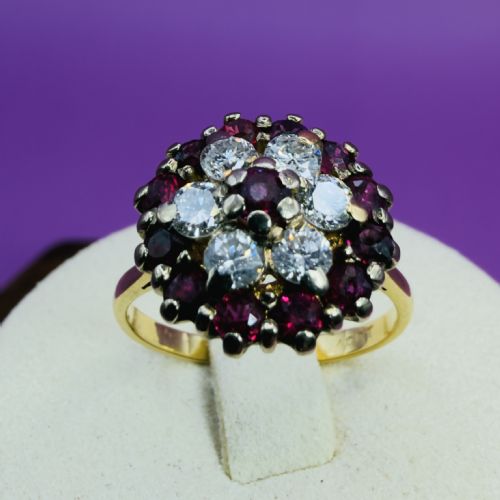
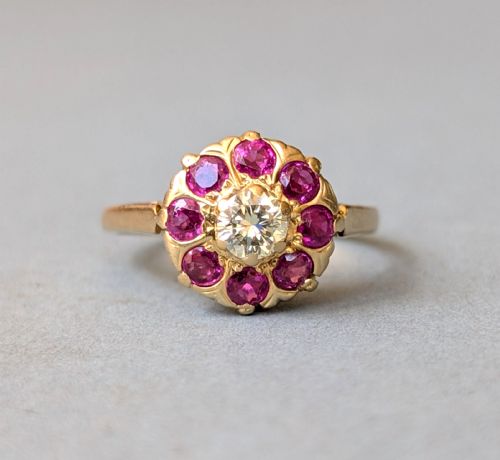
A ruby diamond target ring frames a central gem within concentric circles of contrasting stones, delivering a concentrated flash of colour on the hand.
Ruby Diamond Target Ring
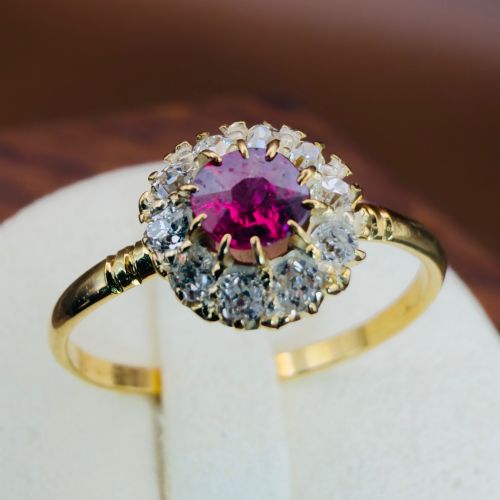
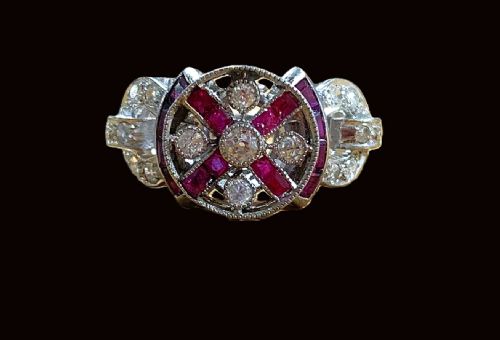
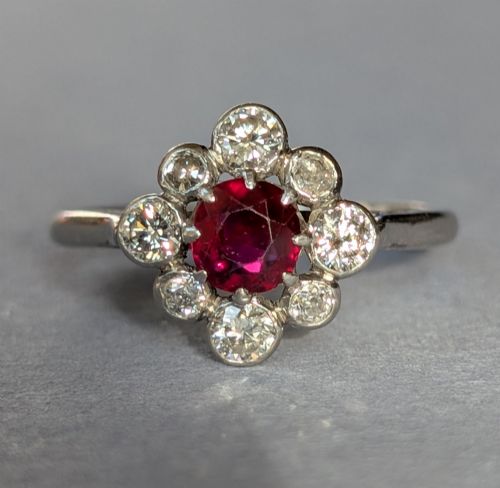
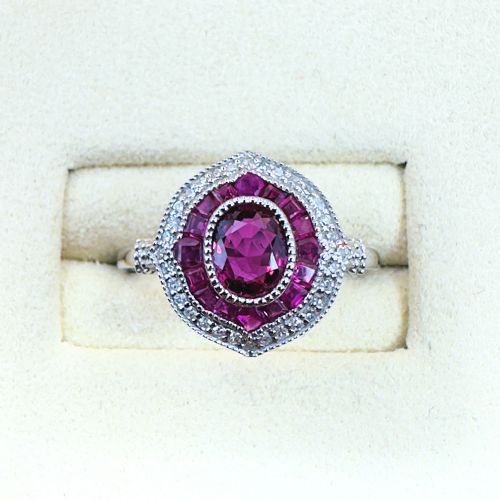
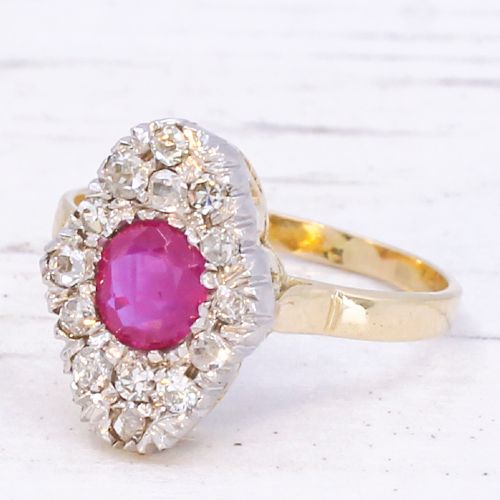
A ruby diamond target ring displays a concentric arrangement where a vibrant red centre stone is encircled by bands of diamonds, creating an optical bullseye effect. This concentrated geometry defines the classic target format.
Most examples encountered on this page originate from the Art Deco era, set in platinum or white gold to emphasise clean architectural lines. Earlier Victorian precursors appear alongside mid-century interpretations in yellow gold.
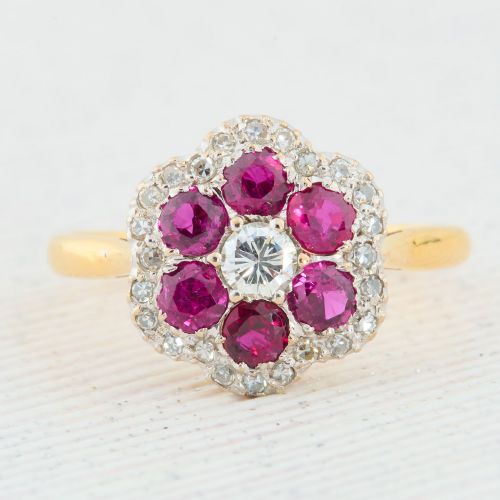
The profile typically centres on either a round or oval ruby, framed closely by calibrated diamonds or smaller pavé-set stones. Dress rings and cluster variants share this fundamental concentric layout.
Materials and construction
Goldsmiths utilised platinum and 18ct gold, both yellow and white, to construct the intricate geometric mounts that hold these stones securely. Platinum gained favour during the Art Deco period for its strength, allowing for delicate millegrain edges without sacrificing durability.
Stones are typically shaped as old cut diamonds, rose cut diamonds, or calibré cut rubies, tailored specifically to fit narrow channel settings and concentric borders. Burmese and Mogok origins appear among the central corundum specimens.
Listings span periods from the 1870s Victorian era through Edwardian designs to Art Deco and 1960s dress rings, using platinum alongside 18ct yellow and white gold.
Judging the range
Quality rests upon the precision of the concentric geometry and the saturation of the central ruby. Evenness in stone sizing within the outer diamond halo distinguishes a finely proportioned piece from a hurried assembly.
The integration of the metalwork, particularly hand-formed millegrain and openwork galleries, separates standard commercial work from superior fine jewellery workshop output.
The Ruby Diamond Target Ring Glossary
- Target ring
- A ring featuring a central stone surrounded by one or more concentric rings of contrasting gemstones. This layout creates a distinct bullseye pattern popularised during the early twentieth century.
- Calibré cut
- Gemstones shaped and cut precisely to fit a specific geometric channel or mount without gaps. This technique requires expert lapidary skill.
- Millegrain
- A decorative border of tiny raised metal beads along the edge of a setting. It provides a soft texture characteristic of Edwardian and Art Deco platinum work.
- Old cut diamond
- A hand-faceted diamond cut before modern brilliant standards were established in the mid-twentieth century. These stones feature smaller tables and larger culets that catch candlelight warmly.
- Cluster ring
- A ring design where multiple smaller stones cluster around a larger focal gem. The target ring is a specialised, strictly concentric subset of this broader group.
Ruby Diamond Target Ring: Frequently Asked Questions
What is a target ring?
A target ring is a specific style of cluster ring featuring a central gemstone encircled by one or more concentric rings of contrasting stones. The layout forms a distinct geometric pattern resembling a target.
Most surviving examples date from the Art Deco period, utilising platinum or white gold to enhance the concentric visual effect.
How do I date a ruby diamond ring?
Dating relies on the combination of metal choices, stone cuts, and overall mounting style. Victorian pieces often use yellow gold with chunky old cut stones, whereas Art Deco examples favour platinum and crisp geometric lines.
Looking closely at the gallery and setting techniques reveals the manufacturing period without relying solely on hallmarks.
Are these rings suitable for daily wear?
These antique rings require mindful care due to their delicate millegrain edges and intricate settings. Removing them during manual tasks protects the smaller stones and fragile claws.
Platinum mounts offer greater durability for regular wear compared to softer high-carat gold alternatives.
What is a Mogok ruby?
A Mogok ruby originates from the famed ruby mines in the Mogok valley of Burma. These stones are prized for their natural colour and fluorescence.
Their presence in historical pieces adds significant interest for collectors of antique fine jewellery.