

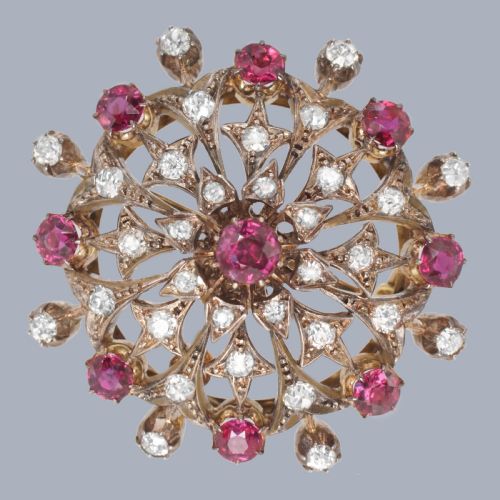


Ruby Diamond Pin
A ruby diamond pin brings together deep red stones and bright cut gems, forming pieces designed to fasten fabrics with colour and sparkle.
Ruby Diamond Pin
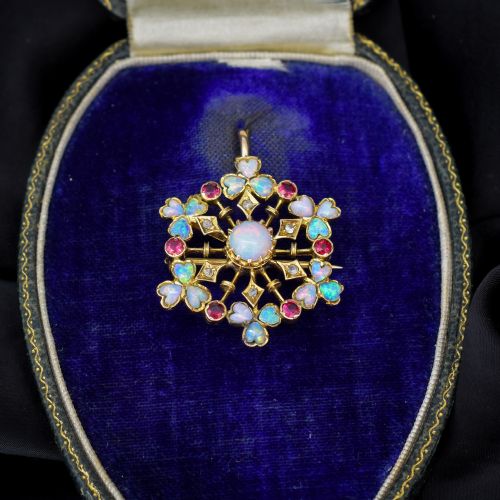
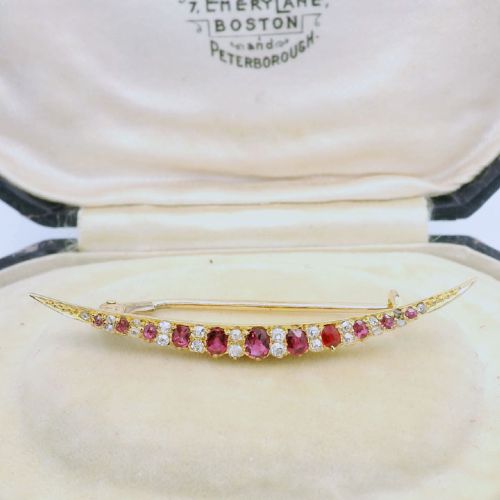
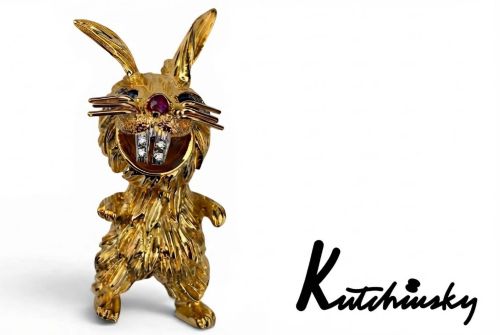
A ruby diamond pin appears in various configurations, most commonly as crescent brooches, bar brooches, and figural animal designs. These items originate from periods spanning the Victorian era through the Edwardian years and into the Art Deco and mid-century decades.
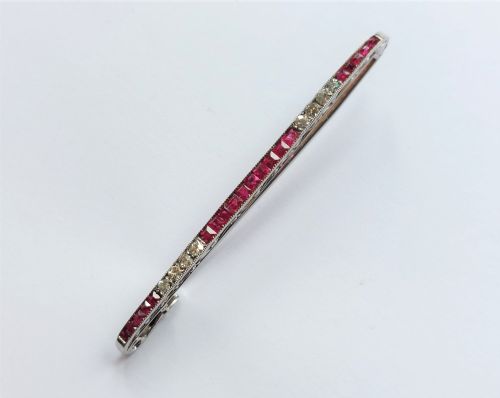
Victorian examples frequently utilise crescent motifs or naturalistic animal forms incorporating yellow gold and rose gold settings. Edwardian and Art Deco iterations often employ platinum and white gold alongside calibrated rubies and diamonds in geometric or delicate floral arrangements.
Buyers seeking a ruby diamond pin encounter pieces that function simultaneously as dress fastenings and pendant ornaments. The selection reflects changing tastes in metalwork and gemstone arrangement across the nineteenth and twentieth centuries.
Materials and construction methods
Makers set rubies and diamonds into combinations of gold, silver, and platinum depending on the decade of production. Early pieces employ yellow gold and silver-topped gold, whereas later twentieth-century items rely on white gold and platinum for strength and colour contrast.
Stone cutting techniques range from rose cuts and flat cuts in earlier eras to brilliant cuts and calibrated steps in later designs. Metal is shaped into delicate claws, millegrain edges, and solid bezels to secure the gems firmly to the backing pins.
Materials across these listings include rubies, diamonds, sapphires, emeralds, pearls, and enamel set in gold, silver, and platinum.
Distinctions in craftsmanship and materials
Quality separates through the natural origin and saturation of the rubies, the clarity of the diamonds, and the precision of the metalwork. Pieces with untreated natural stones and intricate, hand-pierced galleries sit at the upper end of the spectrum.
The integration of the pin mechanism and the security of the hinge and clasp indicate the standard of production. Superior examples maintain structural integrity alongside balanced gemstone proportion and careful colour matching.
Kutchinsky·Ben Rosenfeld·Gubelin
The Ruby Diamond Pin Glossary
- Crescent brooch
- A curved, horn-shaped brooch design popular during the Victorian and Edwardian periods. This shape typically graduates in width from the centre to the tapered ends.
- Millegrain
- A decorative technique featuring a line of tiny metal beads along the edges of a setting. This method softens the metallic profile and adds texture.
- Bar brooch
- A horizontal pin style where gemstones are mounted along a narrow metal rod. It serves as a fastening for lapels and scarves.
- Rose cut
- An antique gemstone cutting style featuring a flat base and a domed crown with triangular facets. It produces a soft, translucent shimmer rather than intense brilliance.
Ruby Diamond Pin: Frequently Asked Questions
How do I wear a vintage ruby diamond pin?
These pieces fasten securely to lapels, heavy wool coats, scarves, and structured hats using their integrated pin and clasp mechanisms. Heavier designs require sturdy fabrics to support the weight of the gold and gemstones without sagging.
Collectors often position bar brooches horizontally across a collar or pin crescent shapes vertically on a jacket fastening. Ensuring the safety catch is secure prevents loss during daily wear.
What periods do these pins come from?
The available selection spans the Victorian, Edwardian, Art Deco, and mid-century eras, dating from the late nineteenth century through to the late twentieth century.
Each era introduces distinct stylistic markers, such as yellow gold crescents from the eighteen-nineties or platinum geometric bar brooches from the nineteen-twenties.
Are the rubies and diamonds natural?
Many examples feature natural rubies and diamonds, occasionally accompanied by gemological reports detailing origin and treatment status. The archive and current selection include pieces with untreated stones alongside traditional brilliant and rose-cut diamonds.
Specific listings note details regarding gemstone carat weights and origins such as Thailand when documented by period reports.
How do I tell Victorian and Edwardian pins apart?
Victorian pieces frequently utilise yellow gold or rose gold, featuring organic motifs like flowers, animals, and crescent moons. Edwardian and Belle Epoque examples often combine platinum and silver with white gold to create lighter, lace-like floral or geometric arrangements.
Millegrain decoration and diamond-heavy settings are characteristic of the Edwardian transition toward white metals.