

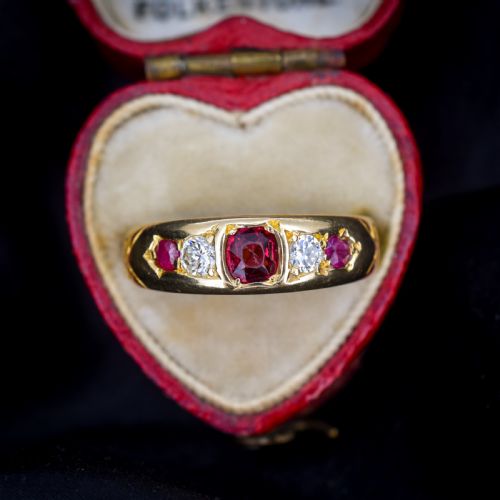


Ruby Diamond Five Stone Ring
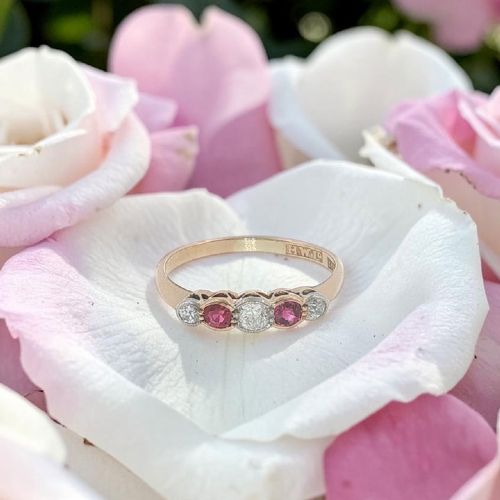
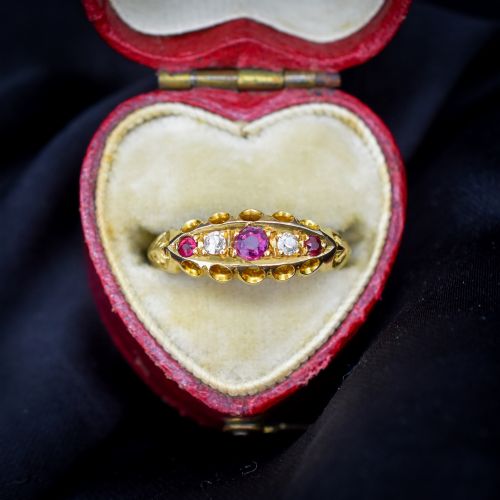
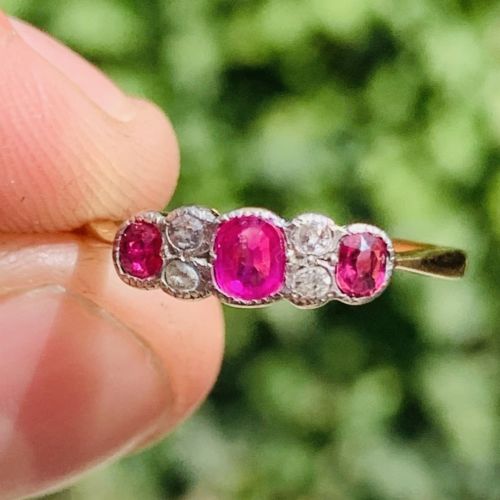
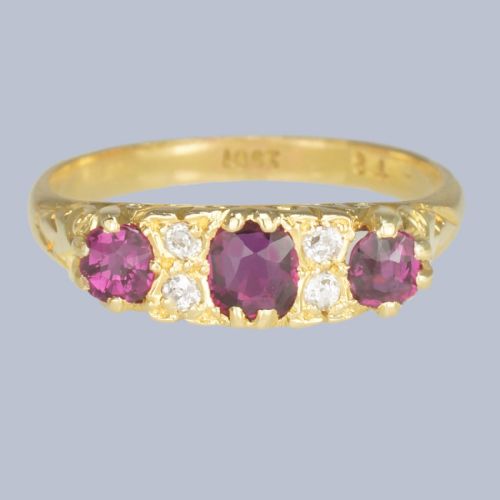
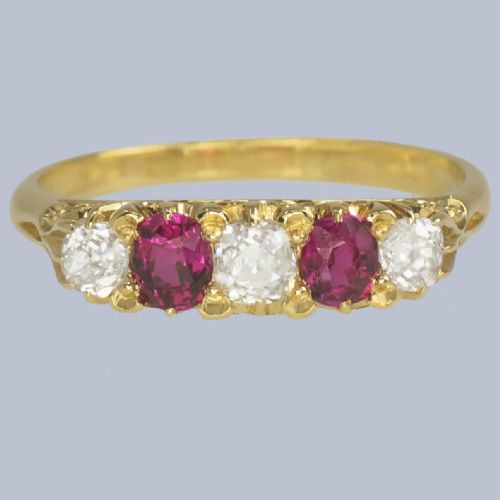
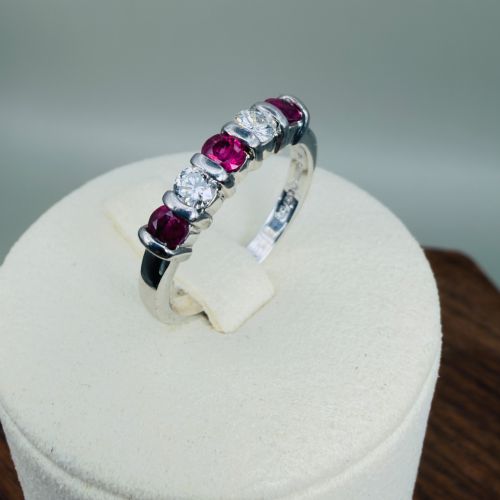
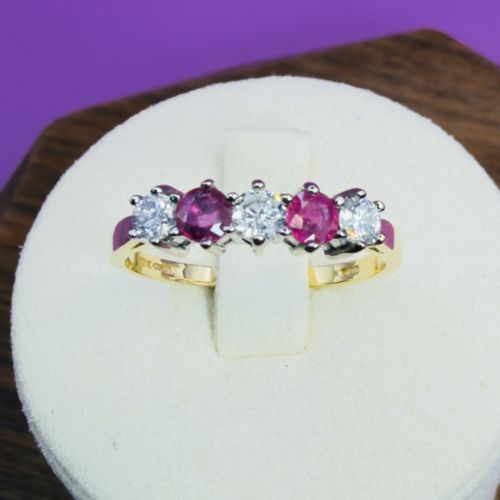
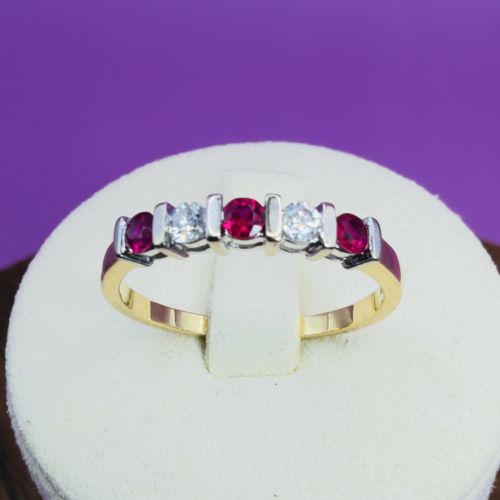
A ruby diamond five stone ring alternates vibrant red gems with bright stones in a horizontal line, offering enduring elegance.
Ruby Diamond Five Stone Ring
A ruby diamond five stone ring displays an alternating sequence of gems across the finger, a format spanning late Victorian, Edwardian, and Art Deco periods. These pieces appear frequently in 18ct yellow gold, white gold, and platinum settings.
The layout prioritises a balanced progression of size and colour, featuring old cut diamonds paired with natural rubies. Many examples carry hallmarks from assay offices such as Chester, Birmingham, and London.
Victorian and Edwardian versions often incorporate boat or navette shapes alongside traditional band mountings. Later mid-century iterations lean towards streamlined profiles while maintaining the signature five-stone arrangement.
Materials and Construction
Goldsmiths utilised 18ct gold, platinum, and occasionally 15ct gold to construct sturdy mountings that secure each gem with claw or gypsy settings. The integration of platinum alongside yellow gold became prominent during the Edwardian transition towards white metals.
Gemstones selected for these rings include old mine cut, old European cut, and rose cut diamonds matched with rich red rubies. Stones are hand-set to align uniformly across the finger span.
Some Victorian rings hide tiny hand-carved starburst motifs framing the stones, built to catch light from every angle.
Assessing Craftsmanship and Materials
The visual harmony of the piece depends on the colour saturation and clarity match among the rubies and diamonds. Superior examples feature stones carefully proportioned to graduate smoothly or maintain equal visual weight.
Structural integrity is evident in the condition of the claws, the thickness of the shank, and the crispness of any engraved gallery work. Hallmarks that remain clear and legible add historical clarity to the construction.
The Ruby Diamond Five Stone Ring Glossary
- Old Cut Diamond
- A diamond cut by hand before modern machinery, characterised by a smaller table, higher crown, and open culet. These stones produce a softer, candlelit sparkle rather than pinpoint brilliance.
- Boat Ring
- A ring style featuring a curved, navette-like setting that swells slightly in the centre to resemble the hull of a boat. This shape was favoured by Victorian and Edwardian jewellers.
- Navette Ring
- A ring featuring a pointed, eye-shaped outline resembling a little ship. The marquise-like silhouette accommodates multiple stones in an elongated formation.
- Hallmark
- An official stamp applied by an assay office indicating metal purity and year of testing. British marks often include town marks, maker marks, and date letters.
- Five Stone Ring
- A ring design showcasing five principal gems arranged in a row across the top of the band. It represents a classic Victorian and Edwardian milestone configuration.
Ruby Diamond Five Stone Ring: Frequently Asked Questions
Can I wear my ruby diamond five stone ring daily?
These antique rings suit regular wear provided you remove them during heavy physical tasks. Gold and platinum settings hold up well over decades, but older stones benefit from gentle care.
Store the piece separately to prevent the diamonds from scratching softer rubies or other jewellery in your collection.
How do I identify a Victorian ruby five stone ring?
Victorian examples typically feature hand-cut old mine or old European diamonds paired with deep red rubies, often mounted in 18ct yellow gold. Look for heavy, substantial shanks and conservative claw work.
Many pieces from this era bear British hallmarks indicating the assay office and exact decade of creation.
What is the difference between Edwardian and Victorian styles?
Edwardian rings frequently incorporate platinum settings to showcase white metal alongside yellow gold bands, creating a lighter visual aesthetic. The metalwork often includes delicate filigree and millegrain detailing.
Victorian pieces lean towards warmer yellow gold mountings and sturdier structural profiles with prominent hand-cut gemstones.
How should I clean an antique ruby and diamond ring?
Clean the ring using warm water, a mild washing-up liquid, and a soft-bristled toothbrush to remove everyday oils from beneath the settings. Avoid harsh ultrasonic cleaners which can damage antique stones or compromise old claws.
Dry the piece thoroughly with a lint-free cloth before wearing or storing it away.