


Ruby Cut Crystal
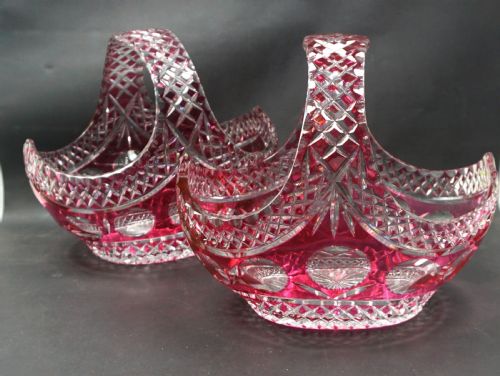
Ruby cut crystal brings deep red glass and sharp faceted surfaces together, offering a brilliant play of colour that catches the light in any room.
Ruby Cut Crystal
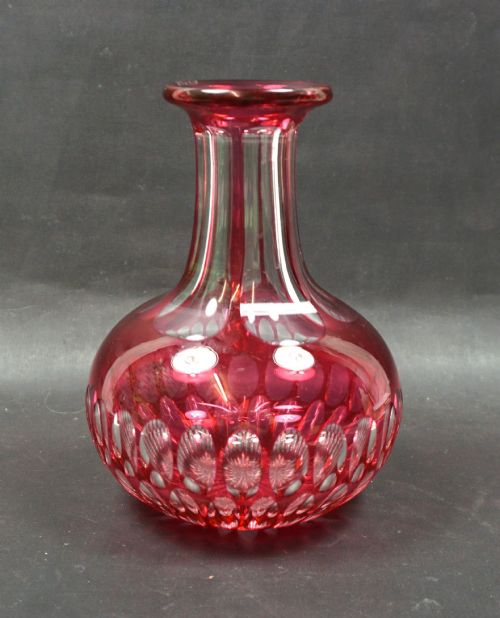
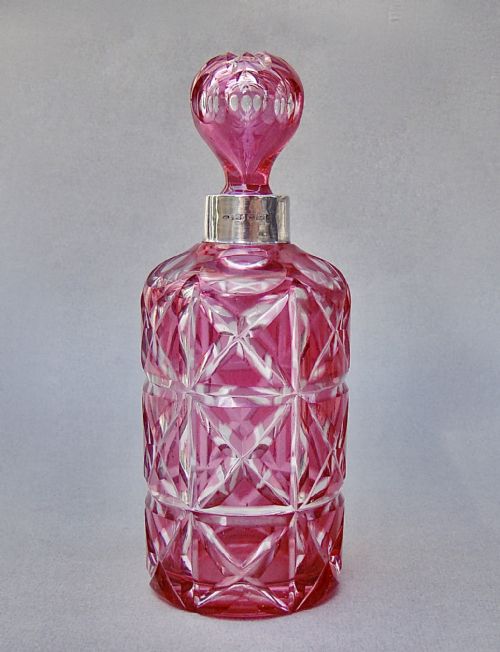
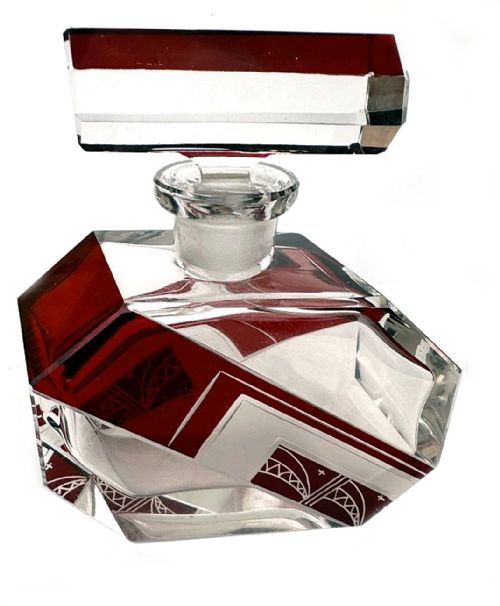
When searching for ruby cut crystal, buyers look at striking red glass objects shaped into scent bottles, decanters, vases, and mantel lustres. These pieces span the Victorian period through to the Art Deco era, originating from English, Bohemian, and Belgian workshops.
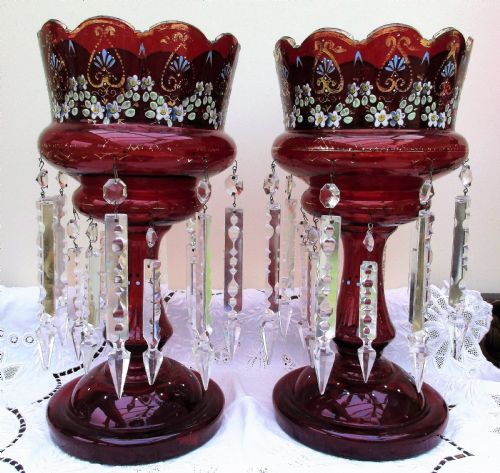
The most common form on this page is the pair of Victorian ruby glass mantel lustres, often hung with glass prisms. Alongside these stand decanters, perfume bottles, and overlay glass vases featuring deep red layers cut back to clear crystal.
How they were made
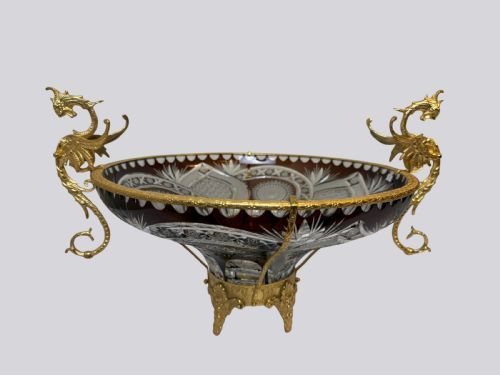
Makers produced these items using overlay or flash techniques, casing a layer of clear crystal inside or over a rich ruby or cranberry glass body. Craftsmen then cut deep geometric or floral patterns through the red surface to expose the clear crystal beneath.
Many items incorporate additional decorative elements such as hand-painted enamel, gilt bronze mounts, or sterling silver collars. Engraved detailing and applied gold leaf finish the surface of select Bohemian and English pieces.
One chandelier even incorporates small red glass drips, proving that nineteenth-century glassmakers enjoyed a touch of theatre with their illumination.
What varies in quality
Quality rests upon the crispness of the wheel-cut facets and the depth of the ruby colour against the clear crystal. Sharply defined edges and heavy, resonant metal-content glass separate finer production from simpler moulded wares.
The presence of original fittings, such as matching crystal prisms on lustres or intact silver mounts with clear hallmarks, elevates a piece. Superior examples display precise engraving and flawless integration of gilt or enamel decoration.
Harold Bushell & Co·Karl Palda·Val St. Lambert·Charles Graffart
The Ruby Cut Crystal Glossary
- Flash glass
- A thin layer of coloured glass applied over a colourless glass base before being cut. This technique allows the underlying crystal to show through the carved patterns.
- Mantel lustre
- A decorative ornamental vase fitted with hanging glass prisms designed to catch the light. They typically appeared in pairs on nineteenth-century fireplace mantels.
- Cranberry glass
- A transparent pinkish-red glass coloured with gold chloride during production. It differs from deeper ruby glass through its characteristic lighter hue.
- Overlay
- A manufacturing method where one layer of coloured glass is fused over another colourless layer. Cutting away sections of the outer layer creates high-contrast decorative designs.
- Prisms
- Cut glass pendants suspended from the rims of lustres or chandeliers. Their faceted surfaces refract light around the room.
Ruby Cut Crystal: Frequently Asked Questions
What is ruby cut crystal?
Ruby cut crystal consists of clear glass cased in a layer of deep red glass, with decorative patterns carved into the surface by wheel-cutting.
This process reveals the transparent crystal underneath, creating a sharp contrast between the red exterior and the clear body.
How do I date ruby glass?
Dating relies on stylistic clues, manufacturing techniques, and any accompanying metal mounts or hallmarks. Victorian pieces often feature heavy proportions and elaborate lustre drops.
Later Art Deco examples from the 1930s tend to show geometric silhouettes and streamlined forms by makers such as Karl Palda or Val St. Lambert.
What are mantel lustres used for?
Mantel lustres served as decorative garnitures placed on drawing room mantelpieces during the nineteenth century. The hanging glass prisms were intended to catch and scatter candlelight.
While primarily ornamental, they also held small decorative items or simply added colour to a room.
How do I clean ruby cut crystal?
Clean these items gently using warm water and a mild detergent with a soft cloth. Avoid abrasive sponges or harsh chemicals that can damage silver mounts, gilt details, or enamel work.
Items with metal collars or silver mounts should be kept dry around the fittings to prevent tarnishing or corrosion.