


Royal Doulton Pottery
Royal doulton pottery brings together tactile stoneware, intricate glaze work, and commemorative ceramics from the late nineteenth century onwards.
Royal Doulton Pottery
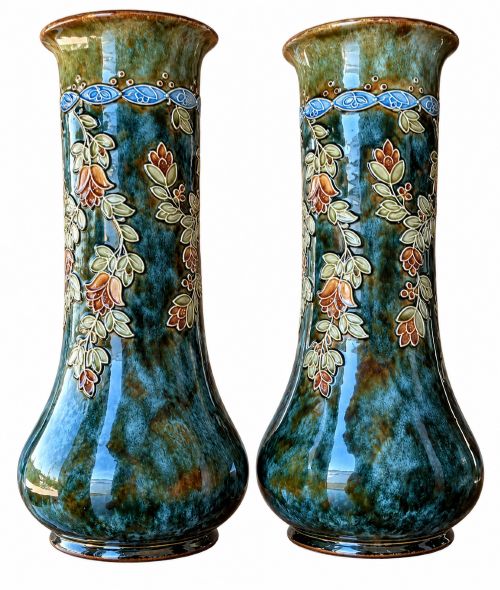
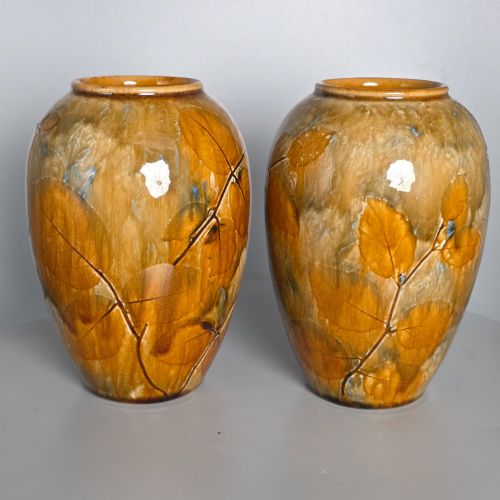
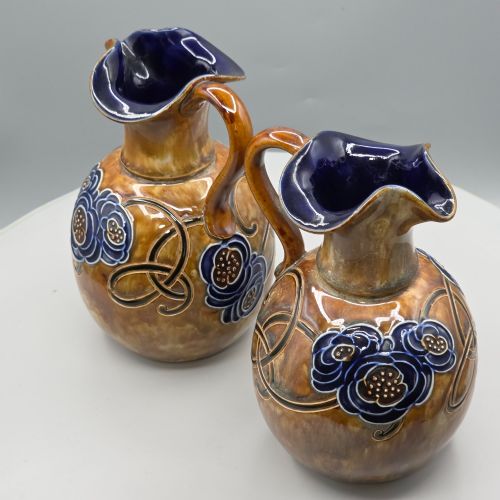
Royal doulton pottery spans functional vessels, decorative vases, and commemorative pieces produced from the nineteenth century into the twentieth. You will frequently encounter heavy stoneware vases and jugs created during the Victorian, Edwardian, and Art Nouveau periods.
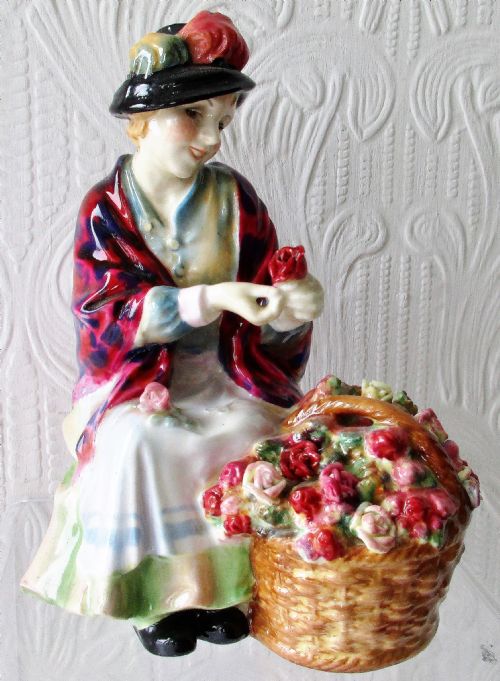
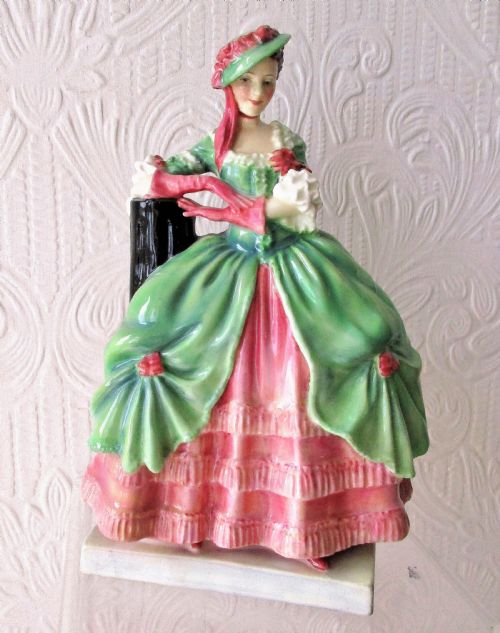
The selection here includes jardiniere planters, chamber sticks, tobacco jar lamps, and porcelain figurines modelling named characters. Production encompasses distinctive Lambeth wares alongside later earthenware and porcelain lines.
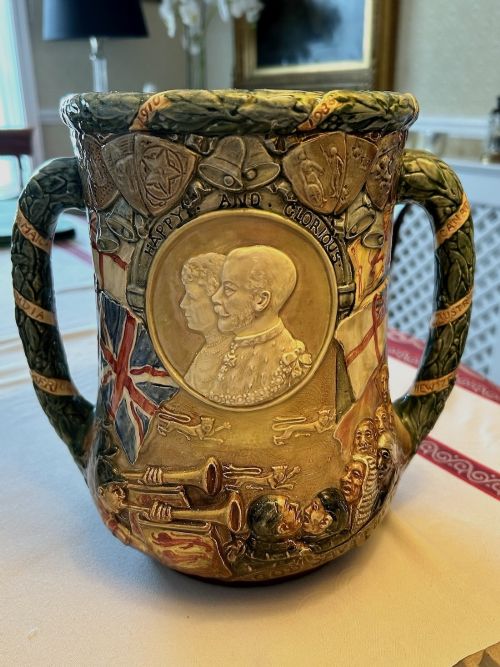
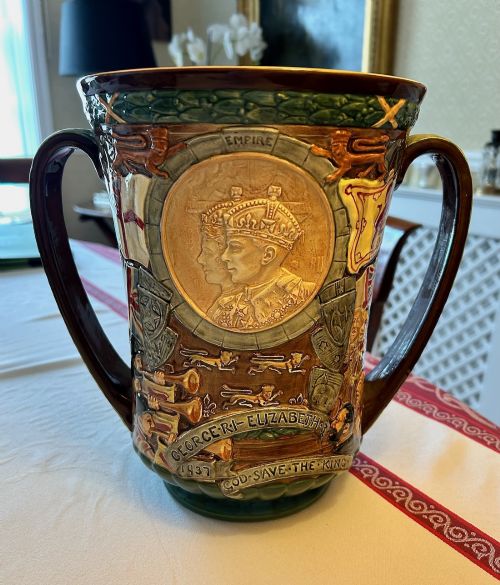
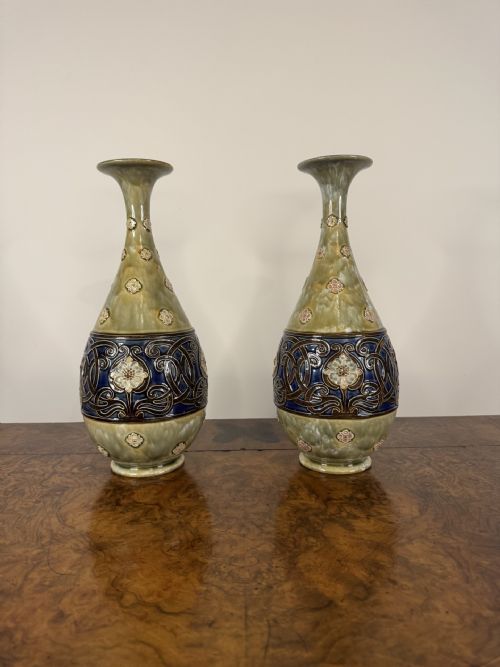
Vessels often reflect specific historical events through jubilee and coronation loving cups or feature sporting and golf motifs. Many survive in pairs, ranging from small cabinet pieces to large baluster forms.
Assessing quality and execution
Quality rests upon the crispness of the incised ornament, the control of the glaze colours, and the precision of hand-painted details. Works bearing the distinct signatures or monograms of recognised studio artists generally display superior handling.
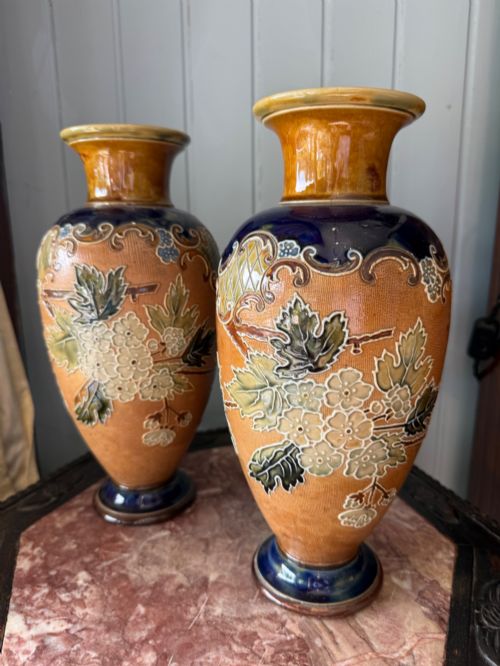
Pieces that retain original lids, matched pairs in uniform condition, and complex multi-coloured enamel work command greater interest. The depth of the texture on Slaterware and the clarity of commemorative portraits set finer examples apart.
Decorated vessels range from tobacco jar lamps and bonsai planters to commemorative loving cups and golf-themed whisky flasks.
Louisa Wakely·John H Plant·Emily Stormer·Ethel Beard·R Allen
The Royal Doulton Pottery Glossary
- Stoneware
- A dense, vitreous ceramic fired at high temperatures until non-porous. It accepts rich salt glazes and deep incised decoration.
- Slater's patent
- A technique developed by Doulton pressing lace or fabrics into damp clay to create textured surfaces. These patterns are often highlighted with enamels and gold.
- Lambeth ware
- Pieces produced at the Doulton London factory known for artistic stoneware. They frequently exhibit Arts and Crafts and Art Nouveau motifs.
- Baluster
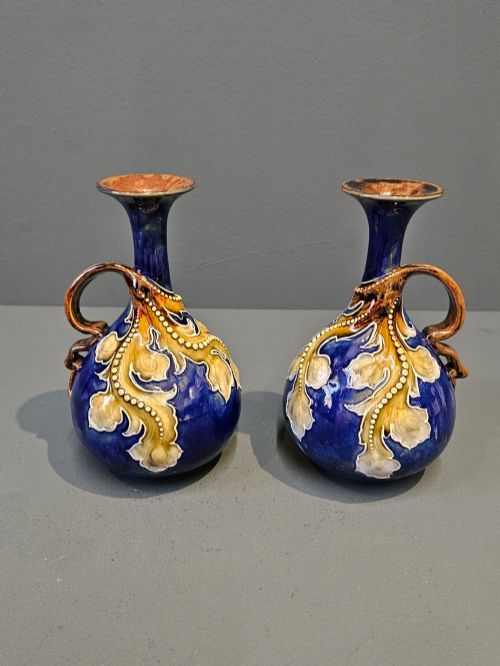
- A vase shape characterised by a rounded lower body that tapers into a narrow neck. This form is common in Victorian and Edwardian decorative vessels.
- Loving cup
- A large two-handled drinking vessel often issued for royal coronations and jubilees. These commemorative pieces frequently feature detailed historical portraits.
Royal Doulton Pottery: Frequently Asked Questions
How do I date my royal doulton pottery?
Examine the factory marks stamped on the base, noting changes in the crown and lion insignia over the decades. The presence of specific royal jubilees or stylistic cues like Art Nouveau motifs also helps narrow the production era.
Matching the piece to recorded periods from the nineteenth and twentieth centuries provides a reliable window of origin. Archive numbers and specific artist monograms further pinpoint the exact manufacturing timeframe.
How were royal doulton loving cups used?
Loving cups served primarily as commemorative objects rather than everyday drinking vessels. They marked significant national events such as royal coronations and jubilees.
Households displayed these two-handled vessels to show loyalty or placed them on mantelpieces as decorative centrepieces during national celebrations.
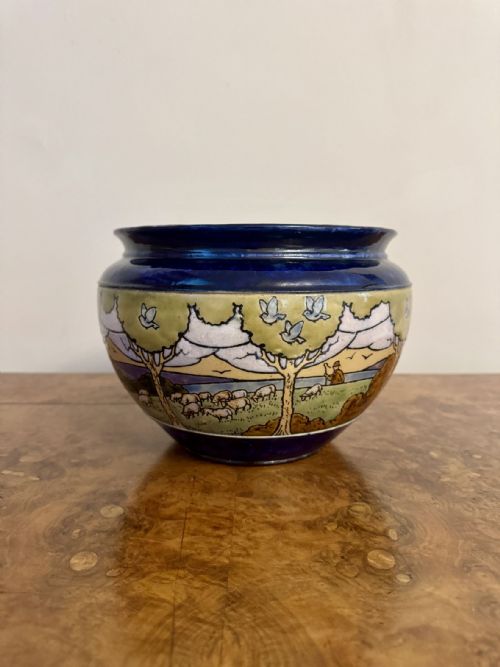
Can I use my royal doulton jardiniere for plants?
Jardinieres were built to hold potted plants indoors, protecting surfaces from moisture with their glazed stoneware bodies. Placing a protective saucer inside helps guard against potential dampness.
Due to the age of antique ceramic bodies, handling them with care during watering preserves the interior glaze and structural integrity.