


Royal Academy of Arts
Royal Academy of Arts pieces bring together historic British paintings, watercolours and portrait miniatures connected to notable academicians through exhibition or membership.
Royal Academy of Arts
When you search for royal academy of arts, you find works created, exhibited or signed by elected members and associates of the institution. The selection relies heavily on oil paintings, watercolours, and pastel works spanning from the eighteenth century through to the post-war period.
You meet Victorian landscapes, genre scenes, and portraits most frequently on this page. These pieces often carry exhibition records or provenance directly linking the canvas or paper to the historic London exhibition spaces.
The objects range from large-scale historical canvases down to intimate portrait miniatures and pen drawings. Each item reflects the academic training and established standards of British fine art across different eras.
How they were made
Artists painted primarily in oil on canvas or oil on board, using layered pigments to build depth in landscapes and portraits. Watercolour and pastel on paper served for lighter studies, preparatory sketches, and detailed miniature portraits.
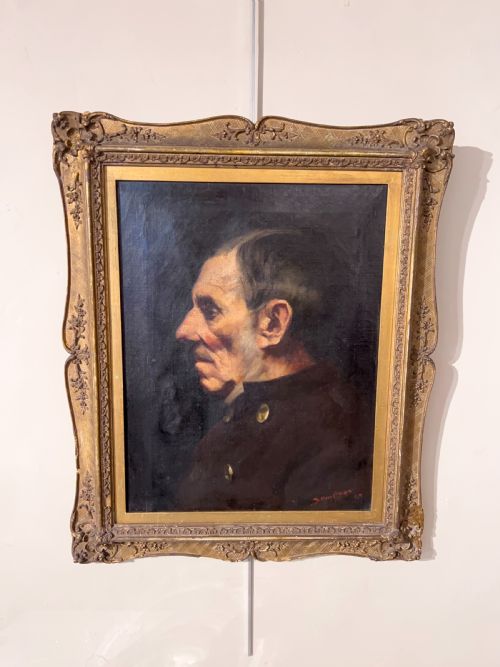
Gilt wood frames frequently house these works, often matching the period of the painting. Support materials include heavy woven canvas stretched over wooden frames and thick artist paper.
Listings feature works spanning the eighteenth, nineteenth, and twentieth centuries, executed in oil, watercolour, pastel, and enamel.
What varies in quality
The distinction between standard works and exceptional pieces lies in the strength of the composition and the confidence of the brushwork. Leading examples demonstrate a complete command of light and atmosphere, particularly in landscape and marine subjects.
Documentation strongly influences the standing of a piece, with exhibition labels, signed personal papers, and confirmed academic membership adding historical weight. The handling of difficult subjects, such as complex interior lighting or detailed portraiture, marks out the superior hands.
Henry Bone·JOHN OPIE·Bertram Priestman·Frederick Goodall·Reginald Grange Brundrit·George Vicat Cole·George Smith·Benjamin Williams Leader·Susie Lassam·Ronald Ossory Dunlop·Joseph Farquharson·Sir Herbert Hughes-Stanton·Joseph Farington·Sir George Reid·Sir David Murray·Thomas Creswick·Dame Laura Knight·Aubrey Sykes·William Collins·William Owen·Robert Alexander Hillingford·Peter Greenham·Sonia Lawson·Edward Bird·John Russell
The Royal Academy of Arts Glossary
- ARA
- Associate Royal Academician. This designation indicates an artist elected to the Royal Academy who has not yet reached full academician status.
- RA
- Royal Academician. A fully elected member of the Royal Academy of Arts entitled to use the post-nominal letters.
- Genre painting
- A pictorial representation of scenes from everyday life. These works depict ordinary people engaged in common activities rather than grand historical or mythological subjects.
- Portrait miniature
- A small, highly detailed painting, often executed on ivory, vellum or card. Such pieces required immense precision and were frequently kept as personal mementos.
- Provenance
- The chronology of the ownership and exhibition history of a work of art. Documented provenance links a painting directly to its creator and past showings.
Royal Academy of Arts: Frequently Asked Questions
What defines a royal academy artist?
An artist holding this distinction gained formal election into the membership of the institution based in London. This membership denotes professional standing validated by peers within the British art establishment.
Works by these figures frequently appeared in the annual summer exhibitions held at the galleries. Their output covers traditional oil landscapes, maritime scenes, and detailed portraiture.
How should I display an oil painting?
Oil paintings on canvas need stable environmental conditions away from direct sunlight and sudden temperature shifts. Proper wall placement protects the pigments and the underlying stretched fabric from warping or fading.
Most period canvases perform best within their original gilt wood frames, which provide structural support. Regular dusting with a soft, dry brush keeps the surface clear without introducing moisture.
Are watercolours different from oil paintings?
Watercolour employs pigment suspended in a water-based solution applied to paper or card. This medium creates translucent washes and lighter effects compared to the heavy texture of oil paint.
Works on paper require protective glass framing to guard against atmospheric pollutants and moisture. They are typically sensitive to light exposure and demand careful placement in a room.
What is a portrait miniature?
Portrait miniatures are small-scale paintings created for intimate display or personal carriage. Artists achieved remarkable detail using fine brushes on surfaces like paper or vellum.
These pieces often feature sitter details and dates inscribed on the reverse or within the casing. Collectors value them for their dense execution and preservation of historical costume.