
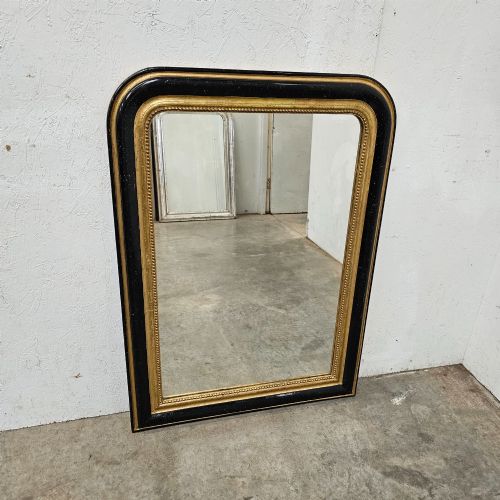

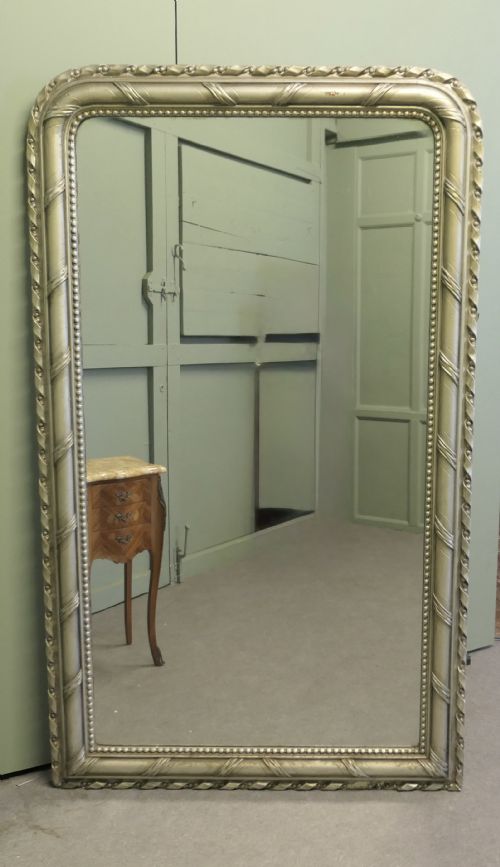


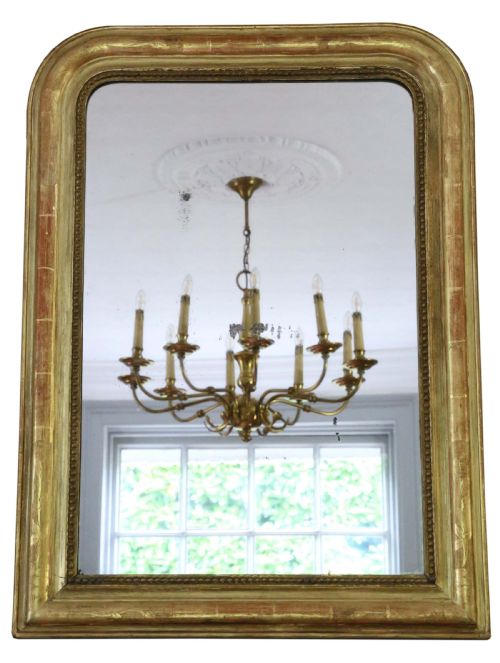


Rounded Corner Overmantel Mirror
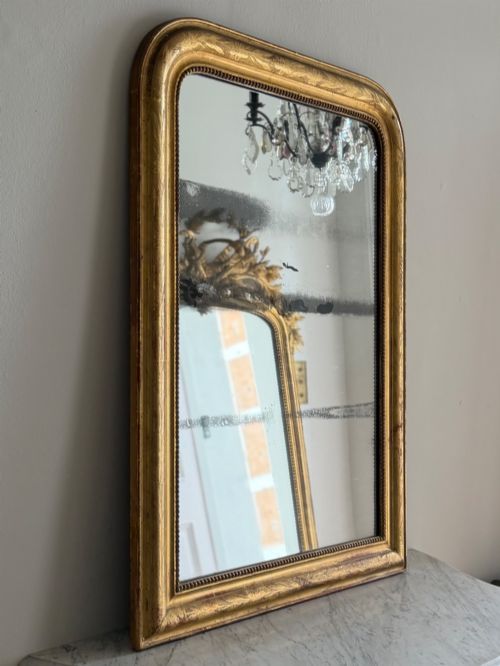
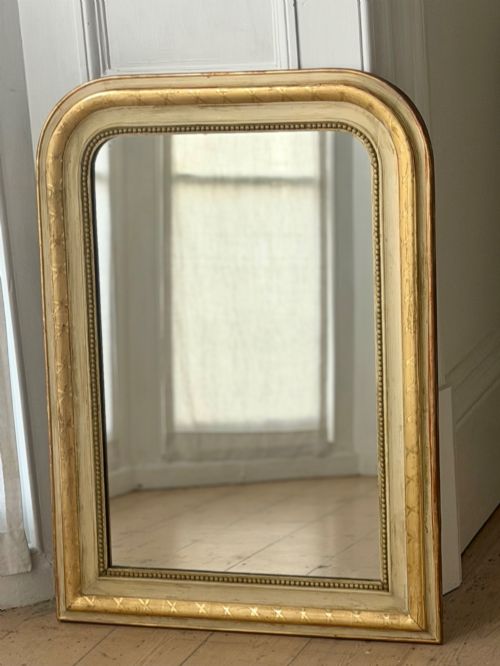
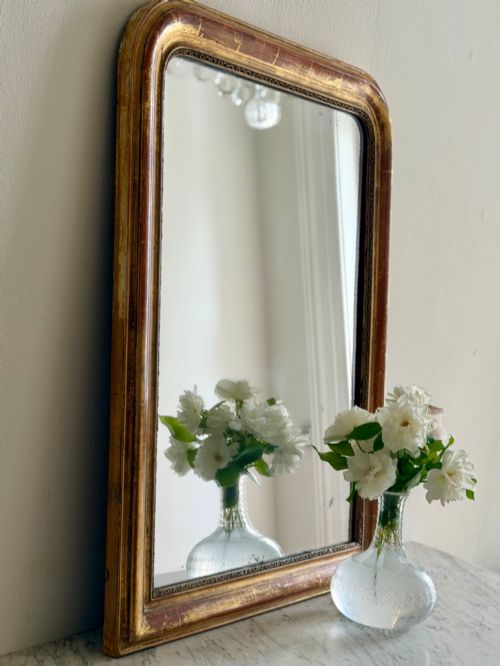
A rounded corner overmantel mirror brings immediate light and proportion to a room, framed in gold leaf, silver leaf, or burr walnut.
Rounded Corner Overmantel Mirror
A rounded corner overmantel mirror is a large wall-hanging looking glass designed to sit above a fireplace, defined by softened upper corners that trace French Louis Philippe or Victorian aesthetics. The examples appearing on this page span the nineteenth century, nineteen-hundred, nineteen-forty, and eighteen-eighty, taking the form of wall mirrors and overmantels.
Most pieces met here belong to the Louis Philippe style, originating from French workshops and characterised by gentle curves rather than rigid right angles. Alongside these, nineteenth-century Victorian pieces emerge in burr walnut and ornate gilt frames, offering a distinct domestic presence.
How they were made
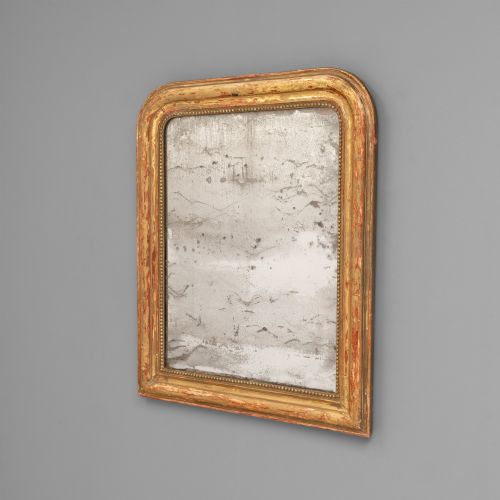
Makers constructed these frames from wood, gesso, and carved timber, applying layers of gold leaf or silver leaf to create a luminous surface finish. Mercury glass frequently forms the reflective plate in earlier examples, contributing to the distinct speckled ageing seen across the surface.
Gilded wood and bare gesso provide the structural base for French and Victorian designs, where intricate corner details and arched tops are shaped directly into the wooden framework before gilding.
Some nineteenth-century mirrors retain heavy foxing, turning mundane reflections into a mottled gallery of atmospheric shadows.
What varies in quality
The distinction between standard and exceptional pieces rests upon the crispness of the carved wood, the depth of the gesso preparation, and the intactness of the original gold leaf or silver leaf. Frames that retain their original gilding without heavy modern restoration display a truer historical character.
Glass condition also shapes the piece, where heavier foxing and original mercury plates distinguish authentic period glass from later replacements. The structural integrity of the large wooden backing and the smoothness of the curved corners further mark the skill of the original workshop.
The Rounded Corner Overmantel Mirror Glossary
- Louis Philippe
- A nineteenth-century French style marked by restrained classical proportions, softened top corners, and minimal ornamentation. It bridges the gap between heavier empire designs and simpler domestic furnishings.
- Gesso
- A plaster-like mixture applied to wood frames as a smooth base for gilding. Its thickness and application determine the sharpness of the underlying carved details.
- Mercury glass
- A double-walled glass blown with a silvering mixture inserted between the layers, creating a characteristic mottled reflection. This technique predates modern chemical silvering methods.
- Giltwood
- Timber coated with gold leaf or gold paint to simulate solid gold. The underlying wood grain often shows subtly through the metallic surface over time.
Rounded Corner Overmantel Mirror: Frequently Asked Questions
Where should an overmantel mirror be hung?
These mirrors traditionally sit directly above a mantelpiece or fireplace, anchored securely to the wall to support their substantial weight.
They also function effectively on principal living room walls where their large scale reflects natural light across the room.
How do I identify a Louis Philippe frame?
Louis Philippe mirrors are recognised by their characteristic rounded upper corners and clean, uncluttered wooden frames.
They often feature subtle decorative motifs at the crest while maintaining an overall sense of structural simplicity.
What causes mercury glass foxing?
Foxing occurs when moisture penetrates the backing over decades, causing the reflective silver layer to oxidise and form dark spots.
This chemical ageing process is considered a desirable sign of age among collectors of nineteenth-century mirrors.
Can these mirrors be hung without a fireplace?
They hang successfully on any large, load-bearing wall provided the fixings match the considerable weight of the wooden frame and glass.
Their proportions make them suitable as central focal points in hallways, bedrooms, and reception rooms.