

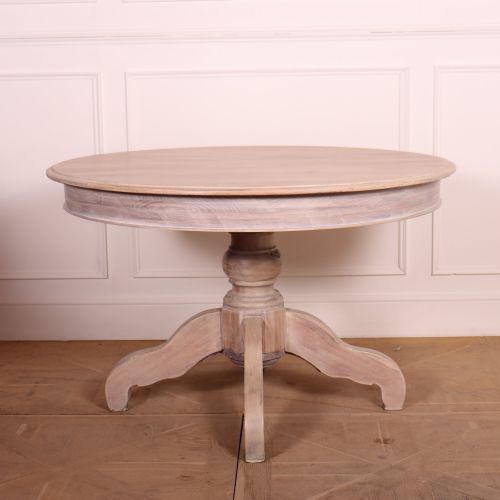
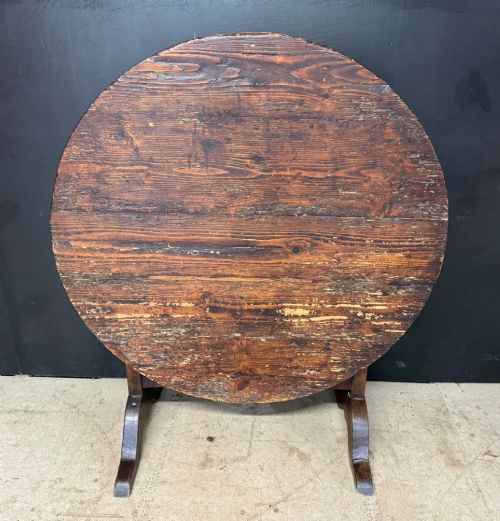
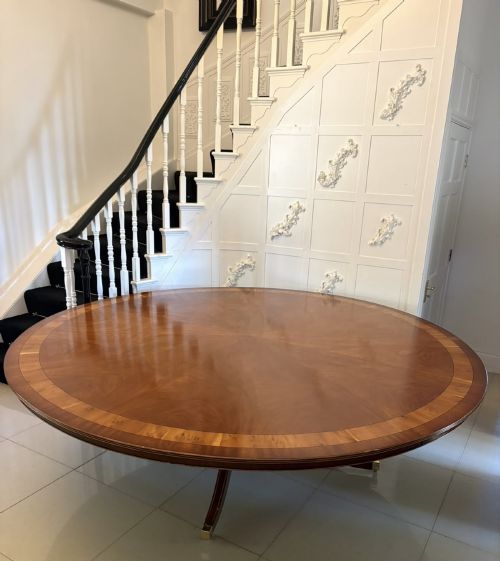
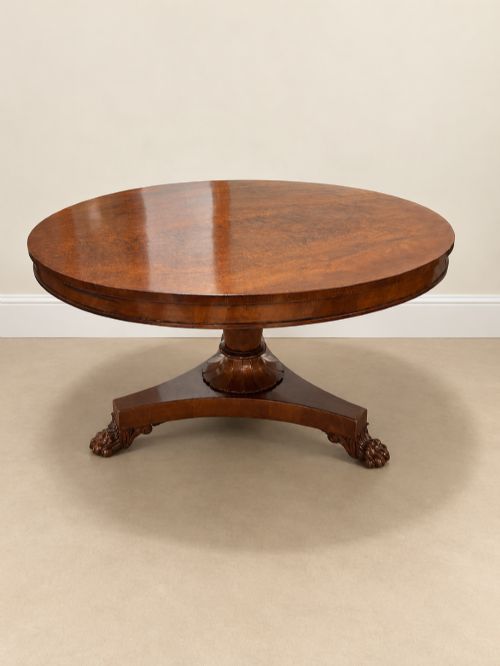

Round Wood Dining Table
A round wood dining table brings people together around a central pillar or set of legs, offering an inviting surface for daily meals.
Round Wood Dining Table
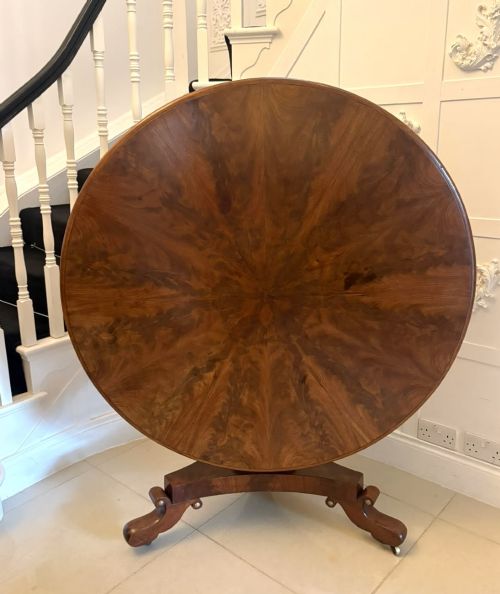
A round wood dining table sits at the heart of domestic life, designed to host meals and gatherings comfortably. The examples found here span from the Georgian and Regency eras through the Victorian period and into the twentieth century, showcasing centuries of cabinet-making traditions.
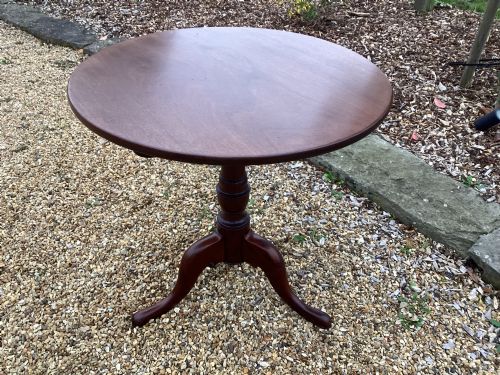
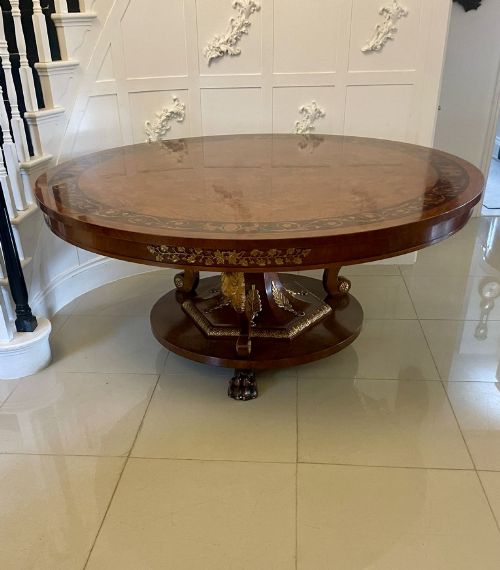
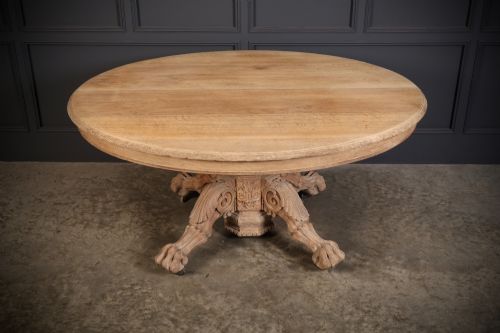
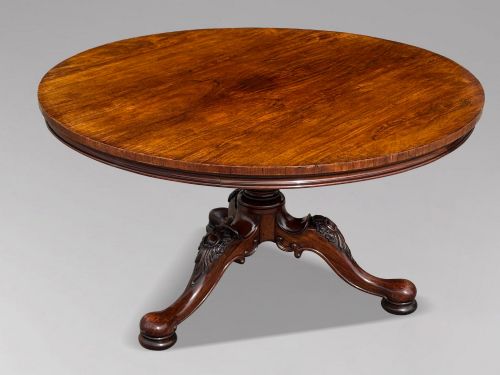
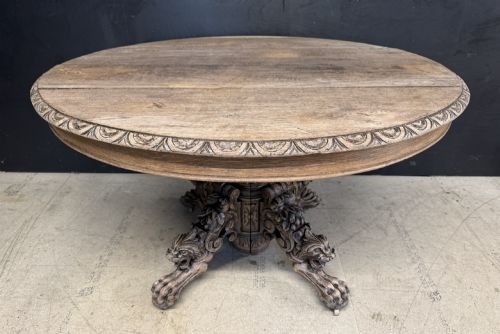
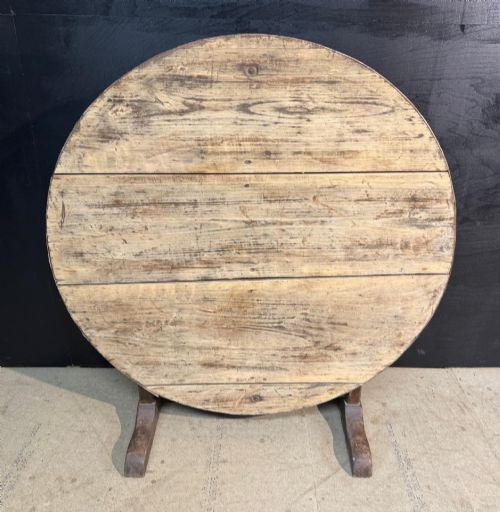
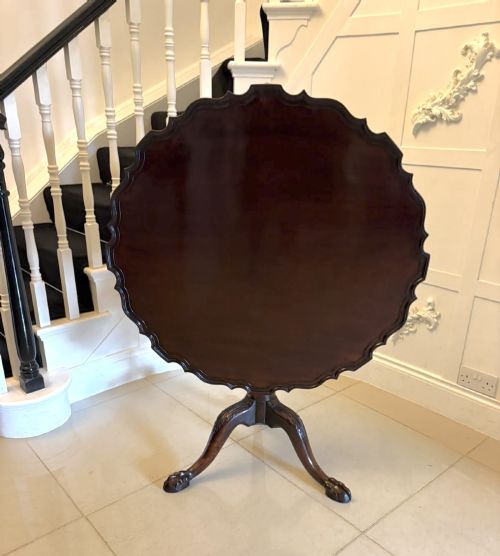
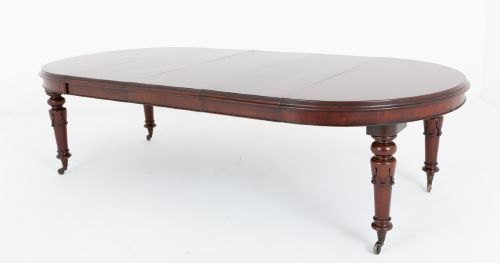
Most pieces meet the eye as breakfast tables, centre tables, or extending dining tables. They range from compact three-legged tripod bases to grand pedestal designs with triform or column supports.
Origins stretch from English workshops to French provincial makers, Swedish centres, and Anglo-Indian colonial studios. This geographical breadth brings diverse regional proportions and timber selections to the surface.
Materials and construction methods
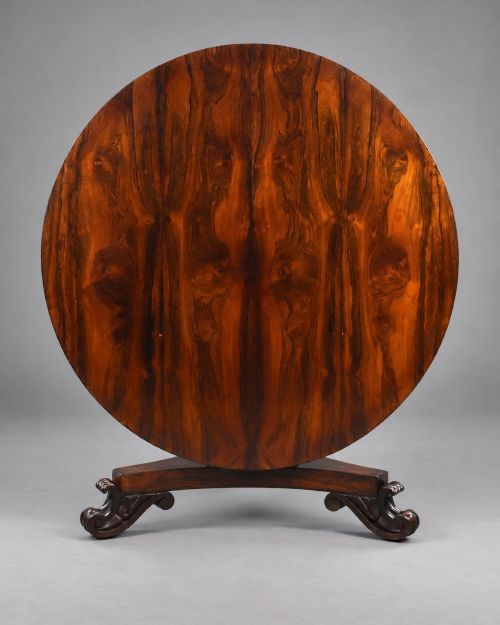
Makers relied primarily on dense hardwoods such as mahogany, rosewood, walnut, and oak to build these tables. Cabinet-makers also utilised exotic materials like padauk, coromandel, and satin birch, often applying veneers over solid timber cores to display striking grain patterns.
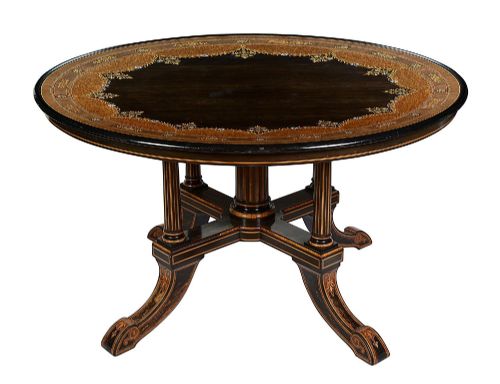
Structural ingenuity shows in tilt-top mechanisms, snap-top catches, and folding frames that allowed tables to be moved or stored against walls when not in use. Brass inlays, marquetry, and carved wooden details finished the surfaces, secured with traditional joinery and turnings.
Round Wood Dining Table Retail Price Guide 2026
Typical asking prices for round wood dining table among the pieces listed under this phrase on Sellingantiques today, from the lower quarter to the upper quarter. They describe what is for sale here now, not the wider market.
Materials span native oak, elm, and pine alongside imported rosewood, mahogany, walnut, satin birch, and padauk.
What defines quality in these pieces
Quality rests upon the selection of timber figures and the integrity of the underlying construction. Tables featuring finely figured rosewood veneer or richly grained mahogany demonstrate superior material choice by the original maker.
The execution of mechanical elements, such as tilt-top mechanisms, pedestal joints, and extending leaves, separates standard workshop production from exceptional cabinet-work. Stable weight distribution and smooth operation under physical use indicate high craftsmanship.
The Round Wood Dining Table Glossary
- Tilt top
- A tabletop mounted on a pivot mechanism that rotates vertically so the piece can stand flat against a wall when not in use. This clever design saved valuable floor space in nineteenth-century homes.
- Breakfast table
- A small dining table designed for morning meals or intimate gatherings, frequently built with a central pedestal base. They often feature circular tops that sit at a convenient height for chairs.
- Triform base
- A three-sided pedestal foot that provides stable support beneath the central column of a table. This form appeared frequently on Regency and William IV dining furniture.
- Centre table
- A freestanding piece finished on all sides to stand in the middle of a room rather than against a wall. These tables served various domestic functions from display to supper service.
- Piecrust edge
- A raised, carved moulding along the perimeter of a circular tabletop resembling pastry work. This decorative detail demanded skilled hand-carving from solid timber.
Round Wood Dining Table: Frequently Asked Questions
How do I seat guests comfortably around a round table?
A circular surface removes rigid head-of-table hierarchies and lets everyone converse freely during a meal. Central pedestal bases provide generous legroom without obstructive corner legs getting in the way of chairs.
Matching the diameter of the surface to your room dimensions ensures adequate space for pulling chairs outward. Smaller breakfast tables suit compact corners, while extending versions accommodate larger dinner parties.
What is the difference between a breakfast table and a dining table?
Breakfast tables traditionally served morning meals or casual dining and often featured tilt-top mechanisms for easy storage. They tended to be built on single central pedestals rather than four fixed legs.
Dining tables were engineered for larger groups and heavier daily use, frequently incorporating extension systems with extra leaves. Both forms utilise solid timber and quality veneers, but breakfast tables prioritise versatile placement within a room.
How do I date a nineteenth-century pedestal table?
Dating relies on examining the timber species, base design, and structural hardware used in the frame. Regency and William IV pieces often display heavy rosewood grain, brass inlays, and robust triform pedestals.
Victorian examples frequently introduce carved pillar supports and walnut marquetry, while earlier Georgian items show simpler tripod legs in mahogany or elm. Hardware marks and joint construction give further clues to the decade of manufacture.
How should I care for an antique wood surface?
Maintaining antique timber requires keeping surfaces away from direct heat sources and strong sunlight to prevent veneer drying or fading. Regular dusting with a soft, dry cloth preserves the finish without abrasive buildup.
Applying a quality beeswax periodically nourishes the wood and protects the patina. Avoid placing wet items directly onto the polish to prevent water rings.