





Round Vitrine Cabinet
A round vitrine cabinet offers a striking way to showcase small treasures, combining curved glass and warm wood to anchor a room.
Round Vitrine Cabinet
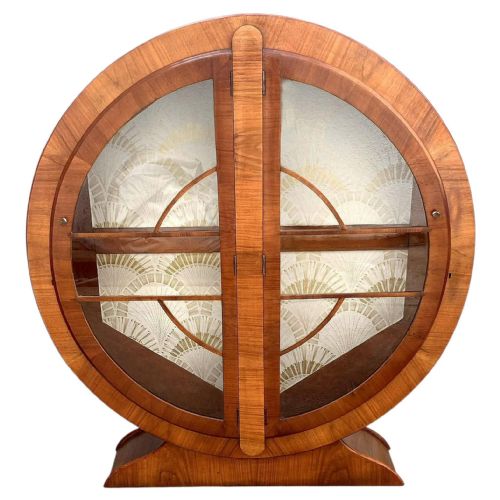
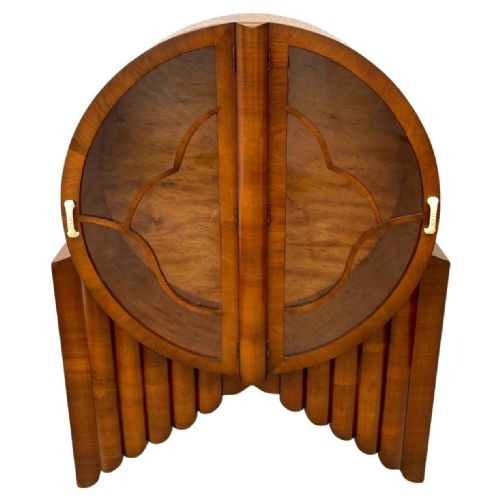
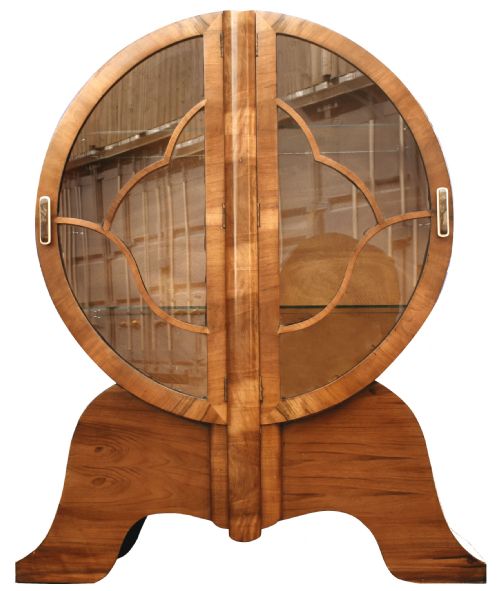
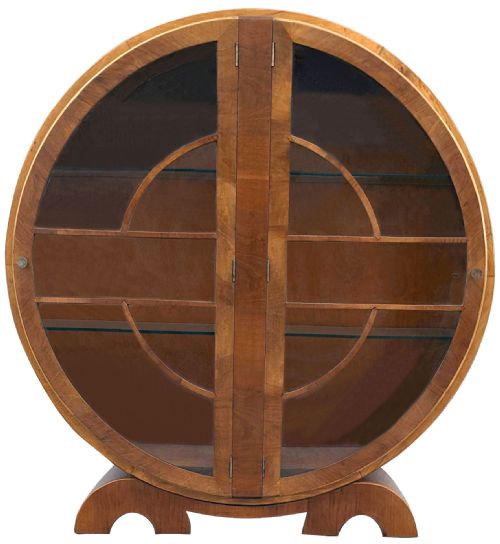
A round vitrine cabinet brings together cylindrical glass displays and distinctive woodwork, most frequently taking the form of English Art Deco circular cabinets from the nineteen thirties. These pieces rely on walnut, figured walnut, and maple to create curved silhouettes that stand apart from traditional square furniture.
Materials and Construction
Makers built these cabinets using walnut, mahogany, kingwood, and maple over substantial timber frames. Curved glass panels required specialist glassblowing and shaping techniques to fit smoothly into circular wooden or metal channels.
Brass mounts and lead cames provided structural definition and decorative contrast for the glazed doors and panels. Selected examples incorporate fabric linings inside the display area to set off the objects placed within.
Listings feature walnut, mahogany, maple, and kingwood alongside lead and brass elements.
Judging Quality
Quality rests on the precision of the curved woodwork and the clarity of the glass. Finer pieces demonstrate seamless integration between the bent wood frames and the sweeping glass panes without distortion.
The choice of timber grain, particularly figured walnut or inlaid kingwood, elevates the visual weight of the cabinet. Attention to small details like brass mounts and leaded glazing patterns distinguishes standard production from superior craftsmanship.
The Round Vitrine Cabinet Glossary
- Vitrine
- A glass-fronted display cabinet designed to protect and exhibit objects. These pieces often feature glass on multiple sides to maximise visibility.
- Bijouterie table
- A glass-topped display table intended for small valuables, jewellery, and curiosities. They frequently sit on slender legs with brass framing.
- Kingwood
- A dense, richly figured timber imported from South America and used in cabinetmaking. It shows distinctive dark brown and violet-black streaks.
- Came
- A slender grooved strip of lead used to hold pieces of glass together in windows and cabinet doors. This technique creates geometric or decorative patterns across the surface.
Round Vitrine Cabinet: Frequently Asked Questions
What is a round vitrine cabinet used for?
These cabinets serve primarily to exhibit small collectables, ceramics, and personal treasures while protecting them from dust. The curved glass allows items to be viewed from multiple angles within the room.
Their compact footprint makes them suitable for corners or spaces where a traditional rectangular bookcase or cabinet would dominate the floor plan.
How do I clean a glass vitrine?
Use a soft microfibre cloth and a mild glass cleaner sprayed onto the cloth rather than directly onto the cabinet. This prevents moisture from seeping into the wooden frames or metal cames.
Take care around older leaded sections and brass mounts to avoid loosening the joints during regular dusting.
How do I tell Art Deco from Victorian cabinets?
Art Deco pieces from the nineteen thirties lean towards streamlined circular shapes, minimalist walnut veneers, and clean geometric lines. They discard heavy ornamentation in favour of smooth, continuous curves.
Victorian and late nineteenth century cabinets typically display richer timber inlays, intricate brass mounts, and more elaborate French or English stylistic influences.
Where should I place a circular cabinet?
A circular display piece works well freestanding or angled into a room corner where light from windows can pass through the curved glass. Positioning it away from direct sunlight protects the interior fabrics and wood finishes.
Ensure the floor beneath is level, as circular frames require stable support to maintain proper door alignment.