


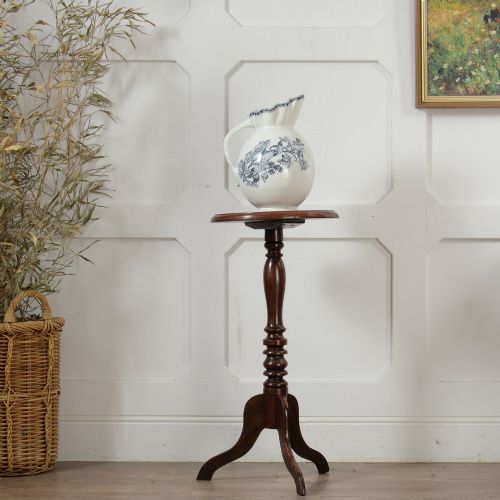
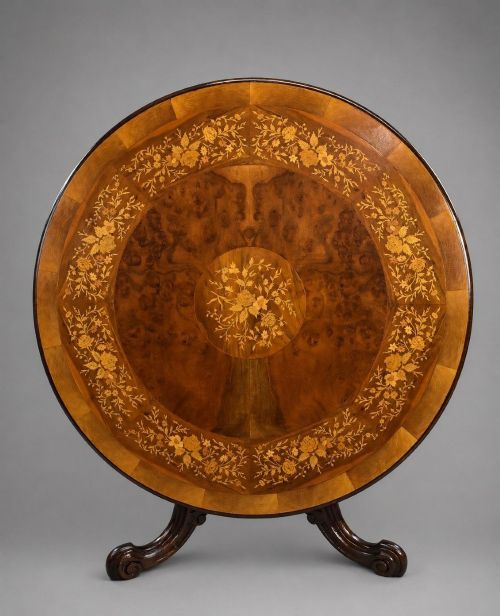
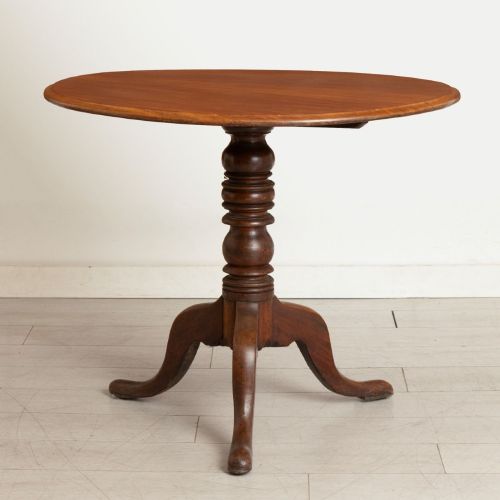
Round Top Accent Table
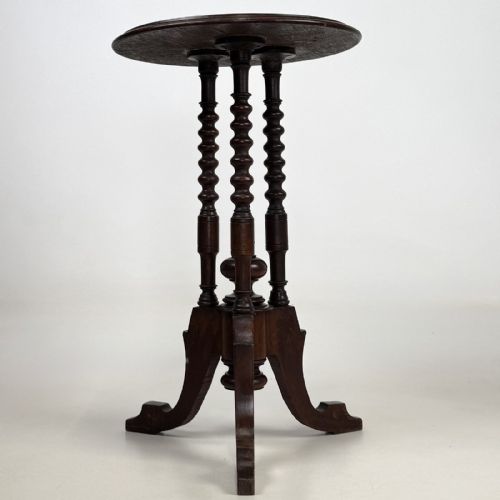
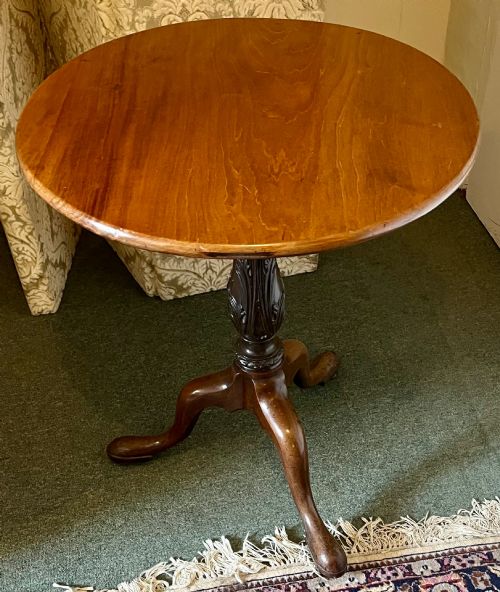
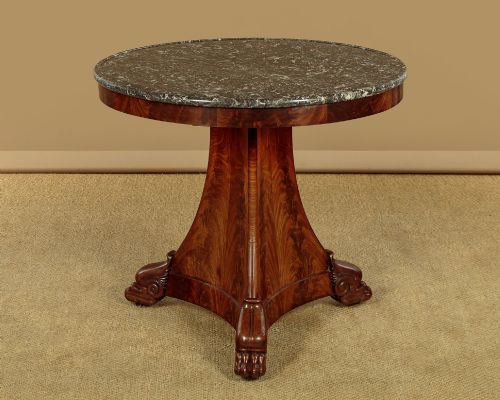
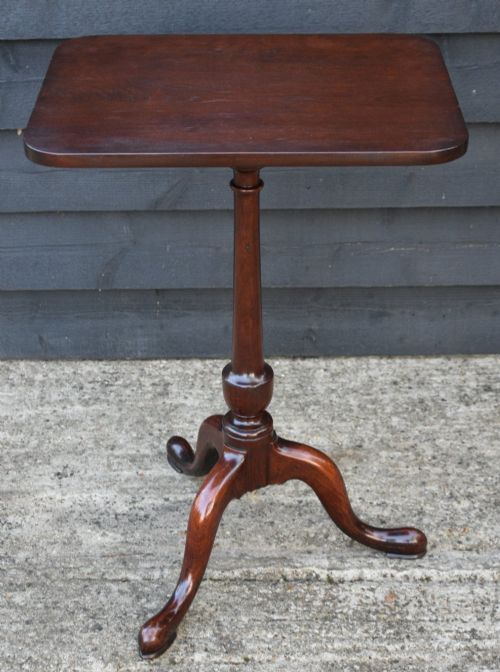
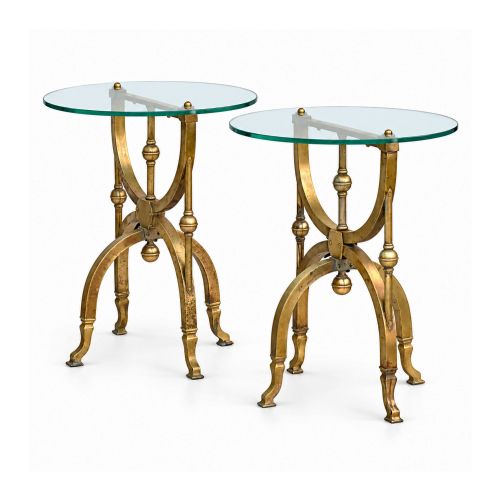
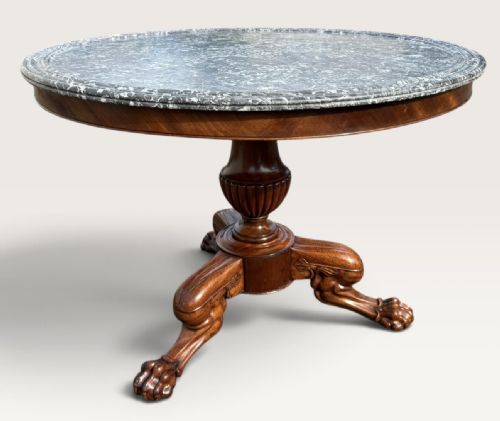
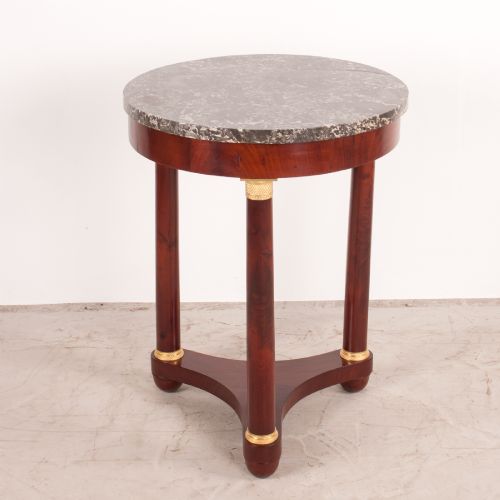
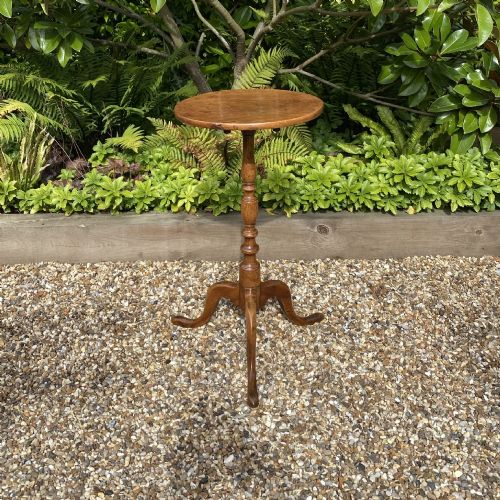
Round top accent table selections offer compact circular surfaces spanning Georgian, Victorian, and later eras in mahogany, oak, and marble.
Round Top Accent Table
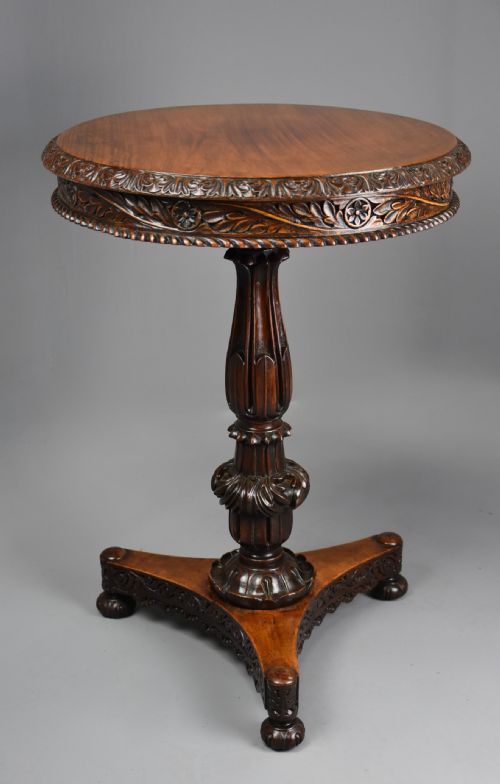
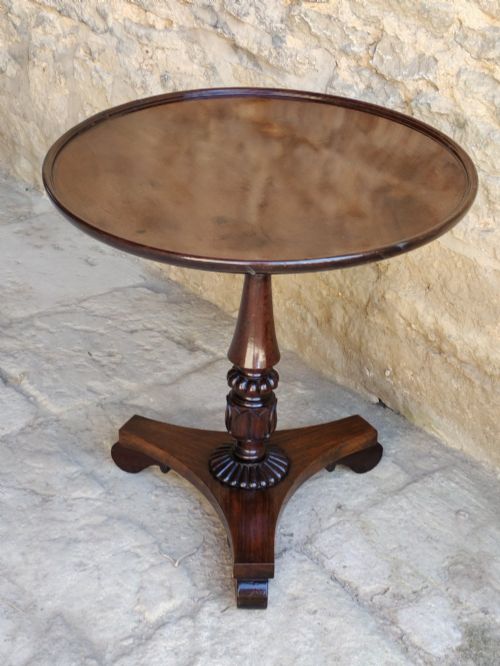
A round top accent table serves as a versatile small-scale surface for lamps, drinks, or display. The examples on this page encompass various historical periods, with Victorian and Georgian pieces appearing frequently alongside later 20th-century variations.
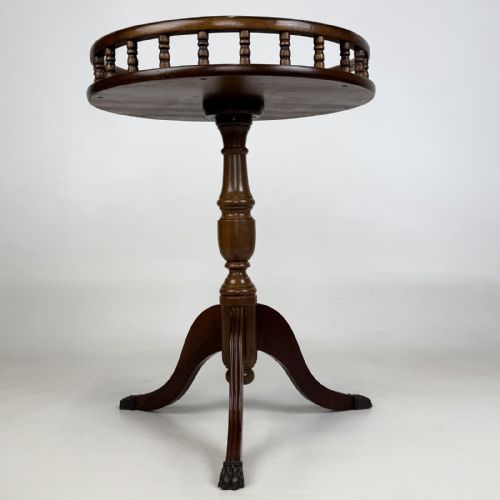
Forms range from compact wine tables and tripod cricket tables to larger centre tables and pedestal lamp tables. Many pieces feature tilt-top mechanisms or raised galleries designed to secure objects.
Origins span English workshops alongside continental European pieces such as French gueridons and Swedish supper tables. Materials reflect this breadth, moving from traditional hardwoods to marble and paint finishes.
Materials and construction
Makers utilised dense timbers including mahogany, walnut, oak, and rosewood, often pairing solid woods with burr veneers on circular tops. Some surfaces incorporate white marble or mother-of-pearl inlay.
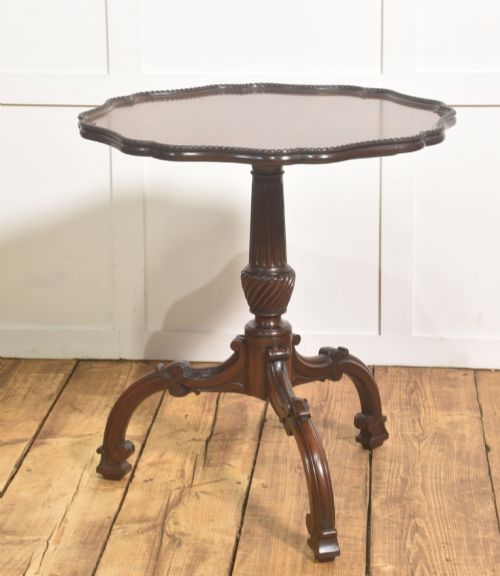
Tripod bases constructed with three legs joined to a central pedestal predominate, supported in certain instances by tilt mechanisms or birdcage assemblies that allow the top to pivot.
Round Top Accent Table Retail Price Guide 2026
Typical asking prices for round top accent table among the pieces listed under this phrase on Sellingantiques today, from the lower quarter to the upper quarter. They describe what is for sale here now, not the wider market.
Listings feature circular surfaces rendered in mahogany, oak, walnut, pine, marble, and paint across Georgian, Victorian, and Edwardian periods.
Distinctions in craftsmanship
Superior execution shows in the precision of the timber selection, such as matched burr walnut or figured mahogany, and the crispness of carved details on tripod legs and pedestals. Simpler regional pieces rely on honest utility rather than ornament.
The stability of the central column and the tight fit of tilt-top latches or birdcage pivots distinguish finer examples from standard functional tables.
The Round Top Accent Table Glossary
- Tripod table
- A small freestanding table supported by three legs radiating from a central pillar. These practical pieces became popular during the 18th century for serving tea or holding candlesticks.
- Tilt top
- A tabletop mounted on a hinge mechanism that allows the surface to fold vertical when not in use. This clever design saved valuable floor space in smaller rooms.
- Cricket table
- A sturdy three-legged occasional table with a round wooden top, traditionally used in domestic settings. The simple three-legged design ensured stability on uneven floors.
- Gueridon
- A small French occasional table or stand, often featuring a circular marble or wood top on a central pedestal. Originating in the 17th century, these forms persisted well into the Victorian era.
- Pie crust
- A carved, undulating raised rim fashioned along the perimeter of a circular tabletop. This decorative edging resembles pastry work and prevents items from sliding off.
Round Top Accent Table: Frequently Asked Questions
Where should I place a round top accent table?
These compact surfaces fit easily beside armchairs, in narrow hallways, or as bedside lamp stands where larger furniture fails to clear the space.
Their circular profiles help soften rigid room layouts and awkward corners.
What is a tilt top table used for?
Historically, tilt top tables were folded flat against walls or pushed into corners when not serving tea or holding lamps.
Today, this mechanism remains useful for storage flexibility or simply appreciating the decorative underside grain.
How do I identify a Georgian round top table?
Georgian examples typically feature rich mahogany or walnut timbers, slender turned pillars, and finely proportioned tripod legs without excessive ornament.
Construction details like hand-cut dovetails and pegged joints help confirm the period.
Can I use a marble top table for daily dining?
Marble top pieces such as gueridons handle hot cups and moisture well, making them resilient choices for daily lamp or drink stands.
Care should be taken with acidic liquids that might etch polished stone surfaces over time.