

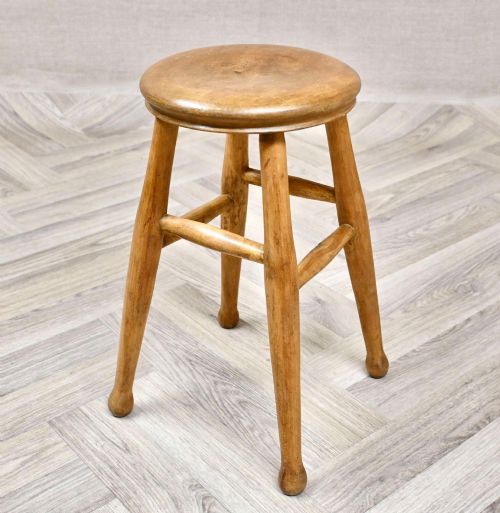
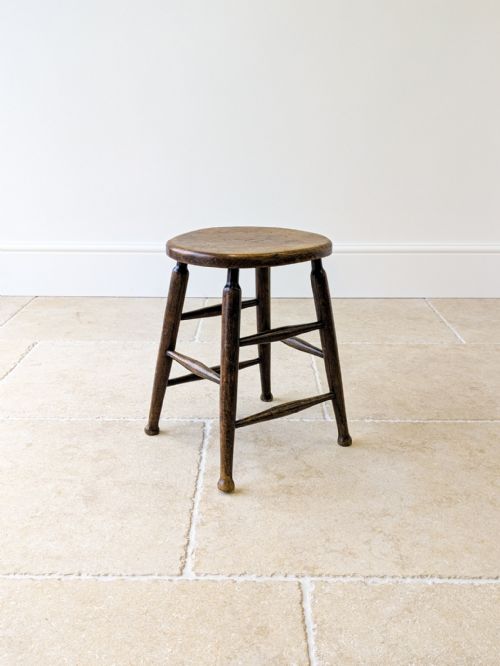
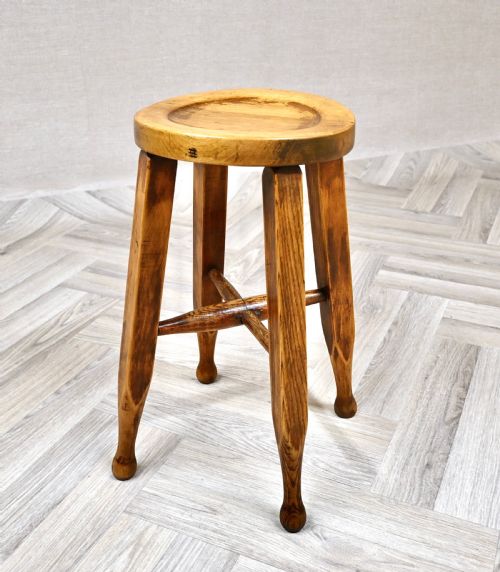


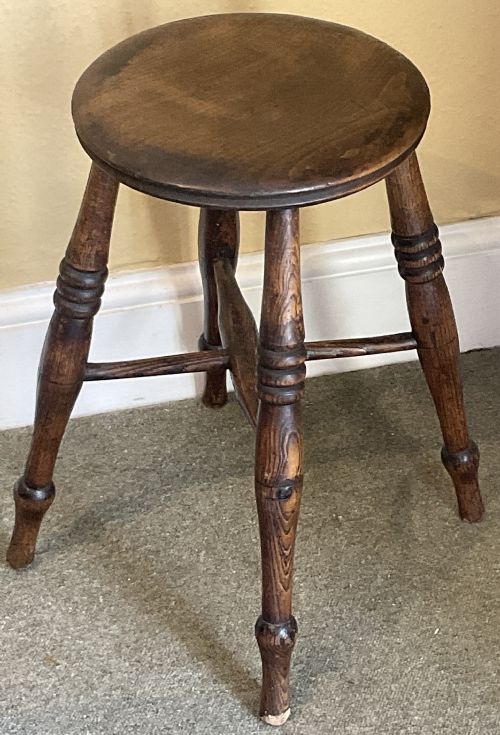


Round Seat Wooden Stool
A round seat wooden stool offers honest utility and simple charm, drawing collectors who appreciate honest grain and functional domestic design.
Round Seat Wooden Stool
When you search for a round seat wooden stool, you are looking at practical seating shaped for daily domestic use. These pieces range from simple country forms to adjustable studio seats and kitchen benches.
The versions you are most likely to meet on this page hail from the nineteenth century and the nineteen-twenties. They span English country styles, rustic farmhouse traditions, and occasional art deco interpretations.
Forms include piano stools, kitchen seating, and diminutive vernacular pieces with sculpted rounded tops. Oak, elm, beech, and mahogany appear frequently across these varied domestic objects.
How they were made
Joiners and makers utilised solid timbers such as oak, elm, ash, and mahogany for the primary structure and tops. Beech often served for turned legs, while iron appeared in mechanical adjustment mechanisms on piano stools.
Construction methods relied on traditional turning, carving, and jointing techniques suited to heavy daily wear. Bentwood methods also emerged in later twentieth-century production to create curved frames.
Round Seat Wooden Stool Retail Price Guide 2026
Typical asking prices for round seat wooden stool among the pieces listed under this phrase on Sellingantiques today, from the lower quarter to the upper quarter. They describe what is for sale here now, not the wider market.
Listings on this site span the nineteenth century, the Regency period, and nineteen-twenty, featuring oak, elm, beech, and mahogany.
What varies in quality
The refinement of the timber selection and the depth of the carving set exceptional examples apart from utilitarian ones. A sculpted seat with pleasing grain variation demonstrates greater care than a plain flat board.
Original joinery integrity and the smooth operation of mechanical adjustment mechanisms define the upper tier. Patina accumulated through decades of use adds character where surfaces remain honest and unoverhauled.
Gillows
The Round Seat Wooden Stool Glossary
- Windsor stool
- A traditional seat featuring legs wedged directly into a thick wooden seat bottom. This method creates a robust and stable frame common in country furniture.
- Vernacular
- Objects built by local tradesmen for everyday tasks rather than following high-style academic designs. These pieces often reflect regional resource availability and practical needs.
- Bentwood
- Wood softened by steam and bent into curved structural forms under pressure. This technique allows for lightweight yet resilient frames.
- Regency
- A British design period spanning the early nineteenth century defined by classical restraint and elegance. Furniture from this era often incorporates fine hardwoods like mahogany.
Round Seat Wooden Stool: Frequently Asked Questions
What is a round seat wooden stool?
It is a compact, portable seat featuring a circular wooden top supported by three or four legs. These items served practical purposes in kitchens, workshops, and music rooms.
They appear in various woods including oak, elm, and beech, reflecting the domestic needs of the nineteenth and early twentieth centuries.
How do I date a wooden stool?
Dating relies on observing tool marks, timber choice, construction methods, and general wear patterns. Nineteenth-century examples often show hand-turned spindles and adzed seat tops.
Later pieces from the nineteen-twenties introduce machine-turned components and bentwood techniques. Comparing these traits to documented periods provides a reliable estimate.
Were piano stools different from kitchen stools?
Piano stools often incorporated mechanical screws for height adjustment to suit different players. They frequently utilised finer timbers like mahogany and featured carved details.
Kitchen stools favoured sturdy woods like beech or elm built for heavier domestic labour. Their designs prioritised simple stability over adjustable comfort.
How should I care for antique wood?
Keep wooden stools away from direct heat sources and dramatic humidity shifts to prevent timber splitting. Regular gentle dusting preserves the natural surface sheen.
Applying a traditional beeswax polish occasionally helps nourish dry timber without building up heavy chemical layers. Allow the historic patina to show its natural age.