


Round Marble Top Pedestal
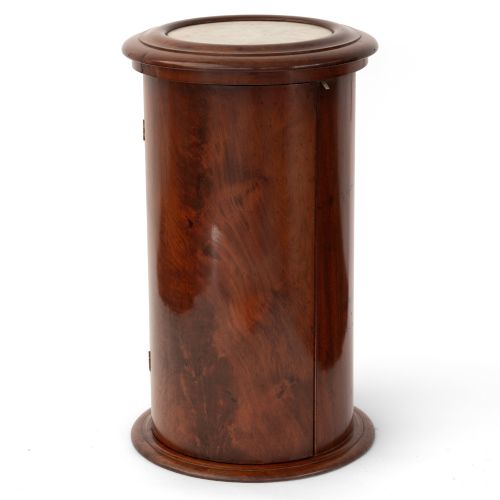
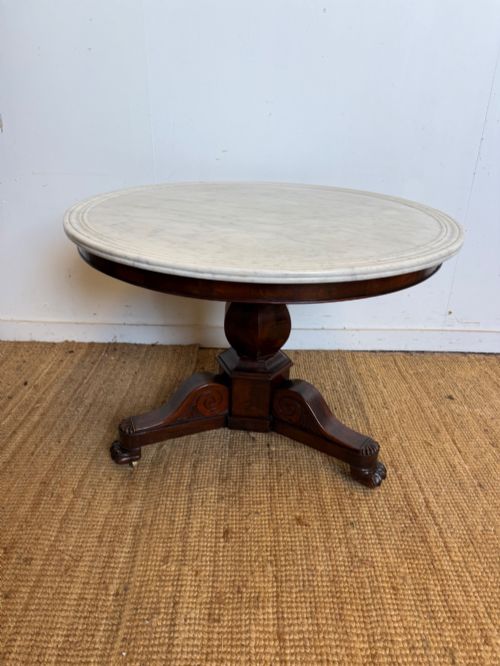
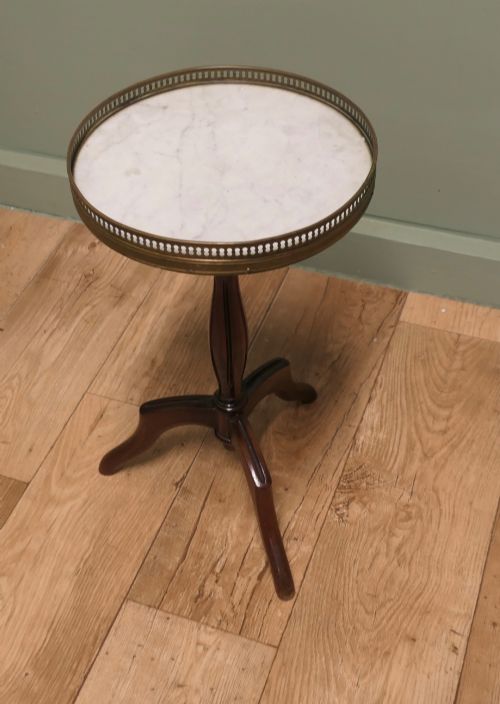
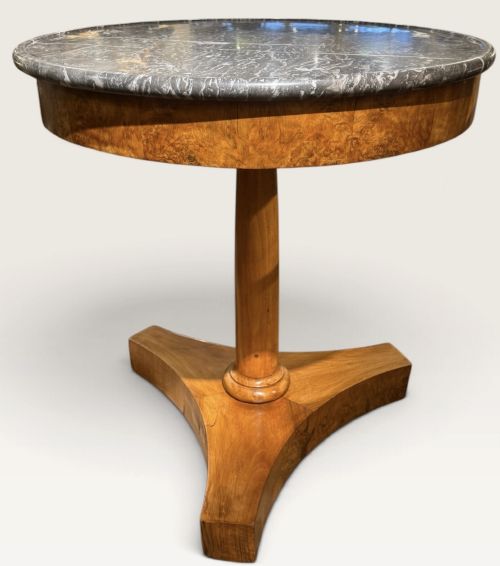
A round marble top pedestal brings solid stone surfaces and timber columns together in compact forms spanning the nineteenth century.
Round Marble Top Pedestal
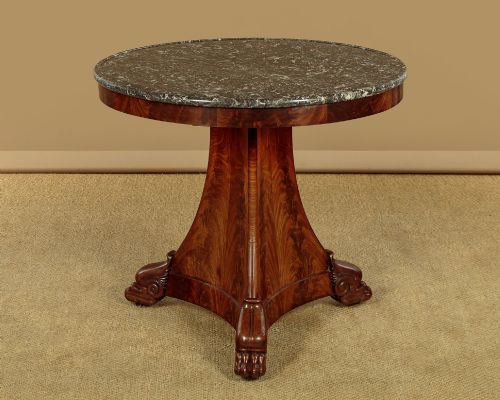
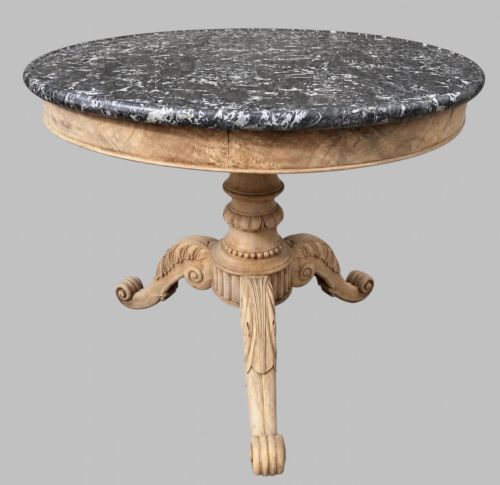
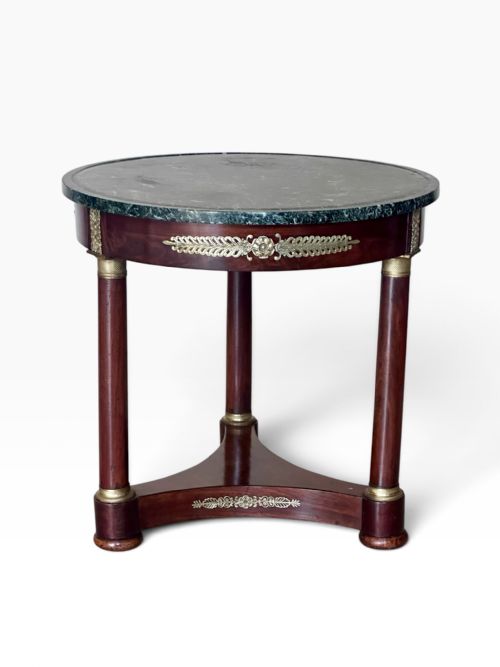
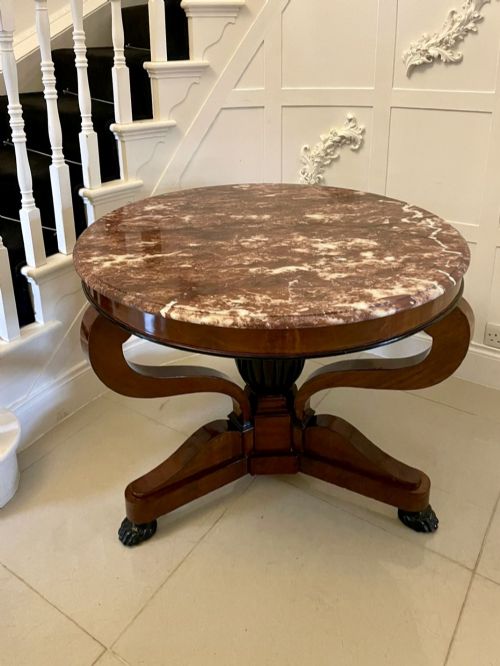
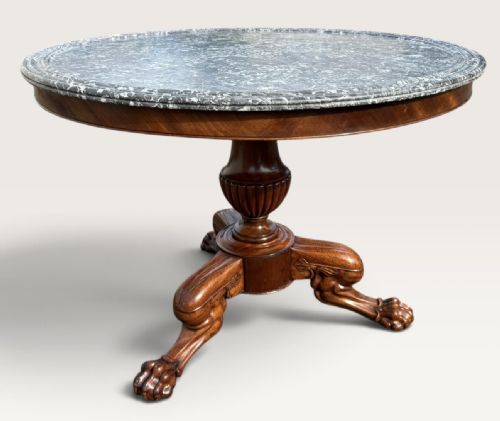
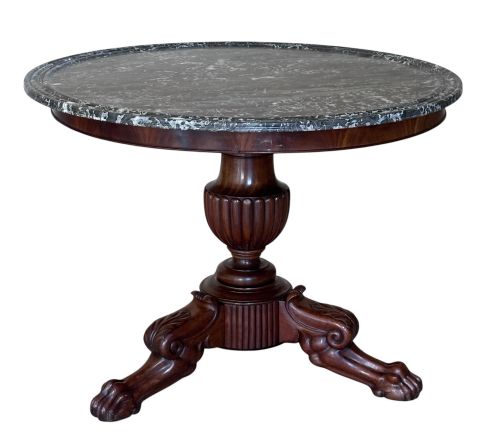
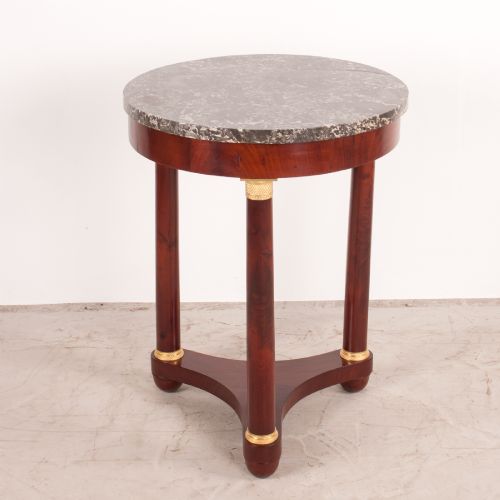
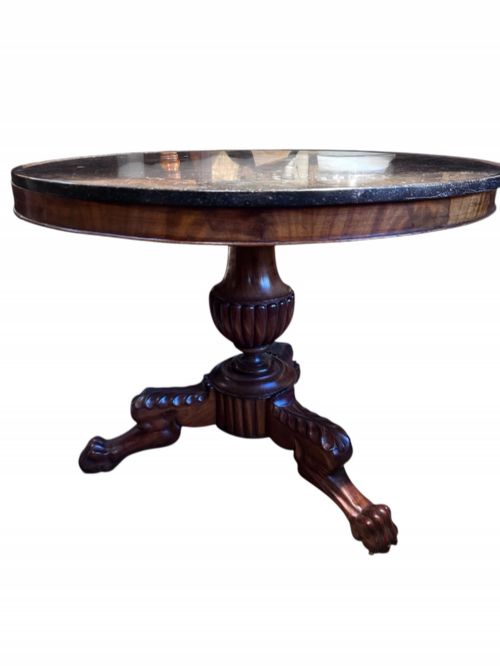
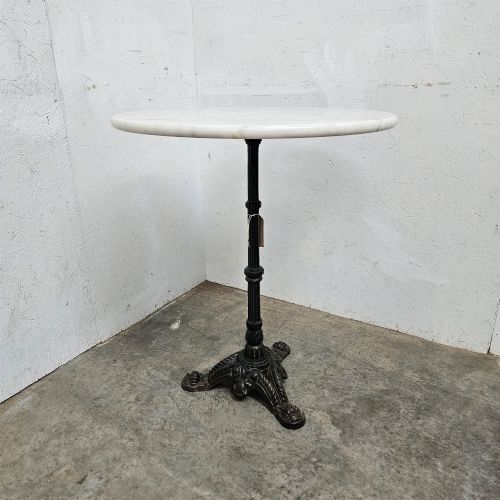
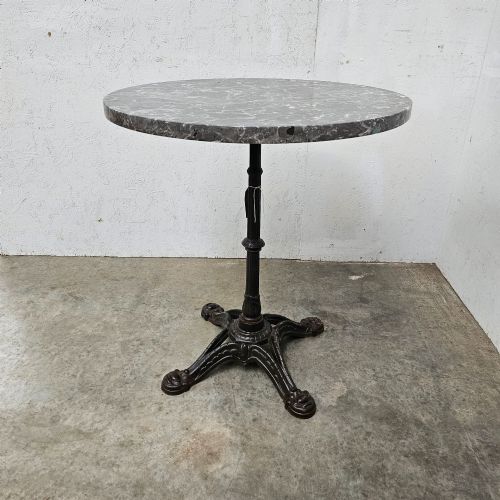
A round marble top pedestal encompasses tables designed with central supports and circular stone tops, appearing frequently as gueridons, centre tables, and occasional tables. These pieces emerge predominantly from French workshops across the nineteenth century, utilising mahogany, walnut, and cast iron structures.
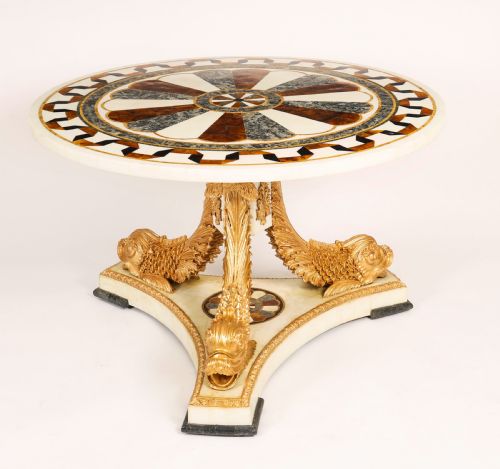
Buyers encounter French Empire, Louis Philippe, and bistro variations among the listings, ranging from heavy mahogany centre tables with figurative mounts to slender cast iron cafe tables. The core form relies on a single central pillar rising to support a heavy circular stone slab.
Proportions shift from grand reception rooms to domestic chambers, creating versatile surfaces suited for lamps, plants, and serving. The integration of marble with wood or metal provides a durable top impervious to liquid rings.
Assessing quality in construction and material
Superior examples reveal themselves in the selection of figured timber veneers and the precise figuring of the marble top. The weight and grain of the stone, alongside the crispness of cast bronze or carved wooden mounts, distinguish refined workshop production from standard commercial output.
Structural integrity depends on the central column remaining plumb and securely joined to the base and top without wobble. Cabinetwork reveals quality through tight joints, original mounts, and the absence of crude repairs to the timber core.
Round Marble Top Pedestal Retail Price Guide 2026
Typical asking prices for round marble top pedestal among the pieces listed under this phrase on Sellingantiques today, from the lower quarter to the upper quarter. They describe what is for sale here now, not the wider market.
Listings feature 19th Century, Regency, and 1920 periods alongside materials like mahogany, marble, brass, and cast iron.
The Woodley family
The Round Marble Top Pedestal Glossary
- Gueridon
- A small French table supported by a central column or figures. The form originated in the seventeenth century and remained popular throughout the nineteenth century.
- Ormolu
- Gilded bronze applied as decorative mounts on furniture. It provides metallic contrast against dark mahogany and marble surfaces.
- Specimen marble
- A top composed of various coloured marbles arranged in geometric or pictorial patterns. This technique demonstrates high stone-masonry skill.
- Flame mahogany
- Timber cut to display a flickering grain pattern resembling flames. Cabinetmakers reserved this veneer for prominent surfaces on high-status tables.
Round Marble Top Pedestal: Frequently Asked Questions
What rooms suit a round marble top pedestal?
These tables adapt well to entrance halls, reception rooms, and conservatories where a compact footprint is required. Their stone surfaces tolerate everyday use while providing a stable platform for display.
Placing them away from direct foot traffic preserves the timber columns and prevents accidental knocks to the overhang of the heavy stone tops.
How do I care for the marble top?
Routine cleaning requires only a damp cloth and mild soap to remove dust and minor marks. Avoid acidic liquids like vinegar or wine, which can etch polished stone surfaces.
Applying a specialist stone wax periodically helps maintain the sheen and protects the porous surface from staining over decades of daily domestic life.
How do I distinguish French Empire from Victorian examples?
French Empire pieces often incorporate architectural symmetry, bronze mounts, and classical motifs such as swans or rams' heads. They date heavily from the early nineteenth century.
Victorian interpretations tend to show broader domestic utility, appearing frequently as bedside cabinets or simpler occasional tables with turned wooden columns.
Are these tables heavy to move?
The combination of dense timber frames and thick stone tops gives these pieces substantial weight. The majority of the mass concentrates in the marble slab and the weighted base.
Lifting requires two people to separate the top from the pedestal where possible, preventing strain on the central fixing joint during relocation.