





Round Edwardian Tea Table
These round Edwardian tea table pieces offer useful circular surfaces for a modern sitting room, drawn mainly from the Edwardian period in mahogany and walnut.
Round Edwardian Tea Table
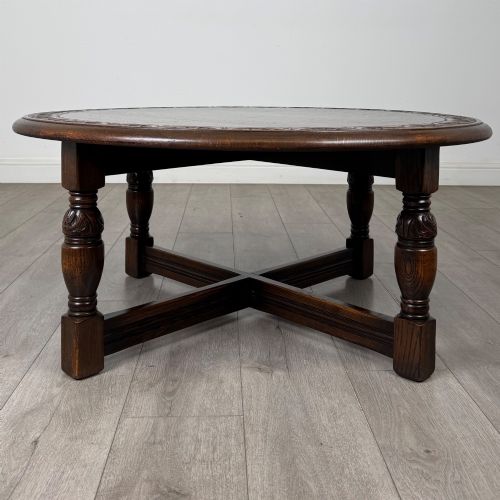
When you search for a round edwardian tea table, you encounter circular occasional, coffee, and centre tables originating predominantly from the Edwardian era alongside pieces from the nineteenth and early twentieth centuries. These timber tables serve as versatile low stands or tea furniture within a room.
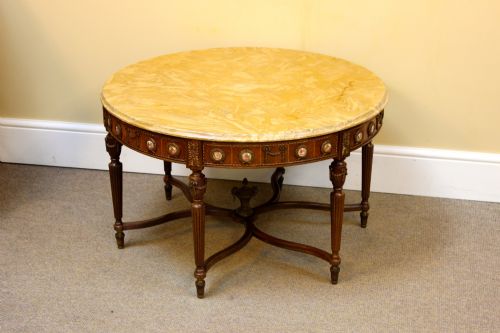
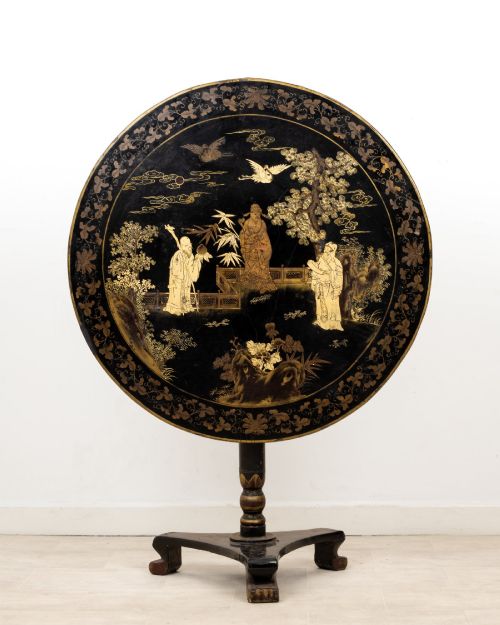
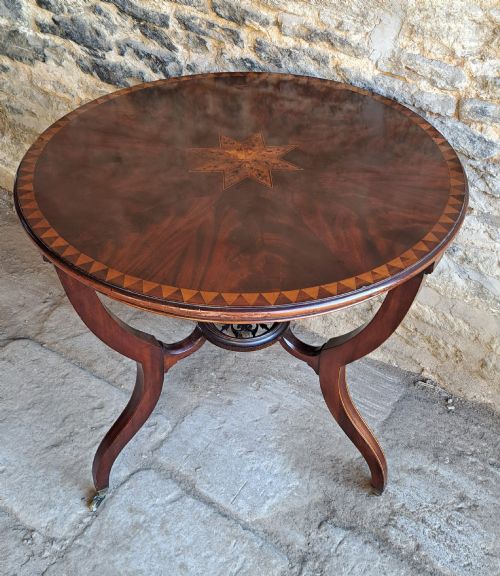
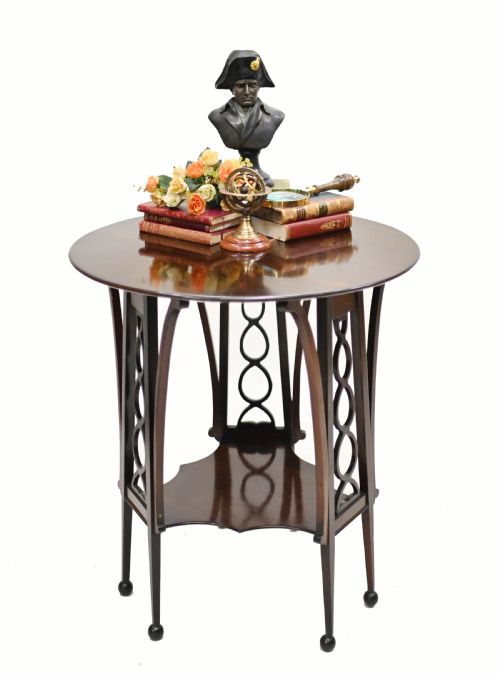
The most common examples on this page are Edwardian mahogany and walnut occasional tables, often featuring circular tops and inlaid decoration. Other variations include tripod supports, marble inserts, and revival styles.
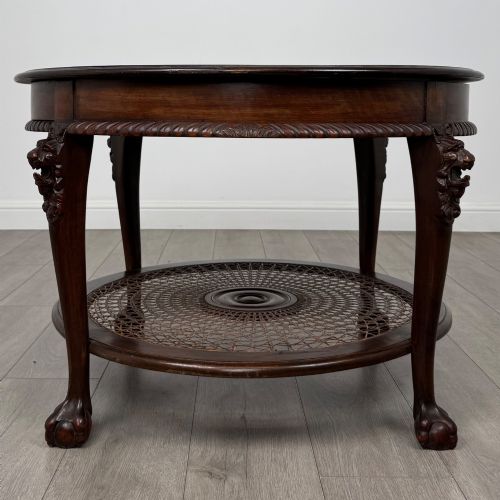
Makers and manufacturers during these periods produced these tables in various forms, ranging from plain occasional stands to elaborate Chippendale revival centre tables with carved edges.
How they were made
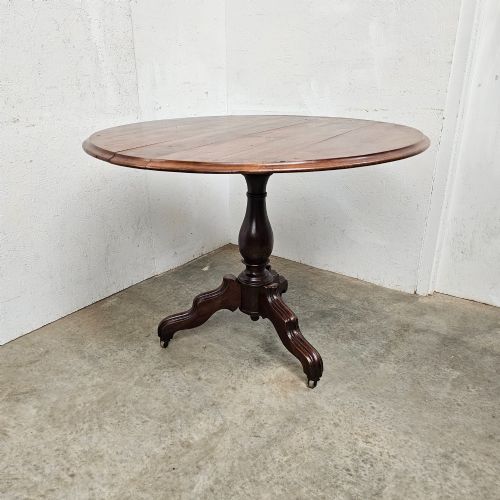
Cabinet makers utilised solid timbers and veneers such as mahogany, walnut, satinwood, and burr walnut for these circular tables. Tops were frequently shaped from single boards or supported by three-legged tripod frames.
Inlay work incorporated boxwood and contrasting woods to create geometric patterns or floral motifs on the table surfaces. Some examples also integrated brass fittings and marble tops.
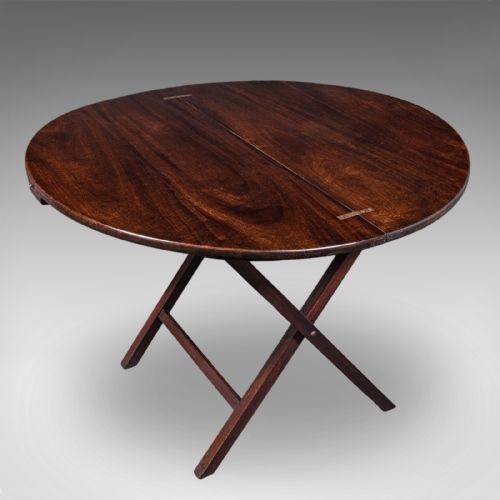
Carved details such as pie crust edges and tripod legs required skilled hand woodworking, while folding mechanisms allowed certain tables to function as coaching or garden furniture.
What varies in quality
The grade of timber selection marks a clear division, with figured burr walnut and finely grained mahogany sitting above standard woods. Figured veneers and detailed boxwood inlay require greater skill in execution.
Construction methods determine durability, separating simpler turned tripod tables from elaborately carved Chippendale revival centre tables. Hand-carved pie crust borders and solid brass mounts reflect higher workshop standards.
The Round Edwardian Tea Table Glossary
- Tripod table
- A small circular table supported by a central pillar on three legs. These versatile stands became popular for serving tea or displaying objects.
- Pie crust edge
- A raised, carved moulding around the circumference of a table top that resembles pastry work. This decorative border appears on fine mahogany coffee and tea tables.
- Inlay
- A technique where contrasting woods or materials like boxwood and satinwood are inserted into recesses in the primary timber. This creates decorative patterns on table tops.
- Occasional table
- A small, moveable table designed for intermittent use in a principal room. They function as lamp, tea, or side stands.
- Centre table
- A freestanding table finished on all sides to stand in the middle of a room rather than against a wall. These often feature decorative carving or inlay.
Round Edwardian Tea Table: Frequently Asked Questions
What is a round edwardian tea table used for?
These tables were originally designed for serving afternoon tea in polite society.
Today, buyers frequently utilise them as coffee tables, lamp stands, or decorative side tables in sitting rooms.
How do I identify an Edwardian table?
Edwardian tables typically date from the reign of King Edward VII and are characterised by lighter timbers, graceful proportions, and often satinwood or boxwood inlay.
They frequently draw upon earlier historical styles such as Chippendale and Sheraton while remaining lighter in build than heavy Victorian furniture.
Are these tables suitable for daily use?
Most of these circular tables are structurally sound and handle normal daily living well when treated with standard care for antique wood.
Tables with delicate inlay or polished veneer surfaces benefit from coasters and gentle cleaning methods to preserve the finish.
What timber types should I expect?
Mahogany and walnut form the majority of the examples seen on this page, often appearing with figured grain patterns.
Satinwood, oak, and burr walnut also occur, occasionally complemented by marble tops, brass fittings, or boxwood stringing.