




Round Cut Solitaire
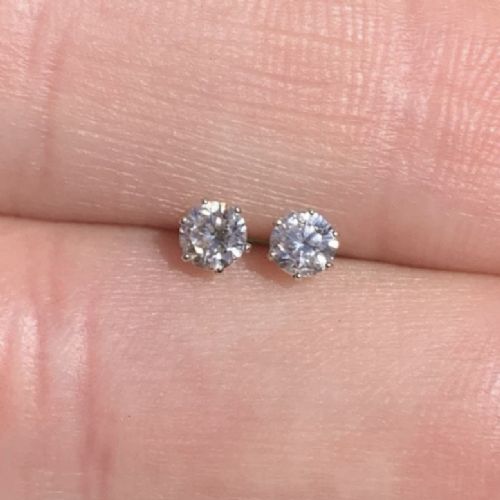
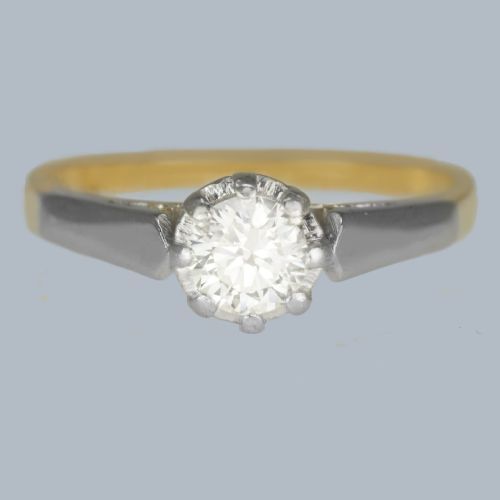
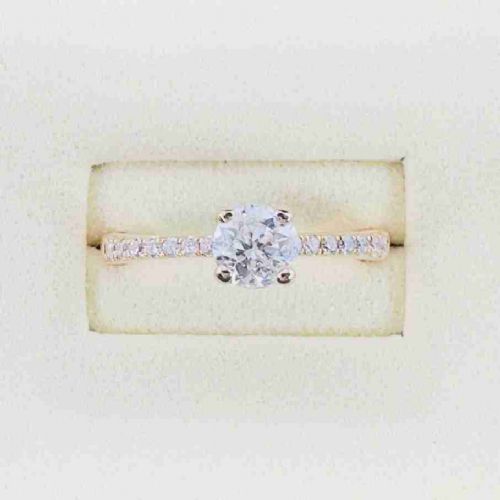
A round cut solitaire focuses attention entirely on a single stone, presented across rings, earrings, and pendants spanning Victorian to mid-century decades.
Round Cut Solitaire
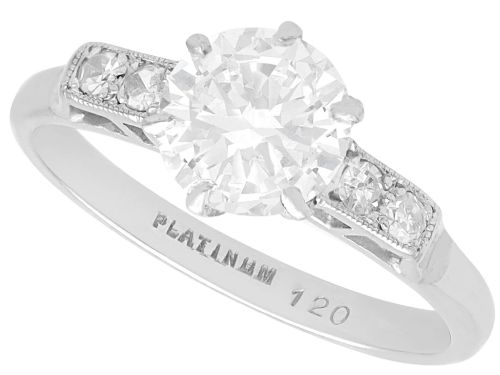
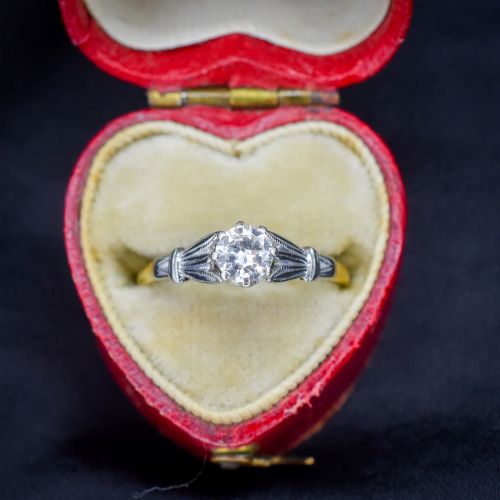
Engagement rings dominate the selection, often paired with platinum or 18ct yellow and white gold bands. Pieces range from delicate Victorian and Edwardian examples to bolder mid-century designs carrying substantial carat weights.
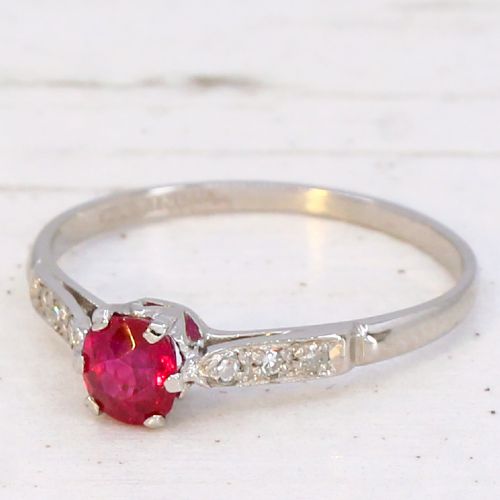
Alternative central stones such as blue zircon, alexandrite, ruby, garnet, and sapphire appear alongside traditional diamonds. These coloured stone variations offer distinct character while maintaining the clean, single-stone configuration.
Materials and construction
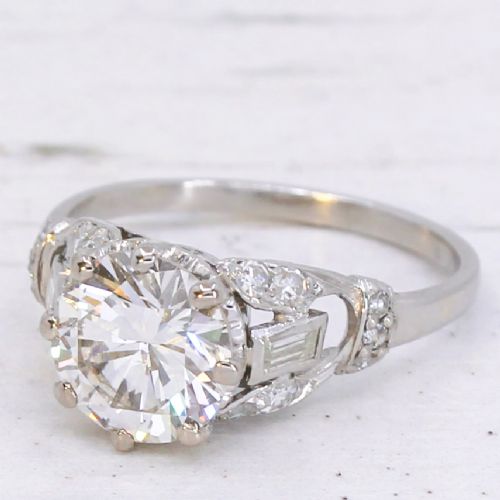
Platinum emerged as a favoured mounting material during the Art Deco period, valued for its strength and ability to hold stones securely with minimal metalwork. Gold in 18ct, 14ct, and 9ct specifications appears across yellow, white, and rose hues, particularly in earlier Victorian and later vintage pieces.
Stone cutting methods evolved from old European and old cut diamonds in Victorian and Edwardian work to transitional and modern brilliant cuts by the mid-century. Settings incorporate bezel mounts, claw prongs, and occasionally shoulder diamonds or rose cut accents to frame the central gem.
Round Cut Solitaire Retail Price Guide 2026
Typical asking prices for round cut solitaire among the pieces listed under this phrase on Sellingantiques today, from the lower quarter to the upper quarter. They describe what is for sale here now, not the wider market.
Some mid-century rings hide tiny rose cut diamond shoulders that wink quietly beside the main stone.
Quality variations
Quality depends heavily on the integration between the central stone and its metal setting. Master craftsmanship appears in the precision of the claw work or the seamless wrap of a platinum bezel, ensuring the stone sits securely without obscuring light entry.
The inherent optical properties of the central gemstone dictate visual impact, where precise facet symmetry in older transitional or brilliant cuts maximises brilliance. The weight and grade of the precious metal housing further establish the tier of the piece.
The Round Cut Solitaire Glossary
- Solitaire
- A piece of jewellery featuring a single mounted gemstone. This design highlights the character of the primary stone without distraction from side stones.
- Old Cut
- A general term for diamond cutting styles predating the modern brilliant cut, typically characterised by smaller tables and higher crowns. These stones display a distinctive, softer scintillation under candlelight.
- Bezel
- A method of setting where a thin strip of metal wraps around the perimeter of the gemstone to hold it in place. This technique offers robust protection for the stone edge.
- Transition Cut
- A diamond cutting style used roughly between the old European cut and the modern brilliant cut. It combines the smaller table of older stones with the increased facet count of modern counterparts.
- Shoulder
- The upper portion of a ring band as it approaches the central setting. These areas sometimes feature smaller accent diamonds or engraved detailing.
Round Cut Solitaire: Frequently Asked Questions
What defines a round cut solitaire?
A round cut solitaire is defined by a single circular gemstone mounted independently on a ring, pendant, or earring. The setting prioritises the central stone above all else.
Designs in this category span multiple decades, incorporating various gold purities and platinum alongside diverse diamond cuts.
How do I identify an Art Deco solitaire?
Art Deco solitaires often feature geometric platinum settings, sometimes accented with smaller side diamonds or clean, linear shoulders. The aesthetic favours architectural precision and strong lines.
These pieces typically date from the 1920s and 1930s, contrasting with the softer curves of earlier Victorian or Edwardian jewellery.
What is the difference between old cut and brilliant cut?
Old cut diamonds feature hand-cut facets with smaller tables and larger culets, producing a deeper, chunkier pattern of light reflection. Brilliant cuts developed later to maximise modern optical return and brilliance.
Older cuts provide a distinct historical charm and softer glow compared to the precise geometry of mid-century brilliant cuts.