

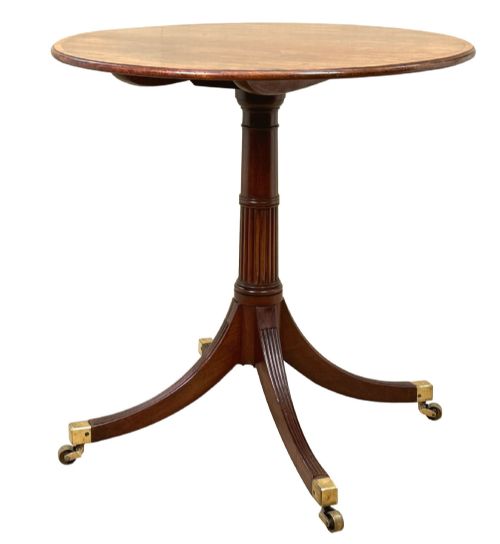
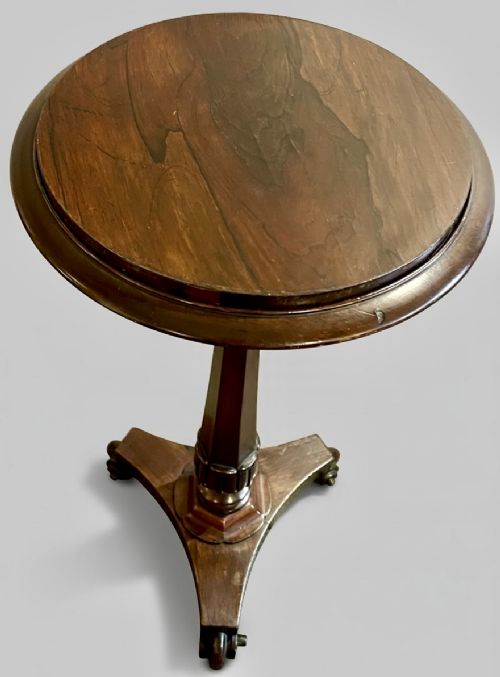
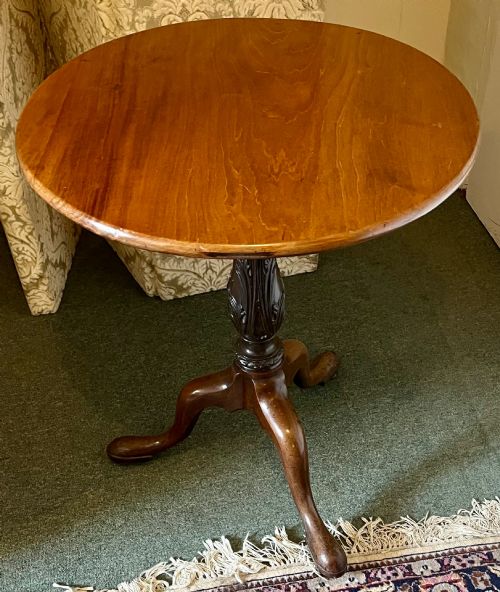
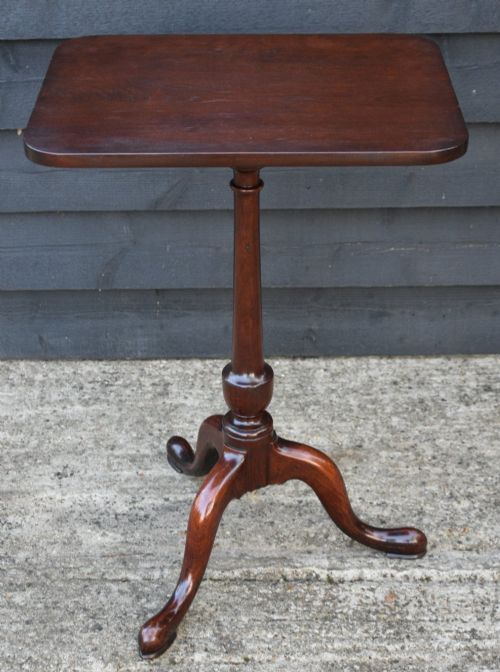
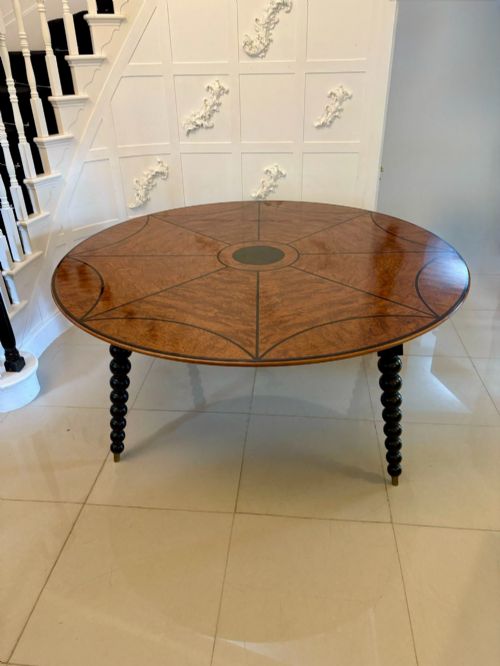
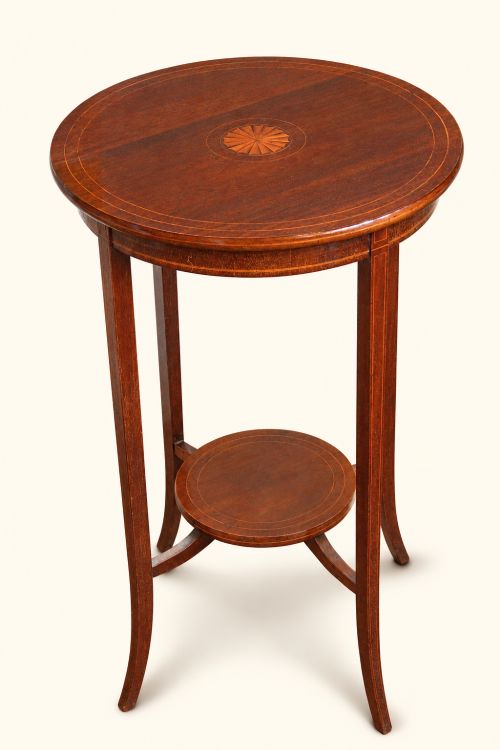

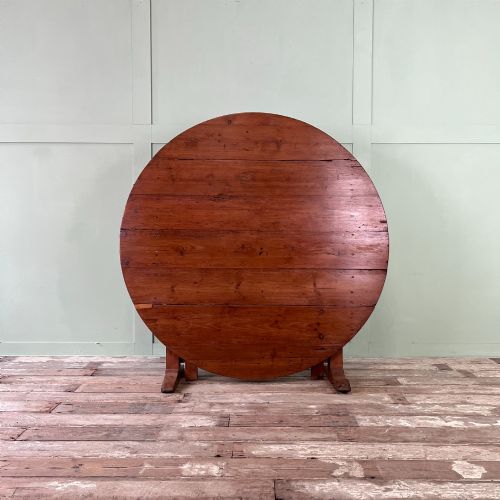
Round Brown Wooden Table
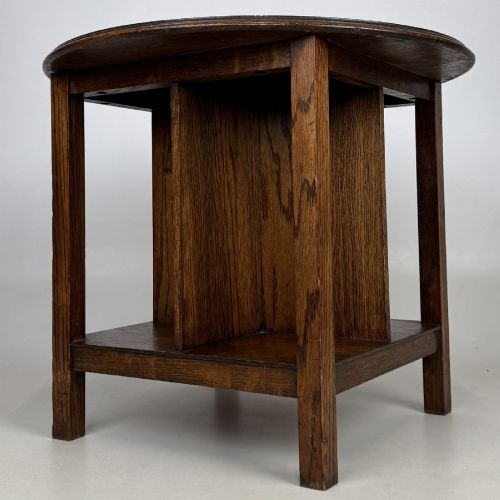
A round brown wooden table anchors a room with its practical circle and warm timber tones.
Round Brown Wooden Table
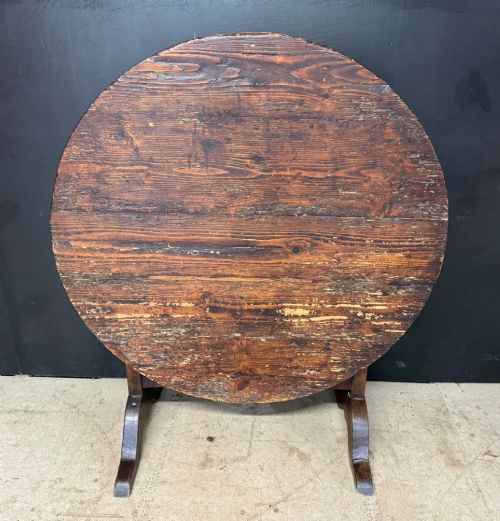
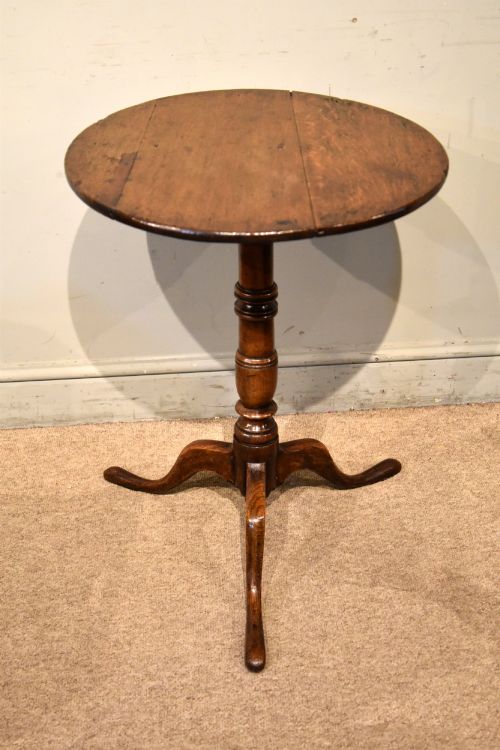
A round brown wooden table spans utilitarian surfaces and formal furniture, appearing across the Georgian, Victorian, and Edwardian periods. Buyers seeking a round brown wooden table will encounter compact wine tables, tilt-top tripod designs, and substantial dining or centre tables designed for everyday use.
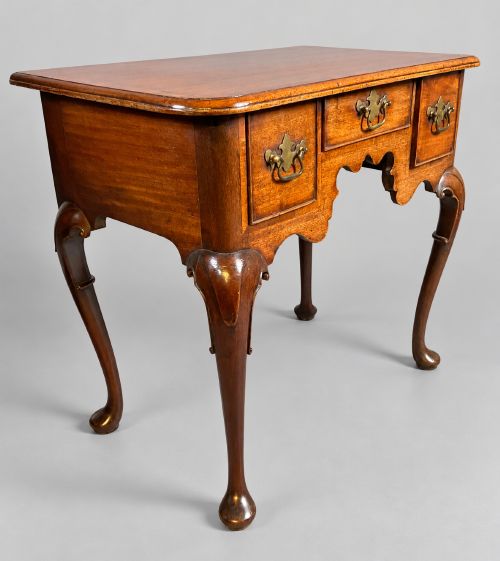
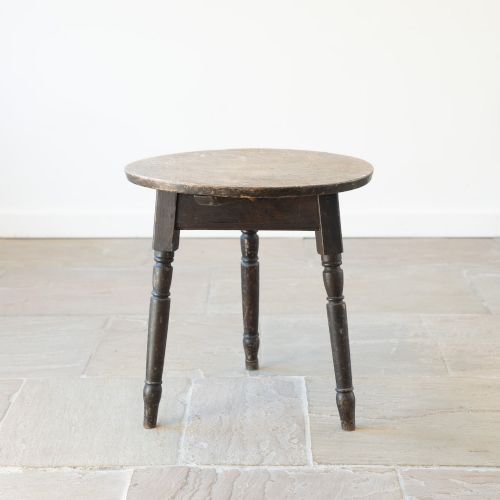
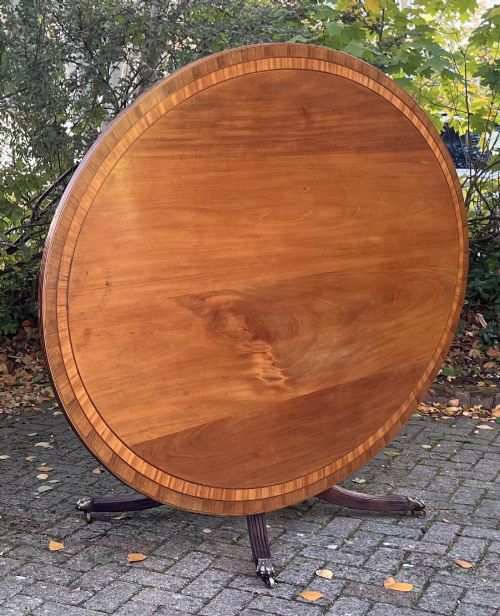
The selection ranges from country-made oak cricket tables to finely crossbanded mahogany breakfast tables and rosewood pieces. Smaller occasional and lamp tables dominate the forms, alongside larger French provincial and English dining examples.
Origins stretch from English workshops to French provincial makers and Anglo-Indian export studios, utilising native and exotic timbers. Each piece reflects the domestic habits and craftsmanship of its respective decade, from the eighteenth century through to the 1930s.
How they were made
Cabinet makers relied primarily on mahogany, oak, walnut, and fruitwood, often selecting figured timbers like burr pollard oak or rosewood for decorative surfaces. These woods were shaped into solid tops, turned pedestals, and tripod bases using traditional joinery and lathe work.
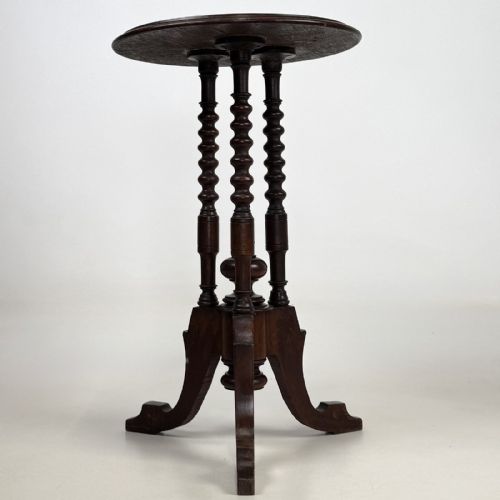
Surface enhancement involved inlay, marquetry, and crossbanded borders utilising contrasting woods such as ebony. Turning techniques produced distinctive structural elements like bobbin legs, barley twist pillars, and pedestal columns.
Construction methods varied from folding coaching mechanisms and tilt-top pivots to fixed pedestal bases and sturdy four-legged frames. Finish was traditionally achieved through polishing and waxing to highlight the natural grain of the hardwood.
Round Brown Wooden Table Retail Price Guide 2026
Typical asking prices for round brown wooden table among the pieces listed under this phrase on Sellingantiques today, from the lower quarter to the upper quarter. They describe what is for sale here now, not the wider market.
The selection includes regional variations such as French provincial elm tables, Anglo-Indian carved pieces, and English cricket tables.
What varies in quality
Quality rests upon the choice of timber and the sophistication of its preparation, where figured veneers and dense hardwoods like mahogany separate standard furniture from exceptional pieces. The handling of secondary woods and the precision of inlaid details further distinguish workshop standards.
Proportion and structural harmony dictate the visual success of pedestal and tripod designs, where the weight of the top must balance the span of the feet. Finer examples display considered turning on columns and crisp carving on legs rather than utilitarian assembly.
The integrity of mechanisms, such as tilt-top catches and folding hinges, demonstrates the original maker's skill and subsequent care. Original surfaces that retain their depth of colour outrank later stripped and refinished alternatives.
The Round Brown Wooden Table Glossary
- Tilt-top
- A hinged table top that folds vertically to allow the piece to be stored against a wall when not in use. This mechanism is frequently found on nineteenth century wine and breakfast tables.
- Tripod base
- A supporting structure featuring three legs radiating from a central pillar. It provides stability on uneven domestic floors.
- Cricket table
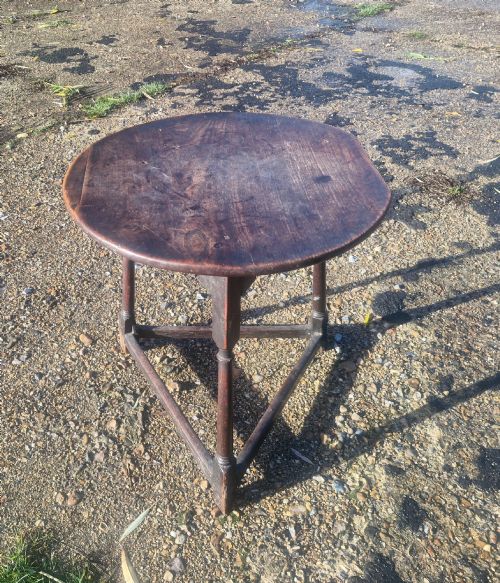
- A small, sturdy round table with three legs, traditionally constructed from oak. The design dates back to earlier centuries for domestic utility.
- Crossbanding
- A narrow strip of veneer applied to the border of a table top with the grain running perpendicular to the centre. It creates a defined visual frame.
- Bobbin leg
- A turned furniture leg shaped to resemble a string of beads or bobbins placed end to end. This decorative turning appears frequently on nineteenth century pieces.
Round Brown Wooden Table: Frequently Asked Questions
What is a wine table used for?
Wine tables served as small, movable surfaces for holding glasses and bottles during evening gatherings in period homes.
Their compact circular tops and portable tripod bases allowed them to be positioned easily beside seating areas.
How do I identify a Georgian table?
Georgian tables typically display solid timber construction, classic proportions, and understated decorative elements such as mahogany veneers or simple tripod legs.
Examining the underside and joint construction reveals the hand-working methods characteristic of the eighteenth century.
Where should I place a centre table?
Centre tables are designed to stand free in the middle of a room rather than pushed against a wall, making them ideal for entrance halls or large living spaces.
They offer a 360-degree view of the timber grain and pedestal turning.
What is a tilt-top mechanism?
A tilt-top mechanism uses a hinged block beneath the table surface that allows the top to lock flat or swing upright.
This practical feature enabled servants to clear floor space quickly in smaller period rooms.