

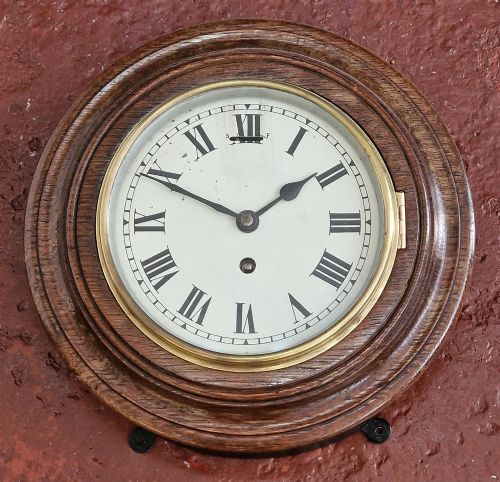

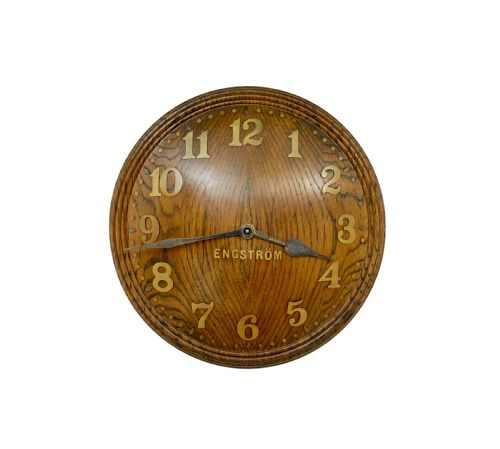


Round Brass Wall Clock
A round brass wall clock brings reliable mechanical movement and clear dial design into domestic and public spaces alike.
Round Brass Wall Clock
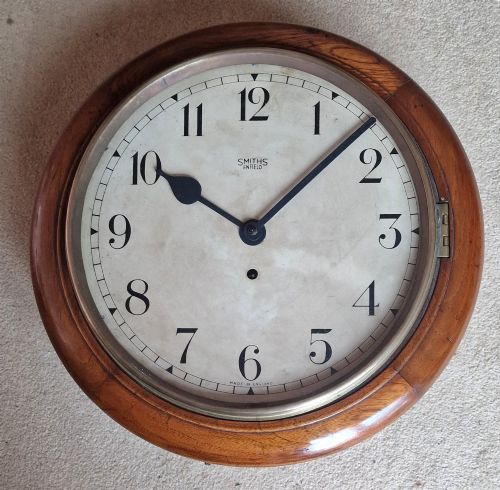
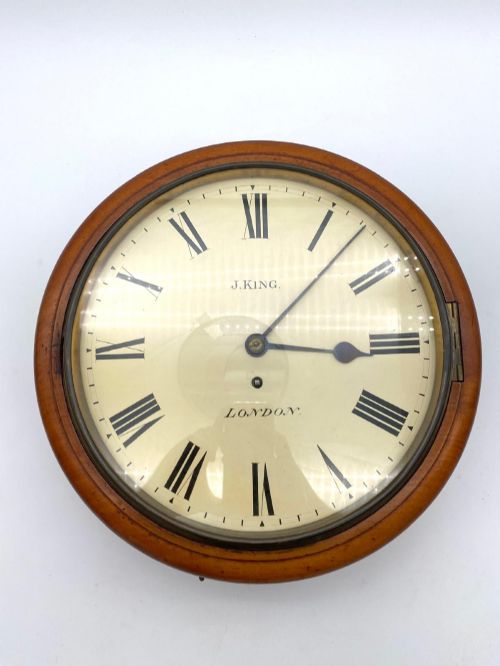
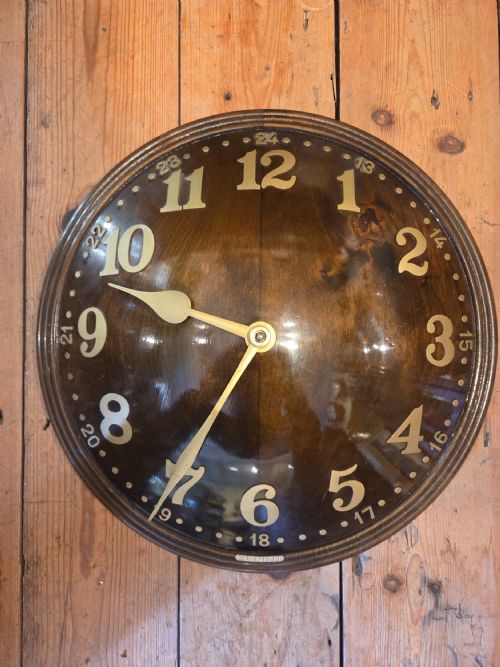
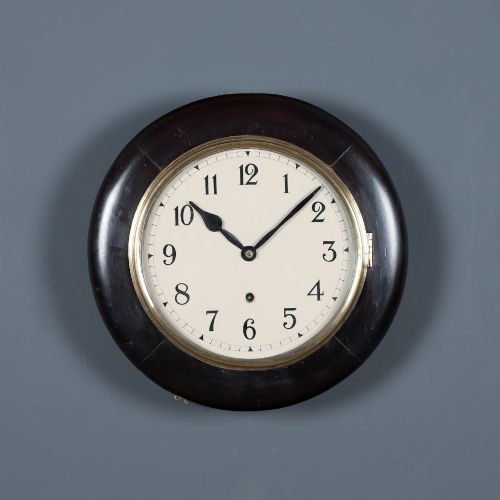
A round brass wall clock unites a circular metal bezel with a timber or metal case designed to hang securely at eye level. These timepieces stem from periods ranging through the nineteenth and twentieth centuries, taking forms that served offices, railways, stations and schools.
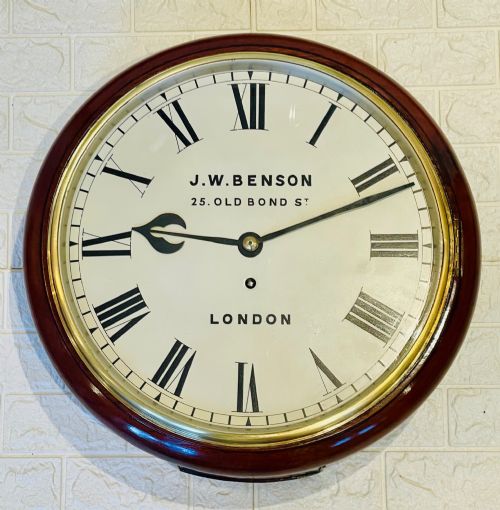
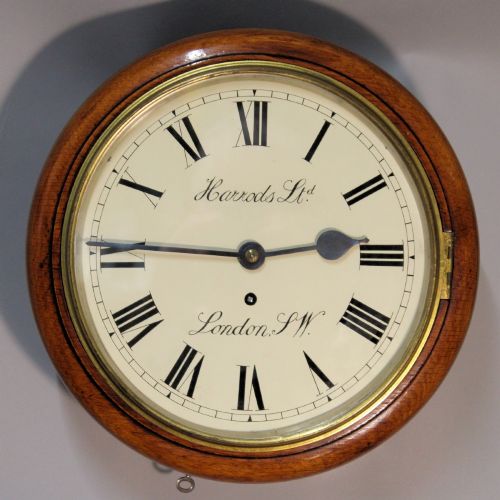
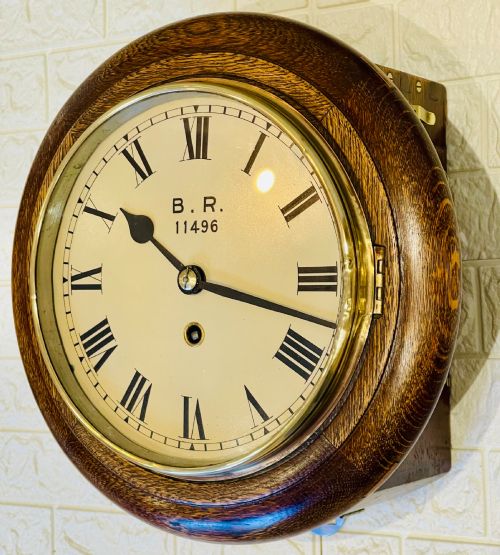
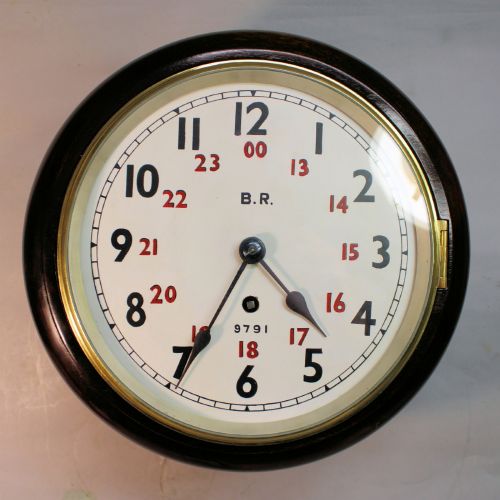
The versions most common here combine a substantial circular dial with robust fusee movements housed in mahogany, oak or walnut surrounds. Examples span simple utilitarian timepieces to refined retail and railway pieces bearing maker signatures on the face.
Makers and retailers such as Harrods, J W Benson, John Walker and Zenith stamped their authority on dials designed for precise legibility. Buyers encounter railway and station clocks alongside domestic wall pieces, each reflecting the period standard for timekeeping.
How they were made
Makers housed precision fusee movements within cases turned from solid mahogany, oak and walnut, protecting the internal brass gears with heavy glass bezels. Iron and steel components formed the robust wheel trains and escapements necessary to maintain steady tension under regular use.
Enamel and painted metal dials provided a durable surface for bold numerals, while cast brass bezels hinged open to allow winding and hand setting. Craftsmen joined timber cases with precise housing and corner blocks to withstand the constant vibration of railway rooms and busy offices.
Round Brass Wall Clock Retail Price Guide 2026
Typical asking prices for round brass wall clock among the pieces listed under this phrase on Sellingantiques today, from the lower quarter to the upper quarter. They describe what is for sale here now, not the wider market.
Many railway clocks spent decades keeping station masters strictly on schedule before retiring to quieter domestic hallways.
What varies in quality
Quality rests in the precision of the fusee movement, the crispness of the hand-painted or enamelled dial markings, and the selection of timber for the case. Superior examples display clean wheel-cutting, original matching components and well-defined maker signatures on the dial face.
Lesser pieces show replacement parts, heavy dial repainting that obscures original lettering, or timber cases with mismatched repairs. The distinction lies in how completely the clock retains its original mechanical integrity and period character.
Harrods·J W Benson·Zenith·John Walker·Anglo Swiss Watch Co·Balbiani Brookley·Wyatt Bournemouth·Palmer and Co·Webster
The Round Brass Wall Clock Glossary
- Fusee
- A conical pulley used in mechanical clocks to maintain an even pull on the gear train as the mainspring unwinds. This mechanism ensures consistent timekeeping from a full wind down to the last.
- Dial
- The visible face of the clock where numerals indicate the hours and minutes. On these wall clocks, dials are commonly painted metal or vitreous enamel.
- Bezel
- The rim that holds the glass protecting the dial. Brass is the predominant metal used for these circular frames.
- Station clock
- A robust timepiece designed for railway platforms or administrative offices where clear legibility and dependable timekeeping were paramount.
- Timepiece
- A clock that indicates the time without striking hours or quarters. Many practical wall clocks omitted striking trains to maintain simplicity.
Round Brass Wall Clock: Frequently Asked Questions
How do I wind a fusee wall clock?
Insert the winding key into the small aperture on the dial face and turn it gently clockwise until firm resistance indicates the spring is fully wound. Care must be taken not to overwind the mechanism.
Ensure the pendulum is stationary before moving the case, and release it with a gentle push to start the beat once the clock hangs securely on the wall.
Where should I hang a heavy wall clock?
Hang the clock directly from a sturdy screw or heavy fixing secured firmly into a wall stud or solid masonry rather than relying on standard picture hooks. The weight of mahogany and oak cases requires robust support.
Position the clock at eye level in a room with minimal temperature fluctuation to protect the timber case and ensure the mechanical movement runs without undue friction.
How do I tell if a dial is original?
Inspect the surface under a strong light to check for the fine hairline crazing typical of aged enamel or the soft patina of hand-painted metal. Original dials display crisp lettering appropriate to the maker and period.
Subsequent repainting often fills in subtle serif details on numerals and can obscure the faint ghost outlines of old maker signatures or railway station codes.
What maintenance does an antique wall clock need?
Keep the movement free from dust by keeping the glass bezel securely closed and have a professional horologist clean and oil the brass pivots every few years. Avoid applying domestic lubricants to the internal gears.
Check the fixing screw periodically to ensure the wooden case remains plumb against the wall, which keeps the pendulum beating evenly and maintains accurate timekeeping.