

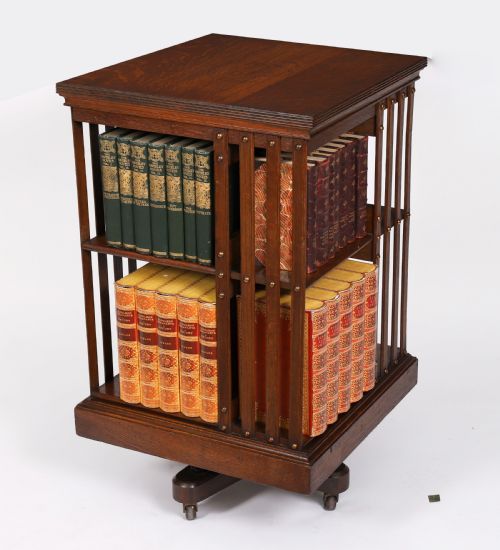


Rotating Tier Book Stand
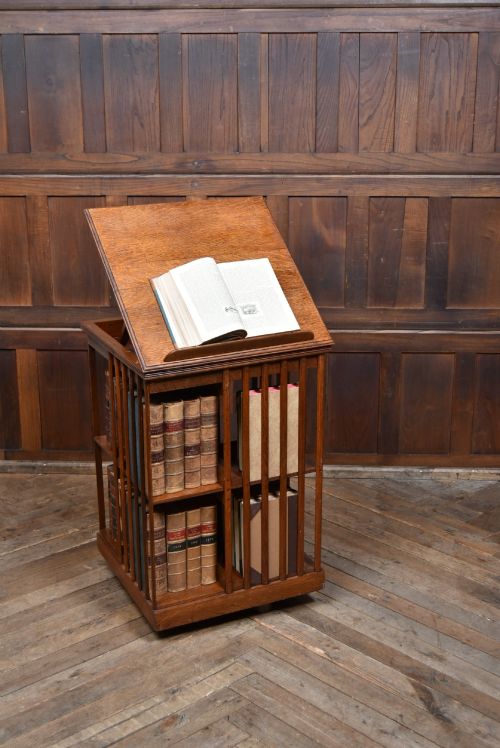
A rotating tier book stand lets you reach a heavy shelf of volumes from an armchair with a gentle spin of the hand.
Rotating Tier Book Stand
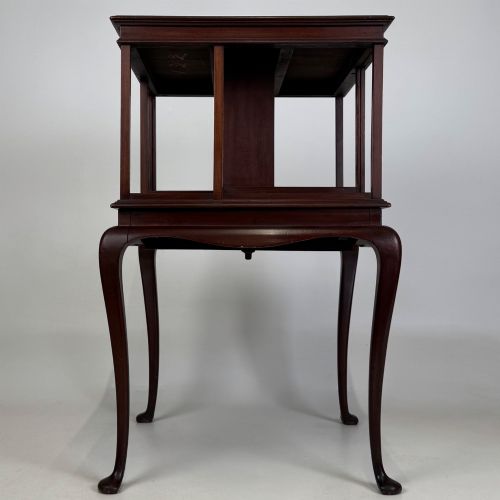
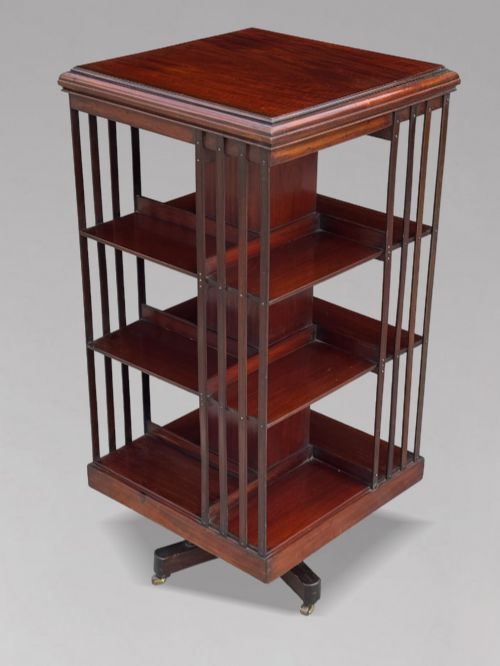
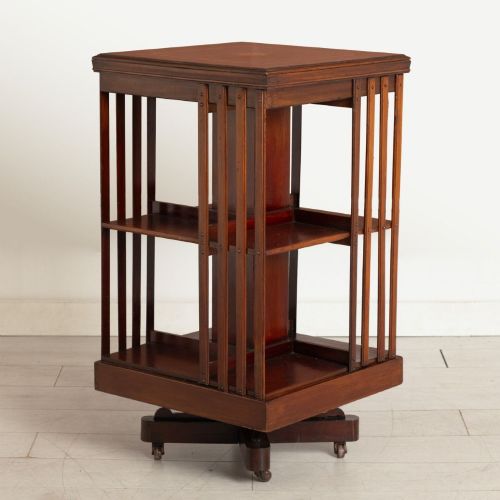
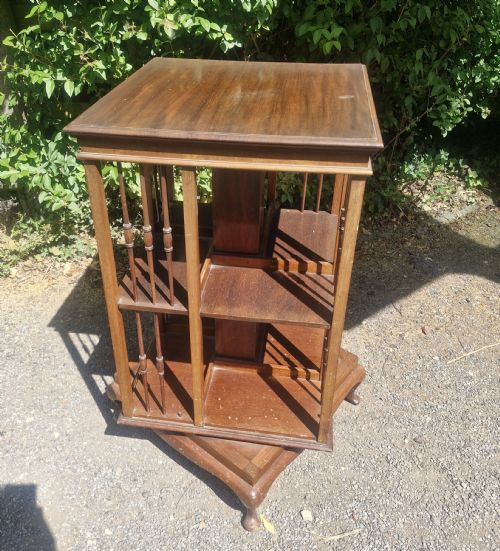
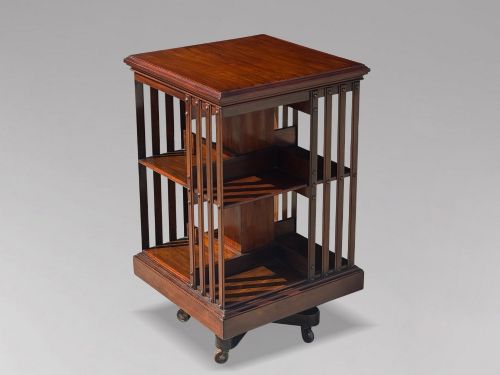
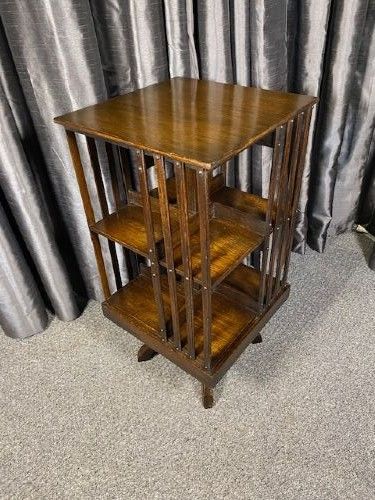
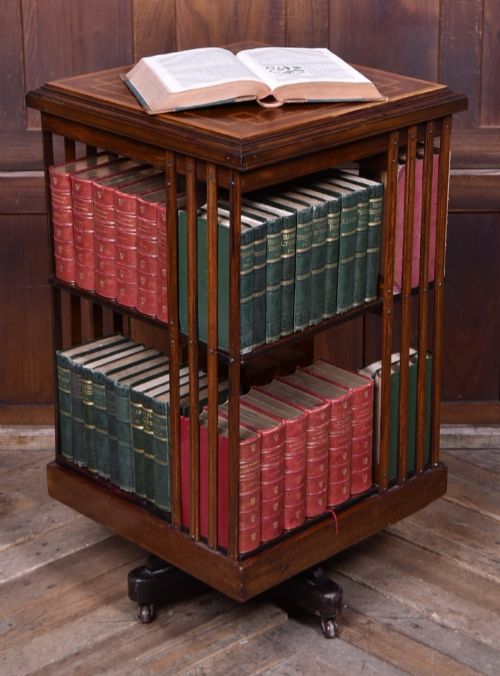
A rotating tier book stand sits on a spindle and base, allowing multiple shelves of books to turn freely. These pieces turn up most frequently from the Edwardian period and the Victorian era, shaped predominantly as compact bookcases.
The form suits studies, libraries and drawing rooms where desk space is tight and reference volumes need to stay close at hand. Makers built them in heights ranging from petite table models to tall floor-standing tiers.
Materials and construction
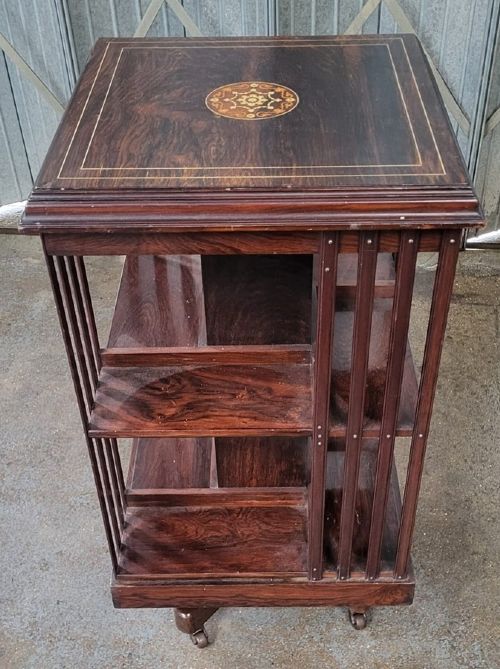
Makers relied heavily on solid and veneered mahogany, alongside oak, walnut and occasional rosewood or kingwood. Finer examples incorporate satinwood inlay, brass fittings, cast iron mechanisms and ormolu mounts to strengthen the rotating framework.
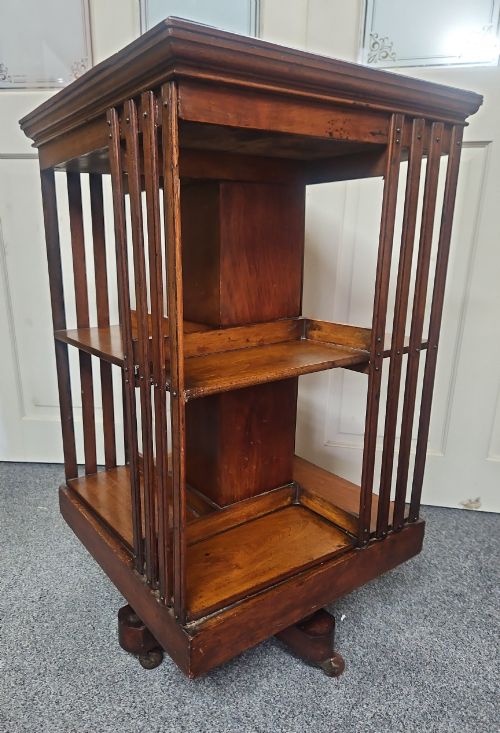
The internal pivot mechanism requires precise engineering to bear the weight of heavy books while maintaining a smooth, silent turn. Cabinetmakers joined the slatted or panelled sides with sturdy corner posts to support the vertical load.
Alternative forms on this page include side tables, marble-topped book tables and French provincial styles.
Distinctions in quality
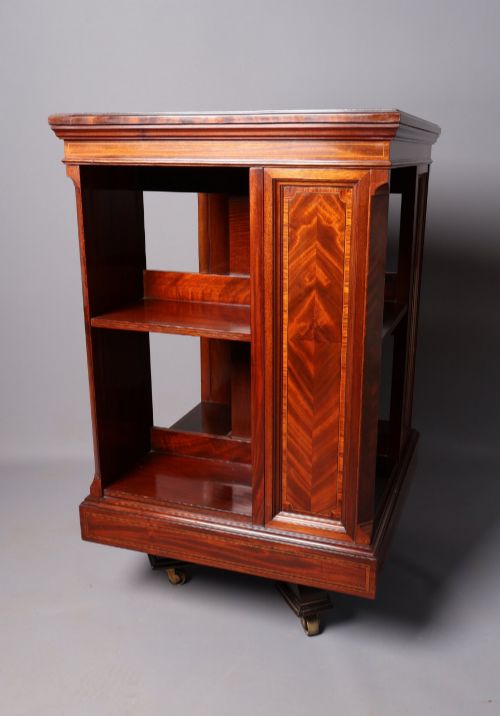
Superior pieces reveal themselves through the choice of timber figures, such as flame mahogany, and the crispness of inlaid satinwood banding. Maker attribution, such as work by Maple & Co, lifts a piece above standard workshop production.
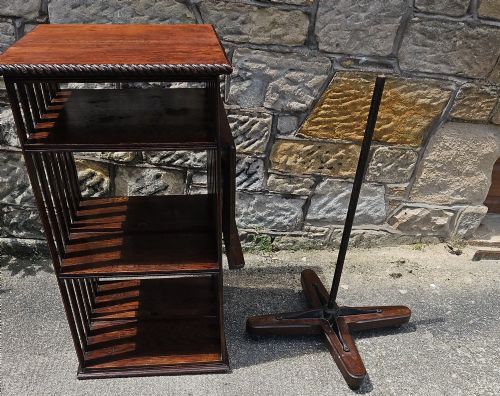
The underlying action separates basic revolving bookstands from exceptional ones. A well-engineered concealed bearing allows a heavy stack of volumes to spin without listing or grinding against the base.
Maple & Co
The Rotating Tier Book Stand Glossary
- Revolving bookcase
- A freestanding piece of furniture with shelves arranged around a central vertical axis that turns freely. It keeps numerous volumes accessible from a seated position.
- Flame mahogany
- A wood veneer cut from the fork of a mahogany tree where the branch meets the trunk. It creates a distinctive rippled, flamy pattern highly prized by cabinetmakers.
- Satinwood inlay
- Small pieces of pale, lustrous exotic wood inserted into a contrasting darker timber to form geometric borders or floral motifs. Edwardian makers utilised this technique extensively.
- Ormolu
- Gilt bronze mounts cast and chased into decorative ornaments attached to furniture. This French technique appears on select high-end specimens.
- Kingwood
- A dense, dark purple-brown Brazilian timber with golden streaks used for fine veneering. It brings a rich, deep tone to luxury library furniture.
Rotating Tier Book Stand: Frequently Asked Questions
How do I know its age?
Look closely at the timbers, construction joints and overall style to establish a period. Edwardian pieces often feature delicate satinwood inlay on mahogany, whereas Victorian examples tend to be heavier and built from solid oak or plain mahogany.
The mechanics and hardware also provide clues. Brass castors and internal iron turn-table components match the manufacturing standards of the late nineteenth and early twentieth centuries.
Will it hold heavy books?
Most standard revolving bookcases handle typical octavo volumes and hardbacks without difficulty. The central spindle and base bear the downward vertical weight while allowing the tiers to turn smoothly.
Very tall or petite versions suit lighter reference books and novels. Distributing the weight evenly across the shelves ensures the rotation remains balanced.
How do I care for the wood?
Keep these pieces away from direct sunlight and strong heat sources to prevent the mahogany or oak veneers from drying out. Consistent indoor humidity protects the timber and the underlying glue joints.
A light application of traditional beeswax feeds the polish and maintains the surface sheen. Avoid modern silicone sprays, which build up and damage antique finishes over time.
Where should I place it?
Position your revolving bookcase beside an armchair, desk or sofa where you can reach the titles easily from a seated position. Because all sides carry books, placing it slightly away from walls lets you spin the tiers freely.
Compact petite models fit comfortably on side tables or desks, while taller standing versions anchor corners in studies and libraries.