


Rosewood Writing Work Table
These rosewood writing work table pieces combine practical drawers with writing surfaces, offering a dual purpose that collectors seek for studies and drawing rooms.
Rosewood Writing Work Table
When searching for a rosewood writing work table, you encounter pieces designed to serve as both compact desks and sewing or crafting tables. The examples recorded here span the Regency, William IV, Victorian, and Edwardian periods, stretching from the early nineteenth century into the twentieth century.
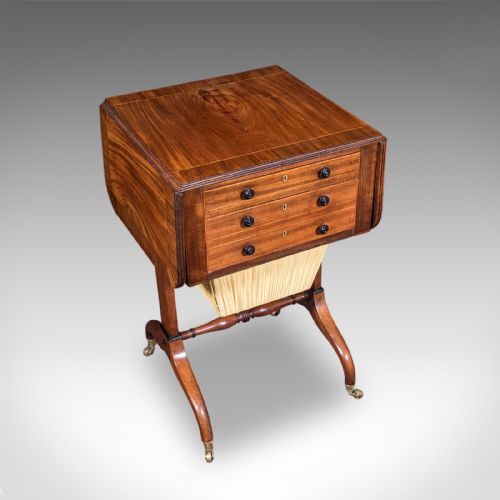
The forms appearing on this page include drop leaf tables, side tables, consoles, and specialised bonheur du jour pieces. Many combine a writing surface or sliding drawer with compartments for sewing, reading, or storing folios.
Origins represented in the evidence include English workshops such as Gillows of Lancaster, alongside continental interpretations like French parquetry tables. Regency and 19th Century items dominate the selection, often featuring pedestal or end support structures.
Materials and construction
Makers utilised dense rosewood as the primary timber, frequently embellished with contrasting inlay in boxwood and satinwood. Subsidiary timbers such as mahogany sometimes appear within internal drawer construction.
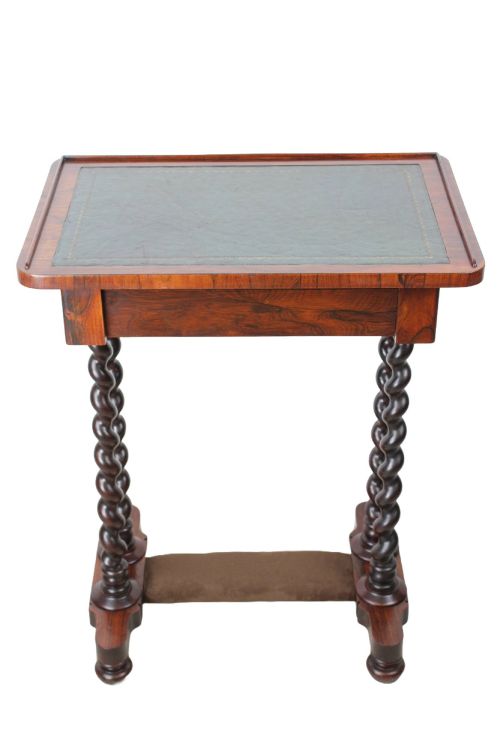
Metal fittings such as brass accents and leather inserts provide functional contrast to the dark grain of the wood. Fabric and parquetry elements further define the surfaces of specific Edwardian and French examples.
Some tables hid your letters and your knitting in the exact same piece of furniture, satisfying both correspondence and crafts.
Judging quality and execution
The distinction between standard pieces and exceptional examples rests on the crispness of the inlay and the selection of the rosewood grain. Master workshops demonstrated superior control in matching veneers across complex drop leaf and console forms.
Integration of multiple functions - such as simultaneous reading stands, folio storage, and fitted writing drawers - demands sophisticated internal engineering that separates basic tables from high-status commissions.
Gillow of Lancaster
The Rosewood Writing Work Table Glossary
- Bonheur du jour
- A light ladies writing desk featuring a small cabinet or superstructure on top with drawers and compartments. This form evolved in France before gaining popularity in Edwardian England.
- Drop leaf
- A table top design featuring hinged flaps that fold down to reduce the footprint or extend the surface when needed. These flaps often supported sewing bags or writing surfaces.
- Parquetry
- Geometric wood-mosaic work used for decorative surfaces on tables and cabinet furniture. The technique creates patterns using contrasting timbers like satinwood and rosewood.
- Stretcher
- A horizontal support connecting the legs of a table to increase stability. In nineteenth-century examples, these stretchers often echo the architectural lines of the base.
Rosewood Writing Work Table: Frequently Asked Questions
What is a rosewood writing work table?
These items are multi-functional pieces of furniture designed during the nineteenth and early twentieth centuries to accommodate writing, reading, and needlework. They integrate drawers, sliding compartments, and fold-out surfaces into a single compact footprint.
Such tables served as versatile items in private sitting rooms and boudoirs where space efficiency mattered. The inclusion of rosewood marked them as pieces intended for prosperous households.
How do I date a Regency rosewood table?
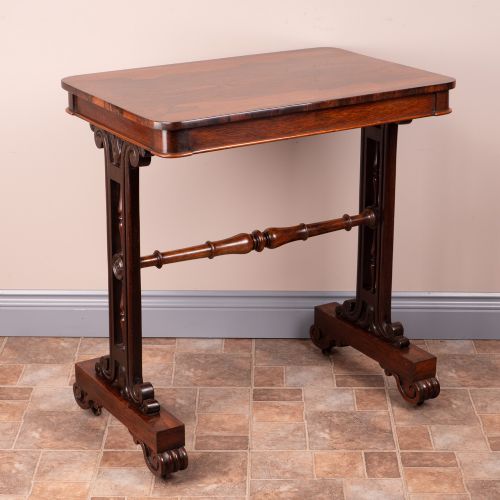
Regency pieces on this page typically date from around 1820, featuring architectural end supports, brass mounts, and formal classical proportions. They often rely on the rich grain of solid or veneered rosewood without heavy surface carving.
Comparing the structural lines to documented Gillows or English Empire designs helps confirm the period. Elements like brass stringing and specific pedestal bases provide further chronological markers.
Did these tables include sewing storage?
Many examples combine writing surfaces with internal compartments or hanging fabric bags intended for sewing and needlework. The dual designation as a work table indicates this textile storage function.
Drawers often contain shallow partitions or sliding trays specifically sized for spools, needles, and documents. This combination made them essential items for ladies of the house.
How do Edwardian models differ from Regency ones?
Edwardian versions, including bonheur du jour forms, tend to feature lighter inlaid decoration using boxwood and satinwood on rosewood carcases. They reflect a revival of eighteenth-century elegance adapted for early twentieth-century interiors.
Regency examples focus more on strong architectural silhouettes, brass details, and bold rosewood grain figures. The later pieces incorporate refined parquetry and delicate framing.