


Rosewood Workbox Table
These rosewood workbox table pieces are dual-purpose pieces combining storage for needlework with a stable surface, built to satisfy 19th-century domestic habits.
Rosewood Workbox Table
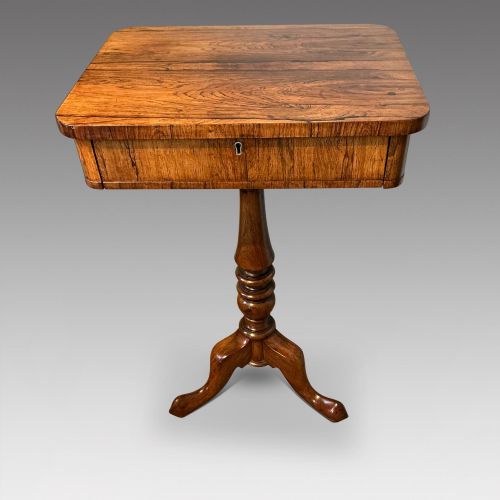
A rosewood workbox table serves as both an occasional table and a fitted compartment for sewing equipment, letters, or small valuables. You will most frequently meet Victorian and Regency examples configured as sewing or lamp tables.
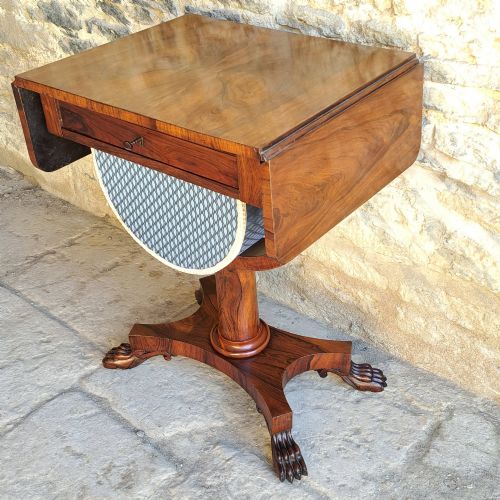
The form spans the nineteenth century, including specific periods such as William IV, French Restoration, and Edwardian eras. Pieces often integrate drop leaves, foldover tops for games, or raised pedestals with internal silk and velvet compartments.
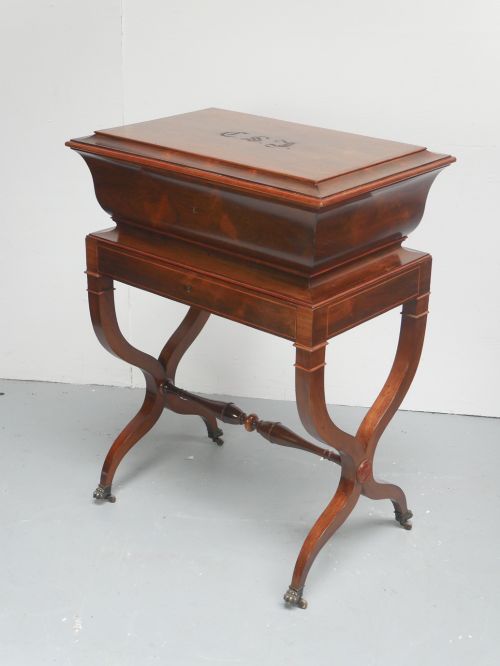
Origin and regional craftsmanship vary across the selection, featuring English production alongside Anglo-Indian and French variants. Some listings present the format simply as a side table or a box on a dedicated stand.
Factors of quality
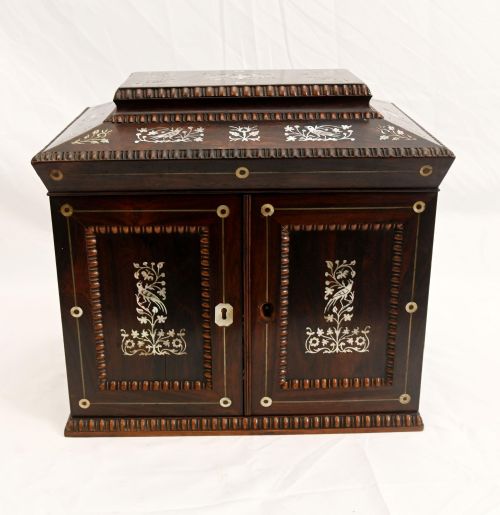
The refinement of the internal fittings distinguishes higher-grade examples, particularly where complex partitioned compartments and original fabric or velvet linings remain intact. Superior specimens display precise execution in brass, mother of pearl, or bone inlay work.
The stability and grain of the rosewood timber define the overall execution of the frame, whether formed as a pedestal base, a trumpet shape, or a drop-leaf occasional table. Joinery integrity across the workbox lid and supporting legs indicates the standard of workshop production.
Some tables double as games boards, proving that Victorian needlework could quickly turn into a competitive card match.
The Rosewood Workbox Table Glossary
- Rosewood
- A dense, heavily figured timber valued for dark grain patterns and polished finishes. It forms the primary structural and veneer material for nineteenth-century cabinet work.
- Workbox
- A lidded box designed to contain sewing tools, threads, and personal items. In these tables, it is integrated directly into the upper surface or mounted on a stand.
- Pedestal table
- A standalone piece supported by a central column resting on a platform or footed base. This configuration allows for independent placement in a room.
- Drop leaf
- A hinged table leaf that lowers to reduce the footprint of the furniture. It provides adjustable surface area for sewing or lamp placement.
Rosewood Workbox Table: Frequently Asked Questions
What is a rosewood workbox table?
A rosewood workbox table is a nineteenth-century piece of furniture combining a functional compartment for sewing gear with an accessible surface for lamps or ornaments.
These pieces typically feature hinged lids opening to reveal fitted interiors lined with silk or velvet.
How were they used originally?
Owners utilised them in drawing rooms and parlours for needlework, correspondence, and storing small personal valuables.
The drop leaves and foldover tops also provided versatile space for playing card games or holding lighting.
How do I date a workbox table?
Dating relies on stylistic markers associated with periods like the Regency, William IV, and Victorian eras.
Specific details such as brass inlay, pedestal forms, and bone embellishments help place the manufacture across the nineteenth century.
Are interiors usually original?
Interiors frequently show evidence of past use, with some fabric, velvet, or silk linings preserved from the nineteenth century.
Other examples display later textile replacements within the fitted compartments while retaining the primary rosewood structure.
Where should I place one?
These tables function effectively as side or lamp tables in living spaces, requiring modest floor space.
The lidded workbox compartments provide practical concealed storage for small contemporary items.