

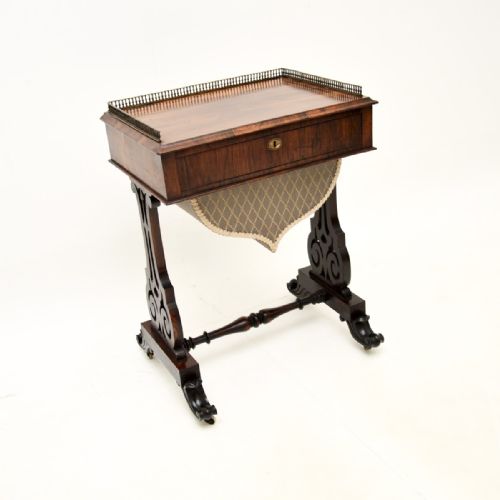


Fabric Basket Side Table
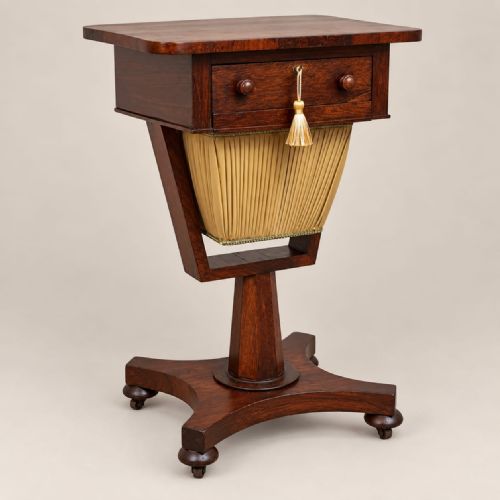
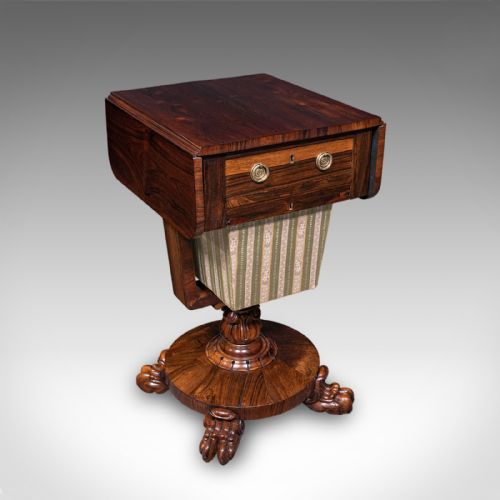
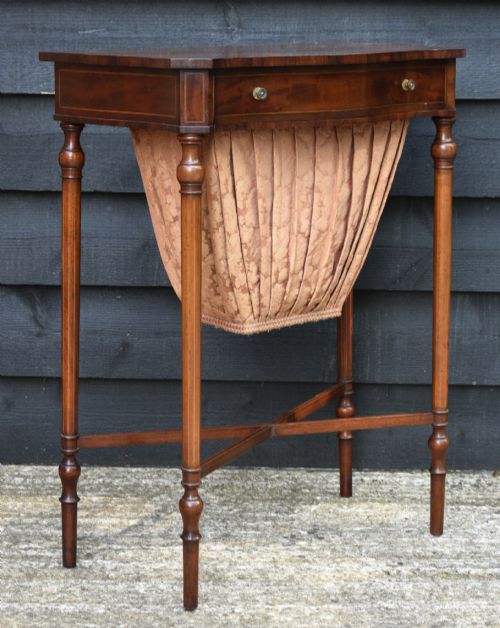
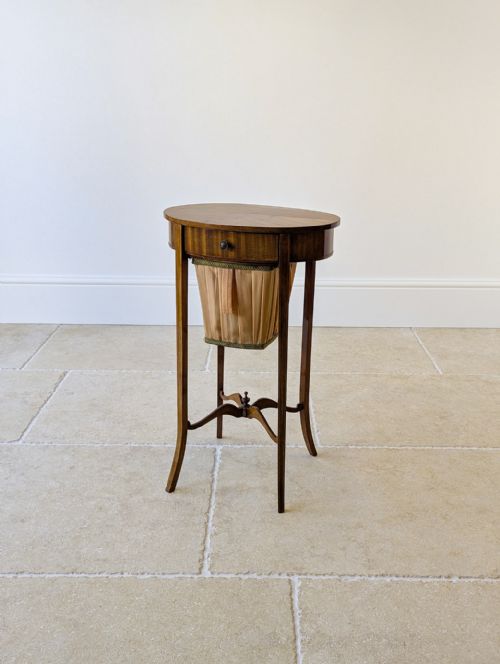
These fabric basket side table examples are practical occasional pieces, uniting timber frames with hanging storage for domestic utility.
Fabric Basket Side Table
When you search for a fabric basket side table, you are looking at nineteenth and early twentieth-century work tables, sewing tables, and occasional side tables. The pieces on this page span Georgian, Regency, William IV, Victorian, and Edwardian periods, crossing several foundational eras of British furniture making.
The primary forms combine a timber standing frame with a suspended textile bag, historically used for needlework, threads, and domestic hobbies. Mahogany, rosewood, and walnut dominate the structural framing, supporting either a drop-leaf top, a circular surface, or a serpentine profile.
Origins trace across English workshops and parlours, manifesting as freestanding lamp tables, games tables, and specialised sewing furniture. Most examples date from the nineteenth century, reflecting the steady domestic demand for multifunctional parlour furniture.
Materials and construction
Makers utilised dense hardwoods including mahogany, rosewood, satinwood, and burr walnut for the structural framework and veneered tops. These timbers provided the weight and stability required for freestanding occasional tables with hinged drop leaves or solid circular surfaces.
Fabric and silk components integrate into the design through suspended under-baskets or integrated work bags designed to hold sewing materials. Brass hardware, lyre-ended supports, and inlaid satinwood details frequently accent the primary timber bodies.
The listings on this page span the Georgian, Regency, William IV, Victorian, and Edwardian eras, utilising mahogany, rosewood, walnut, satinwood, and silk.
Judging quality
Quality rests in the selection of timber figures, such as the richness of rosewood grain or the depth of burr walnut veneer. Superior examples display refined proportions, crisp joinery at the drop-leaf hinges, and intact brass fittings.
The execution of secondary details like lyre supports, serpentine edges, and inlaid satinwood defines the tier of craftsmanship. Original internal fittings within the sewing compartments distinguish the finer parlour pieces from standard utility tables.
Gillows
The Fabric Basket Side Table Glossary
- Work table
- A small occasional table fitted with a drawer and a suspended fabric bag for needlework. These items served ladies in nineteenth-century parlours.
- Drop leaf
- A table top with hinged flaps that fold down to save space when not in use. They are commonly supported by swinging brackets or gatelegs.
- Lyre-ended
- A table support shaped like an ancient Greek lyre instrument. This stylistic motif appears frequently on Regency and William IV furniture.
- Burr walnut
- Timber taken from the wart-like growth on a walnut tree, producing intricate swirling grain patterns. Cabinet makers prized it for decorative veneering.
- Satinwood
- A hard, yellowish wood from tropical trees used for fine inlay and banding on late eighteenth and early twentieth-century pieces.
Fabric Basket Side Table: Frequently Asked Questions
What is a fabric basket side table used for?
These pieces functioned historically as sewing and hobby tables, keeping threads and needlework close to hand in the parlour. Today, they serve as versatile side or lamp tables with convenient under-storage.
The suspended fabric bag holds magazines, small textiles, or modern craft supplies while maintaining a compact footprint beside a sofa or armchair.
How do I identify a Regency work table?
Regency tables typically feature classical architectural motifs, such as lyre-ended supports, brass mounts, and dark rosewood or mahogany timbers. Clean lines and influences from ancient Greek and Roman design are standard.
Look for Pollard oak or figured mahogany veneers alongside subtle brass detailing which characterise the period's output.
Are these tables suitable for modern living?
Their compact proportions make them ideal for modern spaces needing surface area combined with discreet storage. Drop-leaf configurations allow the table to expand or contract depending on daily requirements.
The historical character brings warmth to contemporary interiors while providing practical utility beside seating areas.
How do I date a Victorian sewing table?
Victorian examples frequently utilise rosewood or burr walnut, often featuring circular or octagonal tops supported on carved pillar bases. The construction tends to be heavier than earlier Georgian or Regency equivalents.
Interior compartments often retain original velvet or silk linings, aiding in period identification alongside the characteristic deep timber tones of the mid-nineteenth century.