


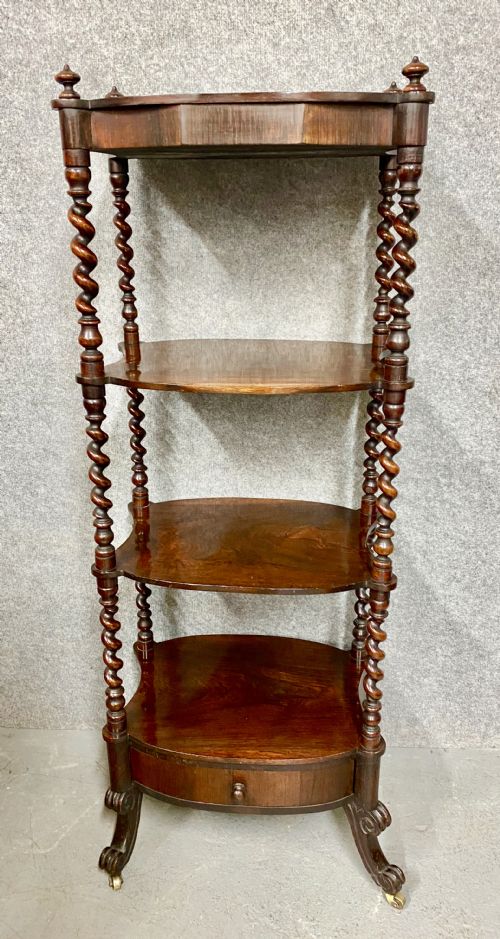

Rosewood Tiered Bookshelf
A rosewood tiered bookshelf brings warmth and open display to a room, offering multiple levels for books and ornaments.
Rosewood Tiered Bookshelf
A rosewood tiered bookshelf combines open shelving with stepped or stacked platforms designed for displaying volumes and decorative objects. These pieces range from compact wall shelves and four-tier etageres to substantial open bookcases.
The selections available here span several distinct periods, most notably the Regency and Victorian eras, alongside Edwardian examples and 1920s reproductions. Alongside traditional floor-standing bookcases, buyers encounter specialised whatnots and waterfall shelving units.
Originating in domestic settings that prized orderly display, a rosewood tiered bookshelf serves as a practical yet decorative focal point in a study or drawing room. The tiered arrangement allows smaller items to sit visibly above larger volumes.
Materials and construction methods
Makers utilised rich rosewood timber for its deep grain and reddish-brown colour, frequently pairing it with brass inlay or ormolu mounts to highlight the architectural lines of the shelves. Some pieces utilise simulated rosewood on alternative timber bases.
Construction techniques include graduated tiers supported by turned columns or open uprights, particularly in waterfall bookcase designs where each shelf recedes from the one below it. Fabric panels sometimes appear behind shelves in specific Victorian formats.
Some nineteenth-century readers used multiple tiers simply to sort books by height, accidentally inventing the gradient look we admire today.
Assessing quality and craftsmanship
Quality in these bookcases is evident in the selection of the rosewood timber, where rich, figured grain patterns demonstrate careful matching across the tiers. Finer examples display precise brass inlay and robust structural joints that support heavy volumes without sagging.
Proportion and scale distinguish standard pieces from superior examples, as well-balanced waterfall profiles and refined turned supports create a harmonious silhouette. The crispness of carved details and the integration of ormolu mounts further separate workshop output.
Samson & Son London
The Rosewood Tiered Bookshelf Glossary
- Rosewood
- A dense, heavily figured timber prized for its dark reddish-brown hue and prominent dark grain. It takes a high polish and forms the primary material for these tiered bookcases.
- Waterfall bookcase
- A shelving unit where each successive tier steps back from the one beneath it, creating a cascading profile. This style gained popularity during the Regency and Victorian periods.
- Etagere
- A piece of furniture consisting of a set of open shelves for displaying ornaments. These often overlap with whatnots and tiered bookcases in nineteenth-century design.
- Whatnot
- A multi-tiered stand used for storage and display of small objects and books. Victorian and Regency examples frequently feature turned wooden uprights.
- Ormolu
- Gilded bronze mounts applied to furniture for decorative accent. It appears on finer pieces to highlight architectural corners and cornices.
Rosewood Tiered Bookshelf: Frequently Asked Questions
How do I date a rosewood tiered bookshelf?
Dating relies on examining the construction style, timber characteristics, and decorative motifs such as Regency brass inlay or Victorian turned supports. Pieces from the Regency period often feature cleaner architectural lines, while Victorian examples can include more elaborate tiered arrangements.
Comparing the shelf profiles and joinery against documented examples from the 1800s through the Edwardian era helps establish the likely period of manufacture.
Where should I place a tiered bookshelf?
These open shelving units suit studies, living rooms, and libraries where books and small decorative objects benefit from accessible display. Their open sides mean they look best against a solid wall rather than floating in a room.
Because rosewood is sensitive to extreme environmental shifts, positioning the bookcase away from direct heat sources and strong sunlight preserves the timber finish.
What is the difference between a whatnot and a bookcase?
A whatnot is primarily designed for displaying ornaments and miscellaneous items across multiple open tiers, whereas a bookcase focuses on housing volumes. In practice, nineteenth-century makers frequently combined these functions in tiered designs.
Waterfall bookcases and etageres often bridge this distinction by offering graduated shelves suitable for both books and decorative pieces.