



Rosewood Table Box
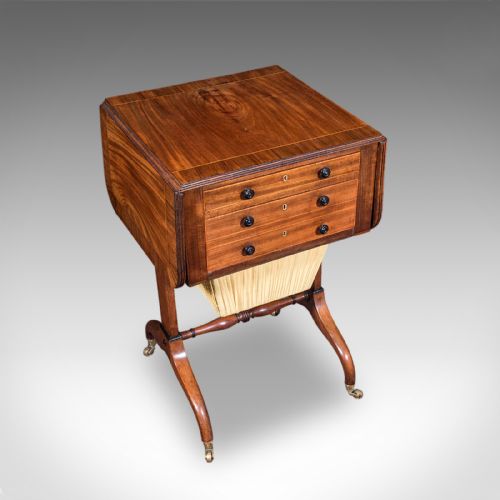
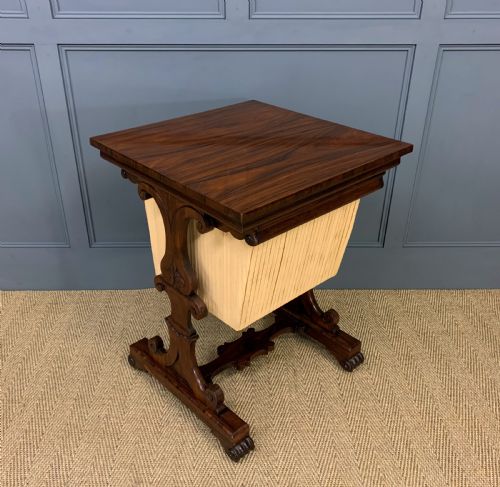
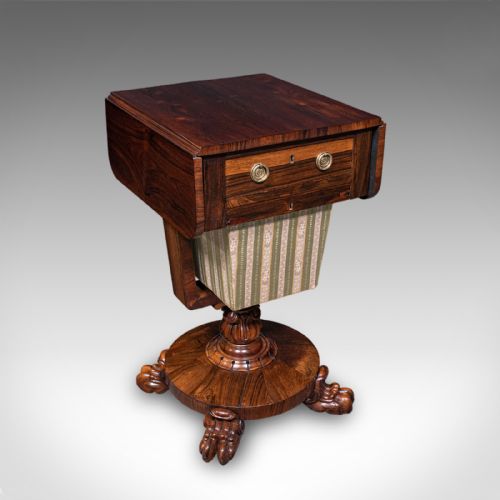
When searching for a rosewood table box, you are looking at functional antique containers and fitted work tables from the Georgian, Regency, and Victorian periods.
Rosewood Table Box
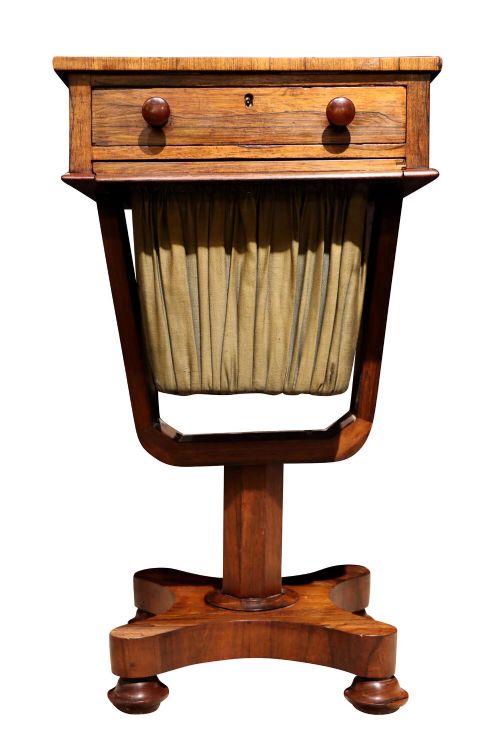
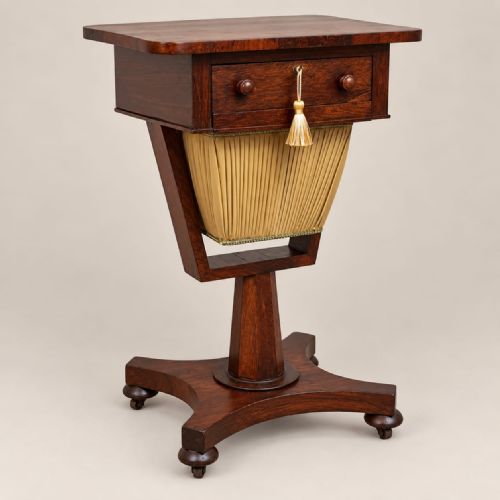
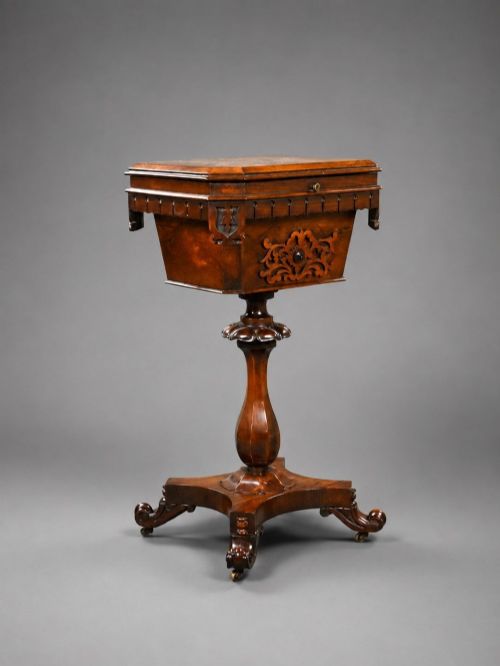
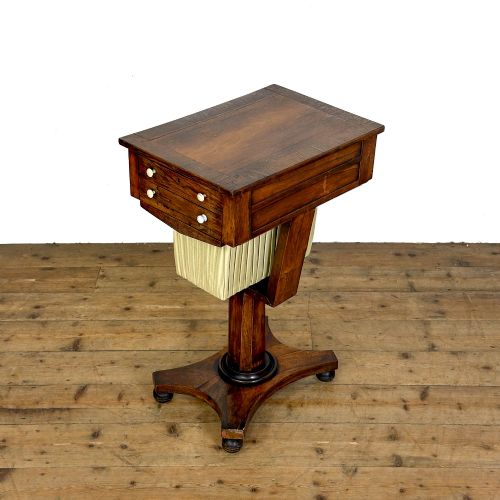
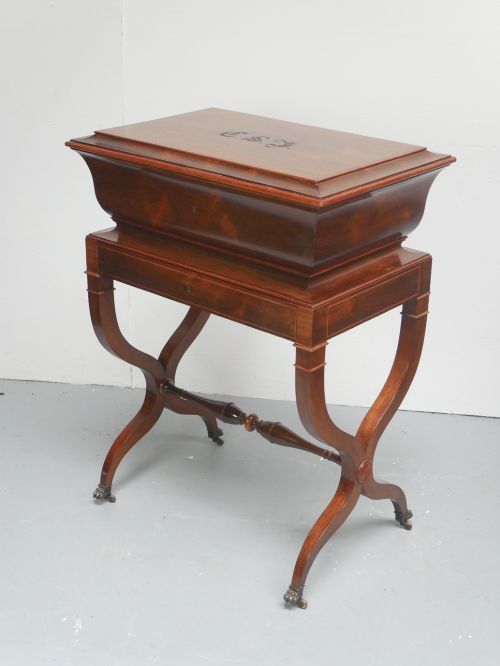
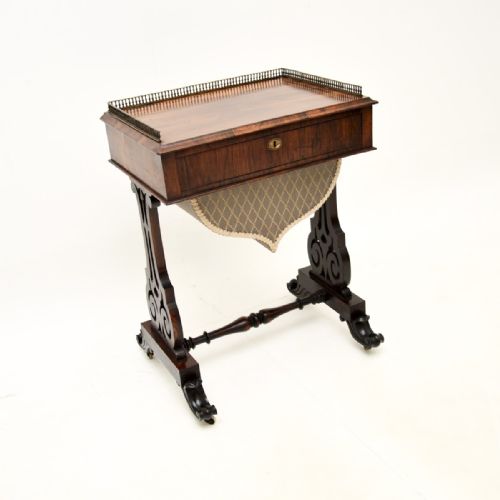
A rosewood table box encompasses both portable writing or sewing containers designed for tabletop use and larger freestanding work tables featuring integrated compartments. These pieces originate predominantly from the nineteenth century, spanning Georgian, Regency, William IV, and Victorian eras.
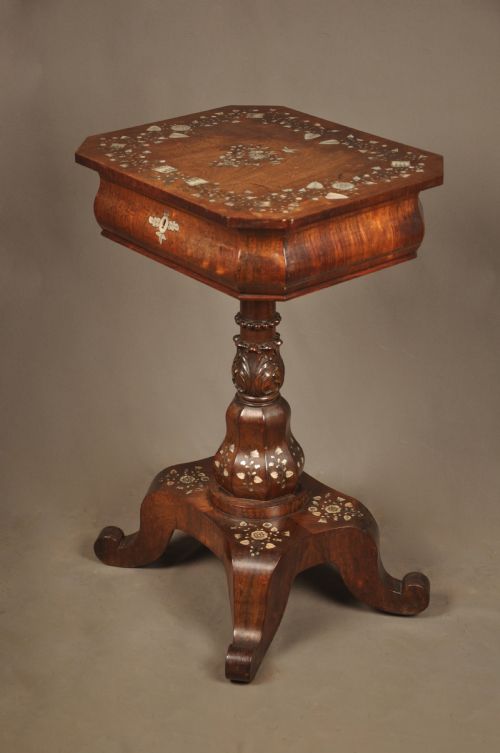
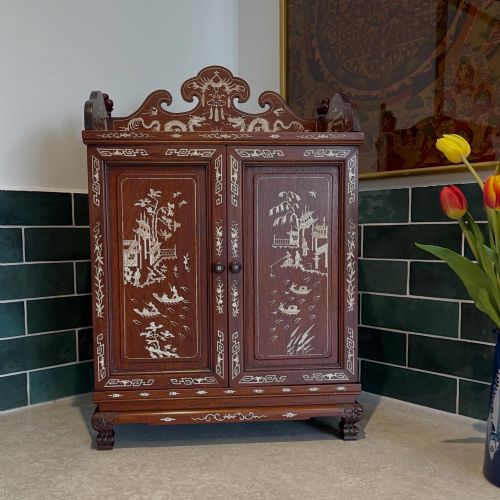
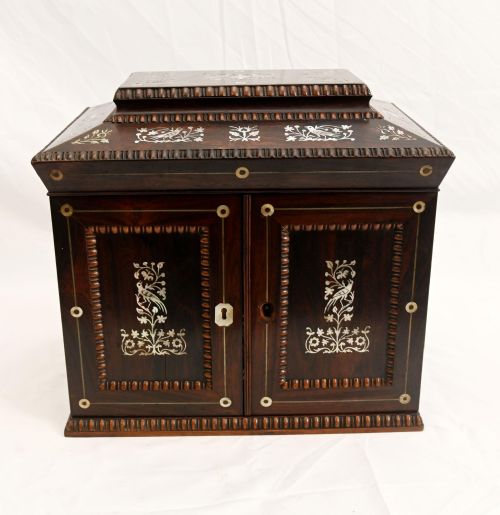
The most common formats met on this page are hinged sewing tables with drop leaves and compact portable caddies decorated with brass inlay or mother of pearl. Examples range from English parlour pieces to French or Anglo-Indian colonial variants.
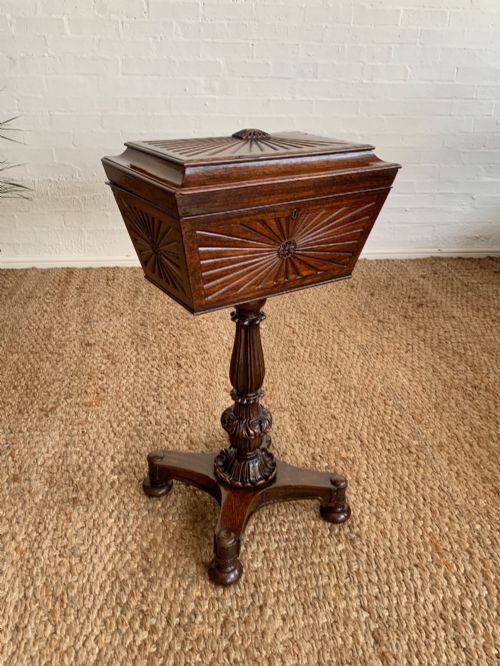
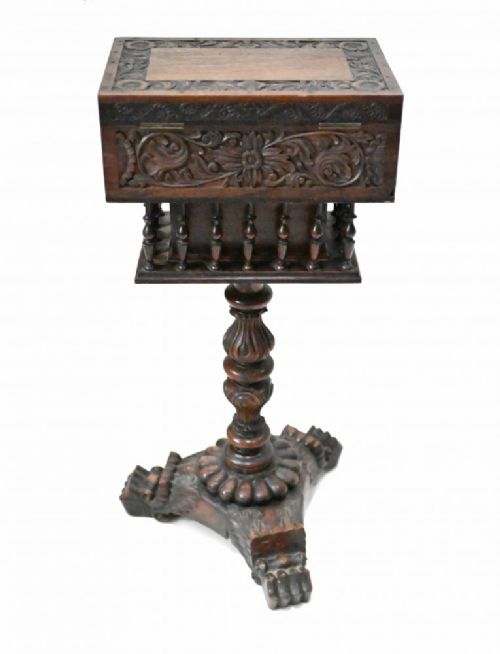
Many items served specific domestic purposes, functioning as tea poys, bijouterie display cases, or writing slopes equipped with internal storage trays.
Materials and Construction Techniques
Craftsmen utilised dense, dark rosewood veneers applied to solid timber carcases, frequently combining the grain with contrasting satinwood, boxwood, or burr maple. Surfaces were polished to highlight the natural figuring of the wood.
Metal mounts in brass or gilded bronze, known as ormolu, reinforced corners and framed inset panels of mother of pearl or detailed marquetry inlay. Interiors were lined with velvet, fabric, or silk to protect delicate contents.
Rosewood Table Box Retail Price Guide 2026
Typical asking prices for rosewood table box among the pieces listed under this phrase on Sellingantiques today, from the lower quarter to the upper quarter. They describe what is for sale here now, not the wider market.
Listings feature nineteen-century periods from the Regency era through to late Victorian and Edwardian examples, utilising rosewood, brass, and mother of pearl.
Assessing Craftsmanship and Detail
The standard of a rosewood table box is determined by the precision of its marquetry and inlay work, alongside the structural integrity of its joints and hinges. Finer examples display continuous grain matching across lid panels and seamless integration of brass stringing.
Internal fittings dictate execution quality, separating simple storage spaces from elaborate multi-tiered compartments with working locks, secret drawers, and hand-carved supports such as sunburst motifs.
Gillows of Lancaster·Lesage
The Rosewood Table Box Glossary
- Teapoy
- A pedestal container originally used for storing loose tea leaves, often fitted with internal caddies and mixing bowls. These pieces typically stand on a central pillar with tripod or platform feet.
- Marquetry
- A technique of applying decorative veneer pieces in geometric or pictorial patterns onto a solid wood carcase. Craftsmen used contrasting timbers like boxwood and satinwood to create detailed motifs.
- Bijouterie Table
- A glazed display cabinet designed to showcase small decorative objects, jewellery, and trinkets on a raised tabletop. They frequently feature hinged glass lids and velvet-lined interiors.
- Writing Slope
- A portable desk box with an angled, hinged writing surface that opens to reveal storage for stationery, inkwells, and pens. Regency and Victorian versions often incorporate leather inserts.
- Caddy Top
- A lid design featuring raised moulded panels reminiscent of traditional tea caddies. This profile adds depth and architectural interest to the top of work tables and storage boxes.
Rosewood Table Box: Frequently Asked Questions
What is a rosewood table box?
A rosewood table box is an antique container or fitted work table designed to hold sewing accessories, writing materials, or small valuables. They combine practical storage with decorative tabletop presence.
These pieces utilise dense tropical hardwoods and intricate inlays, reflecting the domestic habits and craftsmanship of nineteenth-century households.
How were tea poys used?
Tea poys functioned as portable storage units for precious tea leaves during eras when tea was an expensive commodity locked away from servants. They often included internal canisters and a mixing bowl.
As dining habits changed later in the century, many tea poys were converted into sewing stands or occasional tables by removing the internal caddies.
How do I date a rosewood box?
Dating relies on architectural styles, furniture hardware, and decorative motifs such as brass stringing or mother of pearl. Georgian and Regency pieces favour clean classical lines and subtle brass inlays.
Victorian examples frequently introduce heavier carving, marquetry panels, and elaborate fitted interiors designed for specific hobbies like sewing or collecting.
Where should I place a table box?
Table boxes and smaller work tables suit placement on sideboards, console tables, or as freestanding occasional pieces in a drawing room or study. Their decorated lids provide visual interest from any angle.
Keep them away from direct sunlight and strong heat sources to protect the delicate rosewood veneers and internal fabric linings from fading or splitting.