

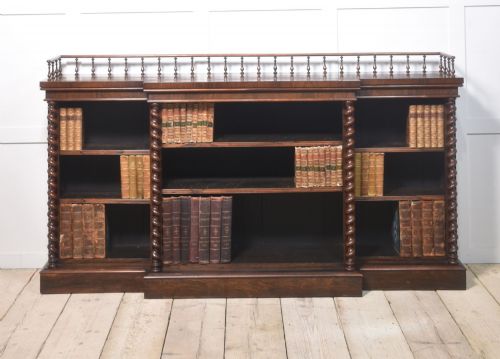
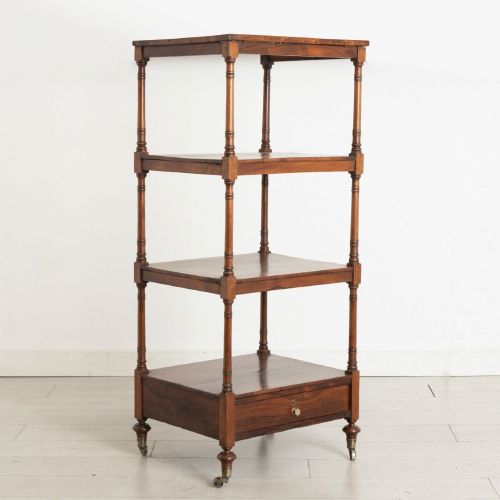


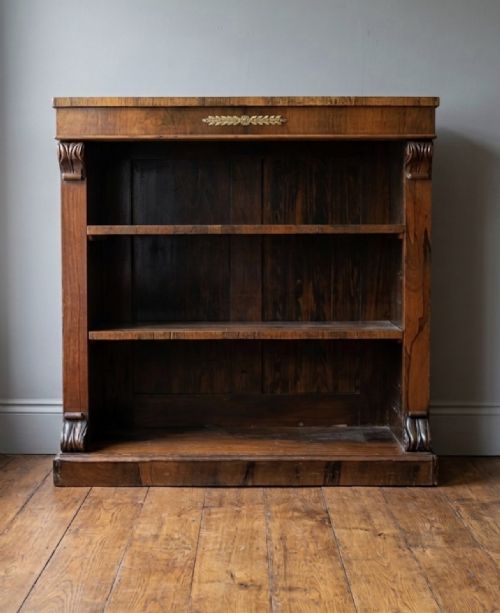


Rosewood Shelf Unit
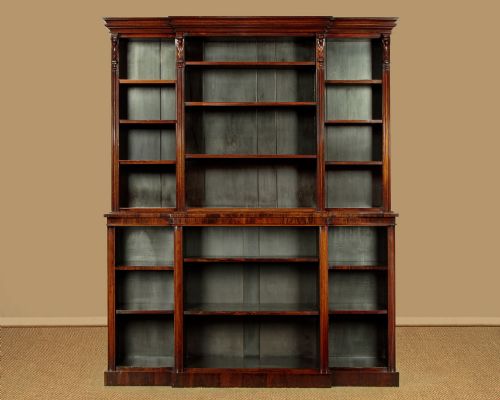
A rosewood shelf unit brings rich timber grain and structured open display to a room, ranging from compact tier systems to grand breakfront bookcases.
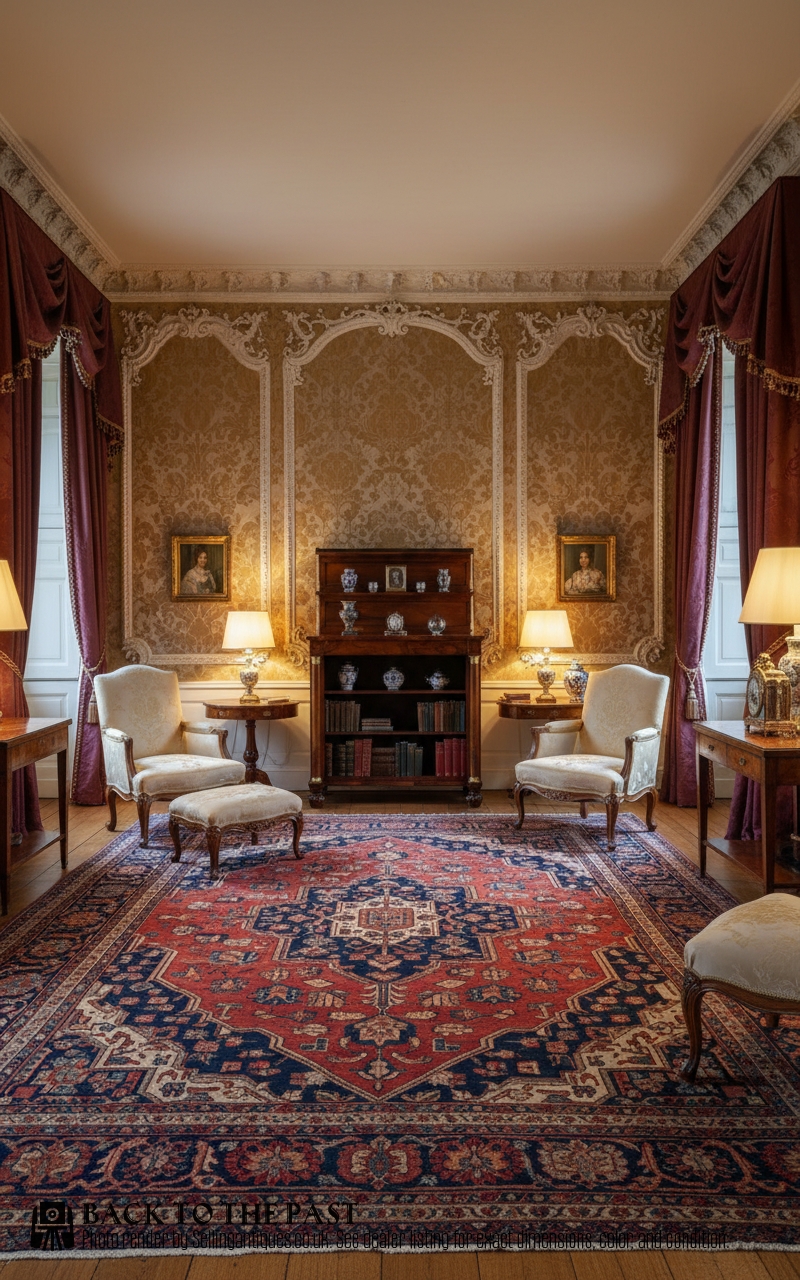
Rosewood Shelf Unit
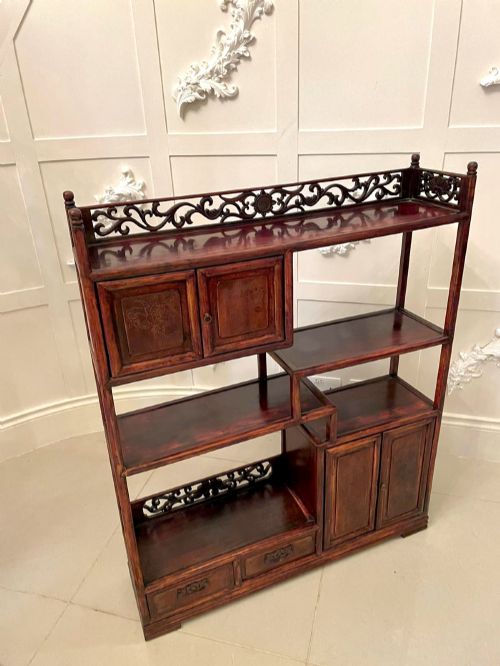
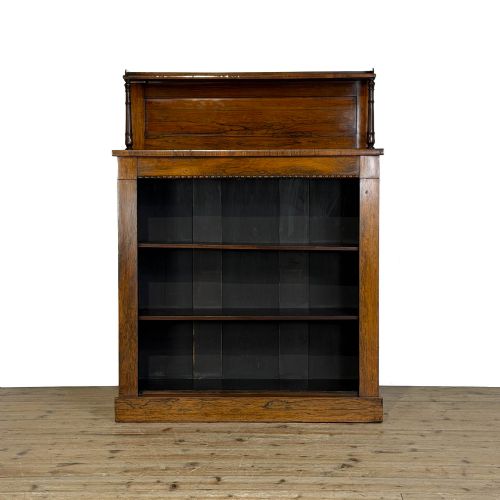
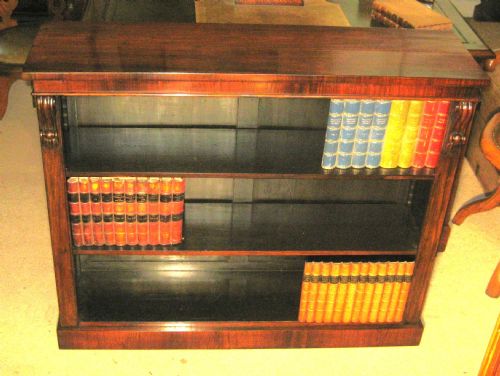
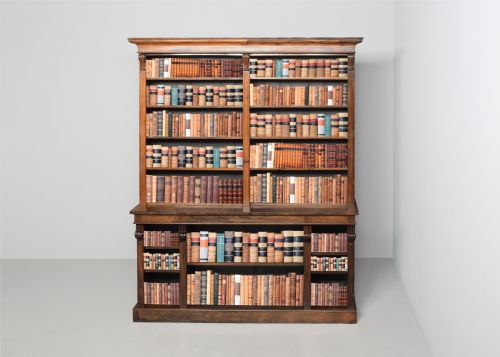
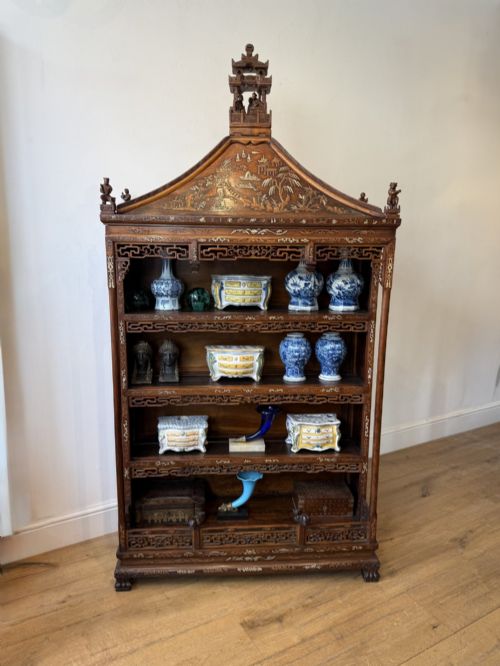
A rosewood shelf unit encompasses open bookcases, tiered whatnots, etageres, and display cabinets designed for books and decorative objects. When searching for this phrase, a buyer meets pieces originating predominantly from the nineteenth century, spanning Regency, Victorian, and William IV periods alongside Chinese and Anglo-Indian variants.
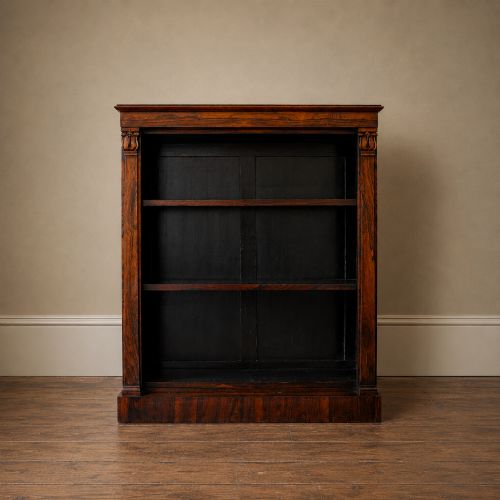
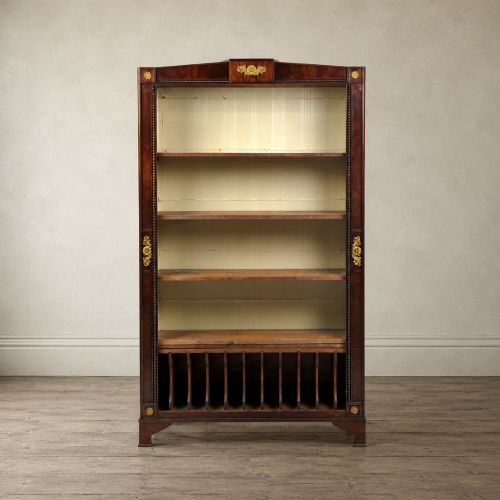
Open bookcases form the most frequent variety on this page, often equipped with adjustable shelves and occasionally incorporating low cupboards or brass inlays. Multi-tiered whatnots and standing buffet shelves provide alternative vertical formats for displaying collections in principal rooms.
Materials and construction methods
Cabinet makers utilised solid rosewood alongside rosewood veneer applied over secondary timbers such as pine or softwood. Structural stability was achieved through precise joinery, while decorative appeal relied on the dense, figured grain of the timber.
Brass inlays, marble tops, and carved details frequently complement the primary rosewood construction, particularly in Regency and Victorian examples. Surface finishes were carefully rubbed down to accentuate the natural warmth and colour of the wood.
Some nineteenth-century multi-functional cabinets managed to combine book storage, display tiers, and a side table all within the footprint of a single corner.
Evaluating quality and execution
Quality in a rosewood shelf unit rests upon the selection of timber and the precision of the cabinet work. Superior pieces display harmonious grain matching across large surfaces and crisply executed brass work or carved detailing.
The integrity of the internal construction, including the smoothness of adjustable shelving mechanisms and the stability of multi-tiered uprights, separates standard commercial production from master workshops.
Gillows
The Rosewood Shelf Unit Glossary
- Whatnot
- A piece of furniture consisting of open shelves for displaying small objects, popular in the nineteenth century. Tiers are supported by slender columns or uprights.
- Breakfront
- A large cabinet or bookcase where the central section projects forward from the flanking wings. This architectural arrangement creates depth and visual balance.
- Étagère
- A French term for a piece of furniture with a set of open shelves for displaying ornaments. These units often stand in corners or against walls.
- Veneer
- A thin layer of superior wood applied to a base timber to provide an ornamental surface. Rosewood veneer allowed makers to utilise rich grain patterns efficiently.
- Chiffonier
- A low sideboard or cabinet, sometimes combined with open shelving above. They frequently appeared in Regency and Victorian drawing rooms.
Rosewood Shelf Unit: Frequently Asked Questions
What is the difference between a whatnot and a bookcase?
A whatnot is primarily designed for displaying ornaments across multiple open tiers, whereas a bookcase is structured specifically for holding volumes.
Bookcases often include backing boards and adjustable shelving, while traditional whatnots remain open on all sides with slender vertical supports.
How do I date a nineteenth century rosewood shelf unit?
Dating relies on stylistic markers such as the restrained elegance of Regency brass inlay or the heavier proportions typical of mid-Victorian pieces.
Examining the secondary timbers at the back and interior helps confirm the period of construction alongside structural techniques.
Where should I place a rosewood shelf unit?
These units suit drawing rooms, studies, or libraries where their rich timber tones complement traditional interiors.
Standing buffet shelves and low bookcases work well against principal walls, while multi-tiered whatnots fit into corners or between windows.
Are rosewood shelves adjustable?
Many nineteenth-century open bookcases feature adjustable wooden shelving supported by wooden ratchets or brass shelf strips.
Tiered whatnots and fixed display cabinets generally maintain stationary shelving integral to their upright structural columns.