





Rosewood Sarcophagus Caddy
A rosewood sarcophagus caddy brings the architectural gravitas of the Regency and Victorian drawing room straight onto the modern table, designed originally to keep expensive tea leaves secure under lock and key.
Rosewood Sarcophagus Caddy
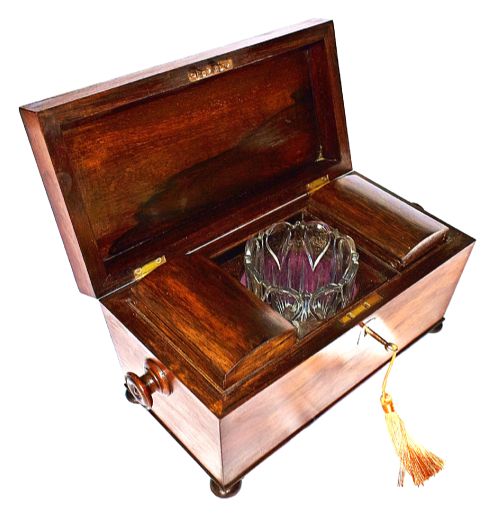
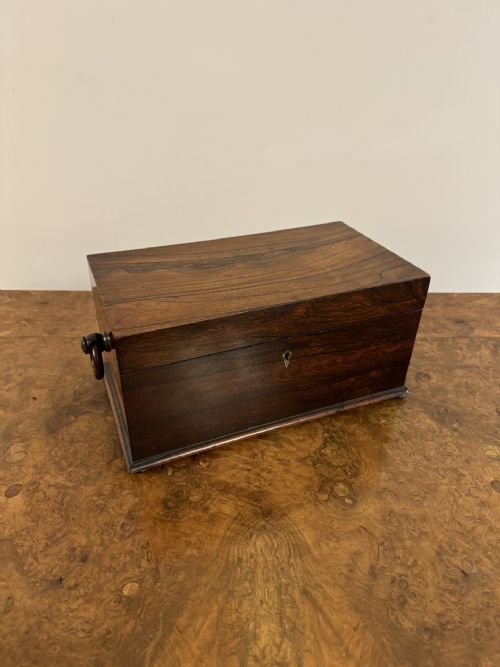
A rosewood sarcophagus caddy is a heavy wooden box shaped like a classical tomb, most commonly found from the Regency, George IV, and William IV periods, alongside later Victorian examples. These pieces typically rest upon bun feet or plinth bases, featuring sloping or domed lids that lift to reveal interior lidded compartments for loose leaf tea and sometimes a central mixing bowl.
While many pieces on this page are tea caddies, the form also crosses over into related storage boxes such as work boxes, sewing boxes, gentleman's table cabinets, and jewellery boxes. The distinct architectural silhouette remains consistent, often pairing the deep purple-brown grain of rosewood with precise decorative inlays.
The objects originate primarily from English workshops, reflecting the high status of tea consumption in nineteenth-century domestic life. Surviving examples demonstrate how these items served both a practical pantry function and a decorative display purpose in the principal rooms of the house.
Materials and construction
Cabinet makers utilised dense imported rosewood veneers laid over a sturdy carcase of secondary timbers, exploiting the rich, dark figuring of the wood to create striking surfaces. Brass inlay, mother-of-pearl, boxwood, and parquetry work were frequently embedded into the lids and front panels to form geometric or foliate motifs.
Interior compartments were constructed with tight-fitting wooden lids, sometimes featuring bone or ivory pull knobs and subtle internal lining to preserve the aroma of the contents. Working brass locks and escutcheons, occasionally accompanied by cast metal lion mask ring handles on the sides, completed the heavy construction.
Rosewood Sarcophagus Caddy Retail Price Guide 2026
Typical asking prices for rosewood sarcophagus caddy among the pieces listed under this phrase on Sellingantiques today, from the lower quarter to the upper quarter. They describe what is for sale here now, not the wider market.
Listings demonstrate a strong preference for Regency and William IV rosewood sarcophagus forms featuring brass inlay and mother-of-pearl.
Judgments of quality
Quality rests upon the crispness of the architectural proportions and the ambition of the surface decoration, distinguishing standard utility boxes from grander drawing room pieces. Finely executed brass stringing, elaborate Tunbridge Ware mosaic panels, and detailed mother-of-pearl bird inlays elevate certain examples above plain veneered surfaces.
The integrity of the internal fittings also dictates standing, particularly where original mixing bowls, matching inner lids, and working locks survive intact. Pieces that retain their structural weight, unwarped lids, and unblemished wood grain represent the finest achievements of nineteenth-century box making.
Henry Hollamby
The Rosewood Sarcophagus Caddy Glossary
- Sarcophagus
- A box shape with outward-sloping sides and a domed or pitched lid, mimicking a classical stone coffin popularised during the Regency period. This architectural profile gives the tea caddy its distinctive presence.
- Teapoy
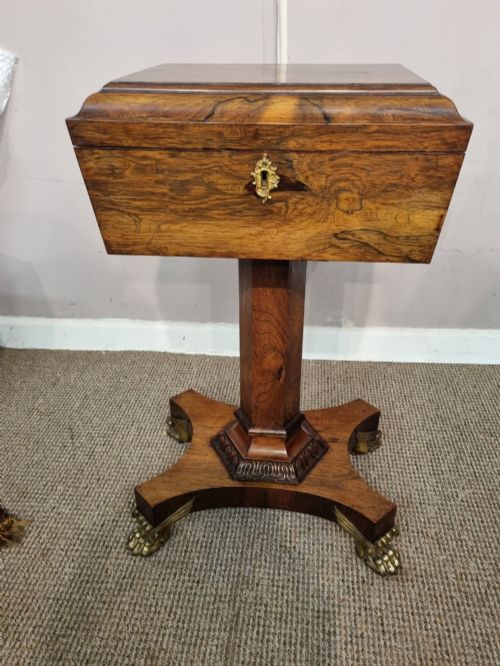
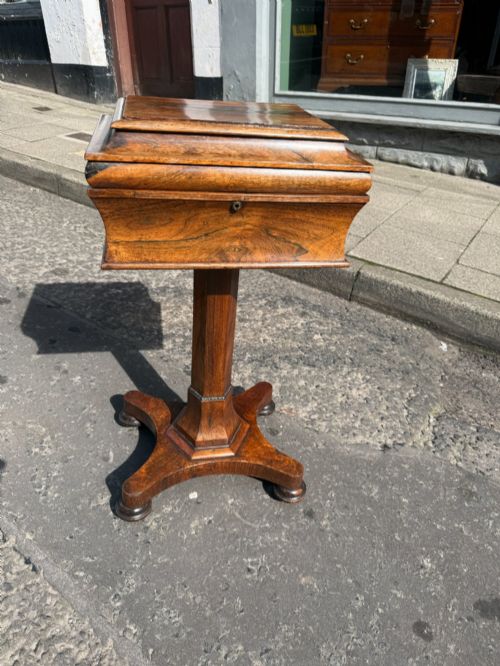
- A larger pedestal table or heavy chest designed to hold multiple varieties of tea and mixing equipment. These pieces often stand on a central pillar with platform feet rather than resting directly on a table.
- Tunbridge Ware
- Small decorative wooden items embellished with mosaic patterns made from thousands of tiny tinted wood blocks. This intricate technique originated in Kent and appears on select rosewood box lids.
- Escutcheon
- A small protective plate surrounding the keyhole of a box, typically fashioned from brass or bone. It prevents the wood from splitting around the lock mechanism during frequent use.
- Parquetry
- Geometric wood-mosaic work utilised for decorative surfaces on box lids and panels. Cabinet makers arranged contrasting native and exotic woods to create repeating patterns.
Rosewood Sarcophagus Caddy: Frequently Asked Questions
What went inside a sarcophagus caddy?
These boxes housed expensive black and green tea leaves inside separate lidded compartments to keep them dry and aromatic. Many also featured a central glass or crystal mixing bowl used to blend different teas before brewing.
Servants prepared the leaves in the drawing room under the watchful eye of the host, utilising the lockable lid to restrict access to the precious contents.
How do I tell a Regency caddy from a Victorian one?
Regency and George IV examples from around 1820 tend to feature bold architectural proportions, precise brass inlay, and crisp carved paw or bun feet. Victorian pieces from the mid-nineteenth century often display heavier proportions and alternative decorative techniques like Tunbridge Ware or mother-of-pearl.
Examining the interior construction, secondary woods, and lock mechanisms helps clarify the exact period of manufacture.
Can I still store tea inside them?
While original interiors accommodated loose leaves, modern collectors generally use these boxes to store jewellery, trinkets, or keepsakes rather than dry foodstuffs. The interior wooden compartments remain well-suited for organising small personal items.
Keeping the boxes away from direct sunlight and damp conditions protects the delicate rosewood veneer and internal linings from deterioration.
Why are the handles shaped like lion masks?
Cast brass lion mask ring handles served a purely practical purpose, allowing individuals to lift and move the heavy rosewood box safely between rooms. These classical motifs reflected the fashionable Regency taste for ancient Greek and Roman design elements.
Not all caddies have side handles, as smaller or simpler forms relied on being lifted directly by their main body.