



Carved Wood Tea Chest
A carved wood tea chest is a domestic timber box made to store dry leaves safely, and buyers seek them for their tactile craftsmanship and period utility.
Carved Wood Tea Chest
When you search for a carved wood tea chest, you encounter a variety of tabletop boxes, caddies, and smaller furniture forms designed to hold precious tea leaves securely under lock and key. These pieces span multiple eras, including Georgian, Regency, and Victorian periods, reflecting shifting domestic habits and social rituals.
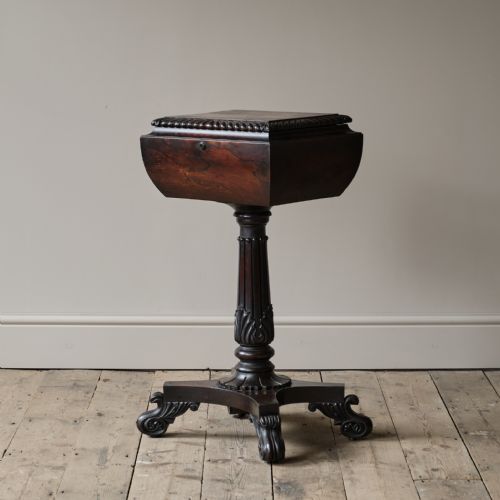
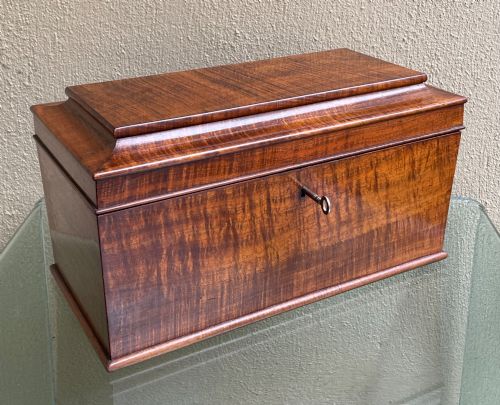
The versions most commonly met on this page include mahogany, rosewood, and padouk tea caddies alongside larger freestanding teapoys on stands. Makers fashioned these containers in distinctive shapes such as the sarcophagus box, bringing both utility and decorative presence to a parlour or drawing room.
How they were made
Cabinetmakers constructed these chests using dense hardwoods like mahogany, rosewood, and padouk, often selecting timbers for their rich grain and deep natural colour. Workshops frequently combined these woods with contrasting materials such as brass fittings, bone details, and intricate parquetry work.
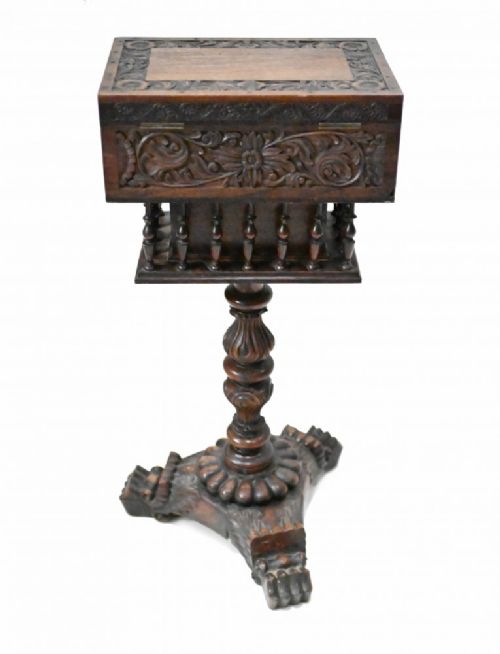
Joinery techniques ranged from neat dovetail boxes to turned pedestals and stands, sometimes enhanced with inlaid brass stringing. Carving was applied by hand to mouldings, sarcophagus lids, and decorative panels, grounding each box in the stylistic language of its period.
Carved Wood Tea Chest Retail Price Guide 2026
Typical asking prices for carved wood tea chest among the pieces listed under this phrase on Sellingantiques today, from the lower quarter to the upper quarter. They describe what is for sale here now, not the wider market.
What varies in quality
The standard of craftsmanship separates standard utility containers from exceptional examples, visible in the crispness of the timber carving and the precision of the mitred joints. Superior boxes display carefully selected veneer matching and harmonious grain patterns across every surface.
Hardware and interior arrangements also distinguish better pieces, particularly where original brass locks, escutcheons, and internal compartment lids remain intact. The sophistication of the overall silhouette, whether a sarcophagus profile or a turned stand, dictates the piece's decorative authority.
The Carved Wood Tea Chest Glossary
- Tea caddy
- A small box or chest designed to store loose tea leaves. These containers typically featured internal divisions and a secure lock.
- Teapoy
- A freestanding table or box mounted on a pillar and claw, or a stand, used for holding tea equipment. They often incorporate internal compartments for canisters and a mixing bowl.
- Sarcophagus
- A box shape featuring a convex or domed lid tapering downwards, popular during the Regency and Victorian periods for substantial tea caddies.
- Parquetry
- A geometric mosaic of wood pieces used for decorative veneer on furniture surfaces. It creates patterned wooden floors or box exteriors.
- Escutcheon
- A flat plate of brass or other metal surrounding a keyhole. It protects the surrounding wood from wear and adds a decorative accent.
Carved Wood Tea Chest: Frequently Asked Questions
How do I date a tea chest?
Dating relies on observing the timber species, overall form, and construction methods characteristic of different eras. For instance, sarcophagus shapes and brass inlay point toward the Regency period, while plainer mahogany boxes often suggest Georgian origins.
Internal fittings, hardware style, and secondary woods also provide clues to age. Examining the dovetailing and finish helps place the piece within a specific century or design movement.
What is a teapoy?
A teapoy is a larger tea chest mounted on a central pillar or a dedicated stand rather than resting directly on a table. These pieces served as self-contained stations for preparing tea in the drawing room.
Many include fitted interiors with removable canisters and space for a glass mixing bowl. Their elevated stature makes them function effectively as occasional or side tables.
How should I care for antique wood?
Maintain antique timber by keeping it away from direct sunlight and sudden temperature changes that can cause wood to split or warp. Regular dusting with a soft, dry cloth preserves the natural finish without building up heavy wax residues.
Avoid placing damp items directly onto the polished surface to protect the historic veneer and polish. Gentle handling ensures the original hardware and joints remain secure.