

Rosewood Pedestal Card Table
A rosewood pedestal card table brings folded elegance and hidden gaming surfaces into a room, offering the rich grain and sturdy central support that collectors prize.
Rosewood Pedestal Card Table
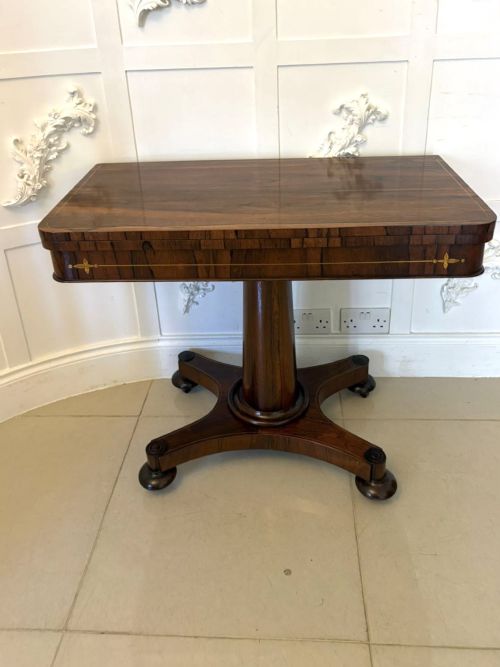
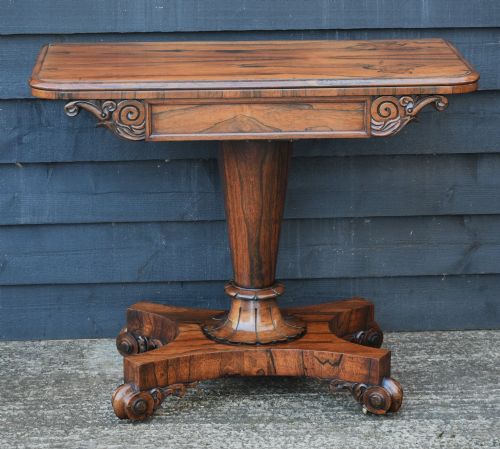
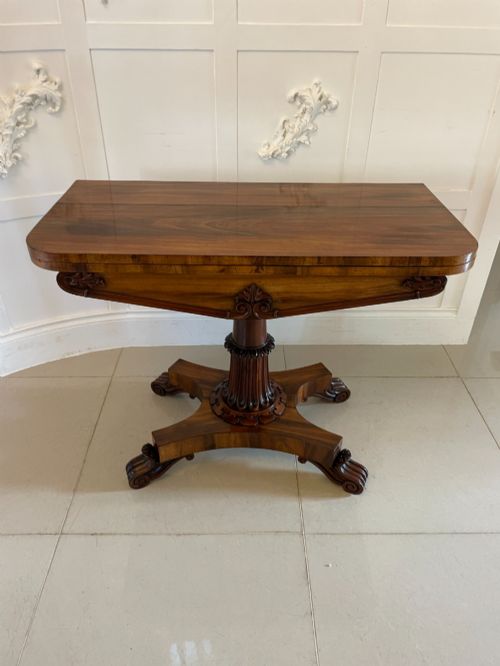
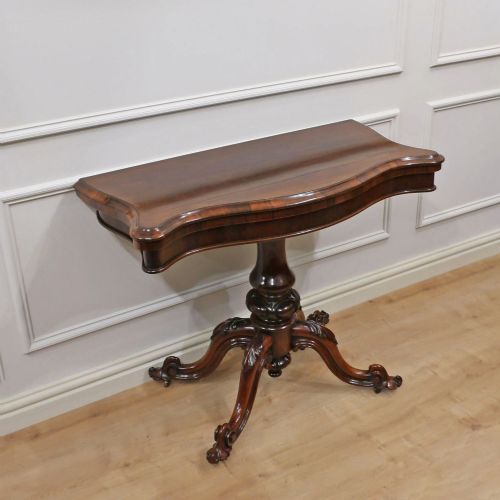
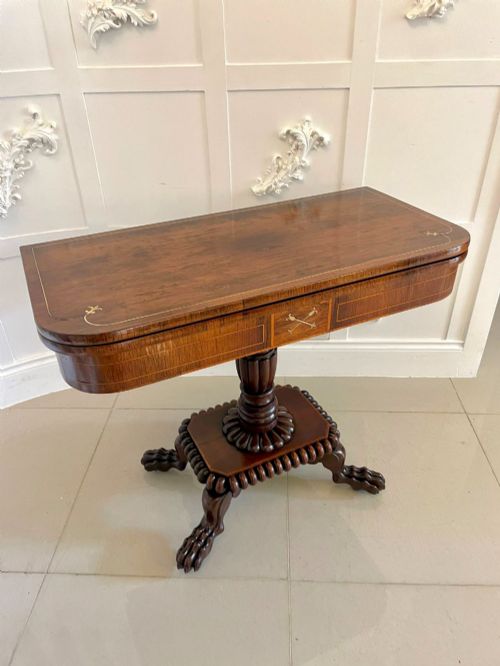
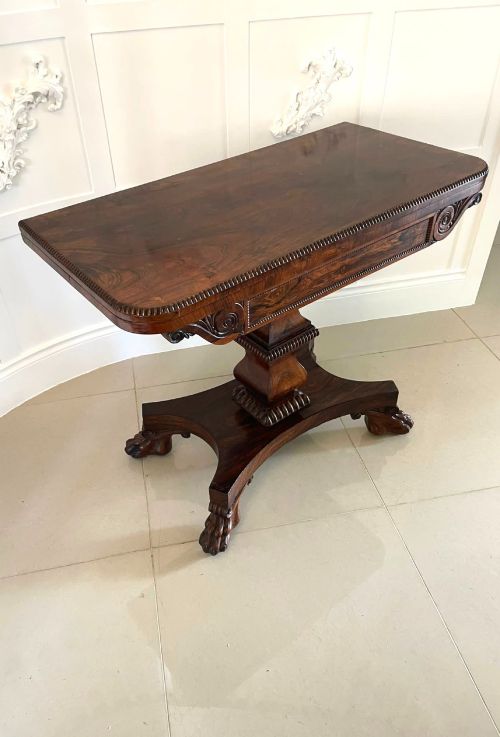
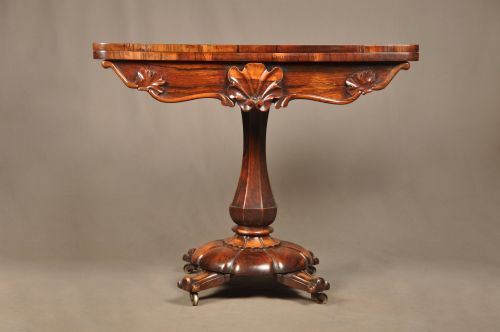
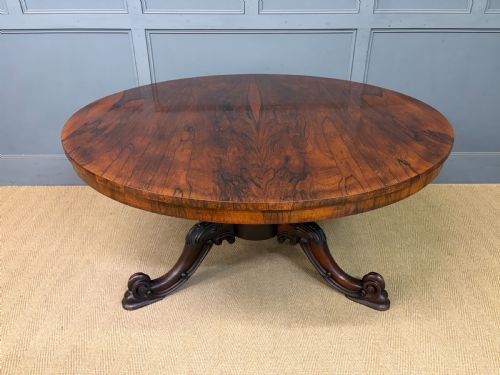
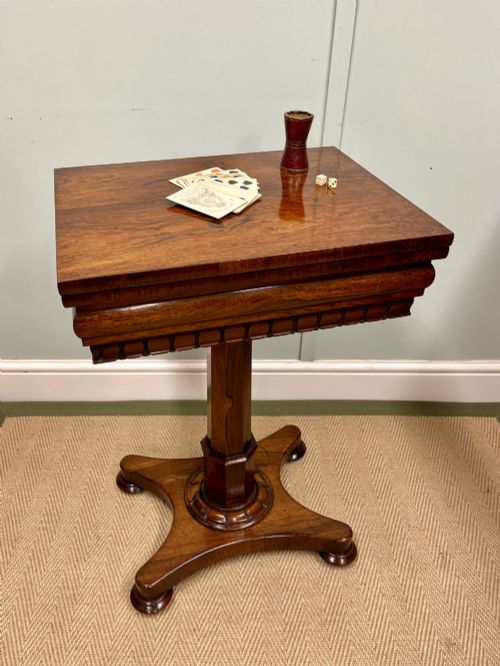
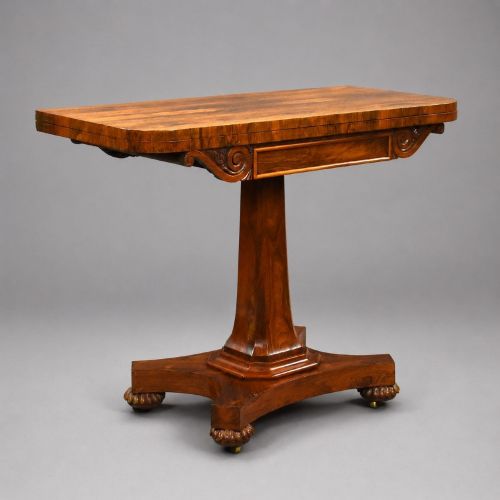
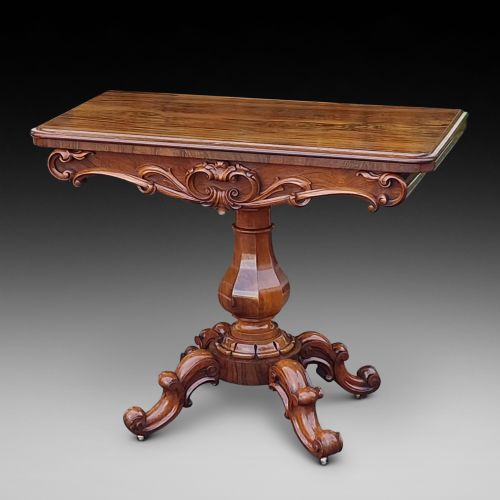
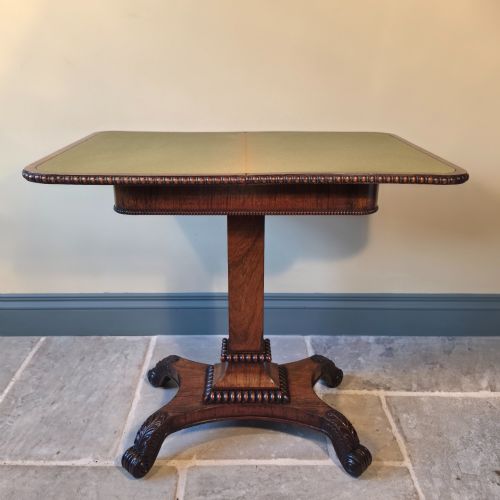
A rosewood pedestal card table is a multi-functional piece designed for parlour entertainment, featuring a hinged top that swivels and folds open to reveal a baize-lined playing surface. Buyers browsing this page will encounter examples spanning the Regency, George IV, William IV, and Victorian periods, often with pedestal bases supported by scroll feet, carved dolphins, or platforms.
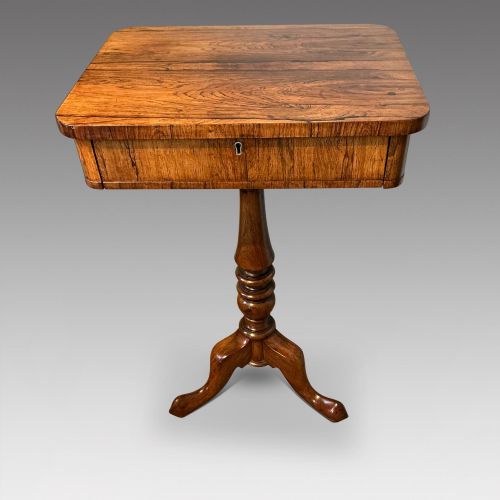
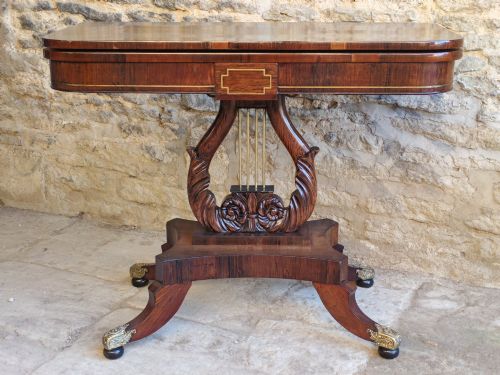
The primary form involves a heavy pillar rising from a plinth or scrolled feet, carrying a rectangular or serpentine fold-over top. Alongside dedicated card tables, the selection includes related folding games tables, tea tables, and centre tables that share the same distinctive rosewood construction and pedestal architecture.
How They Were Made
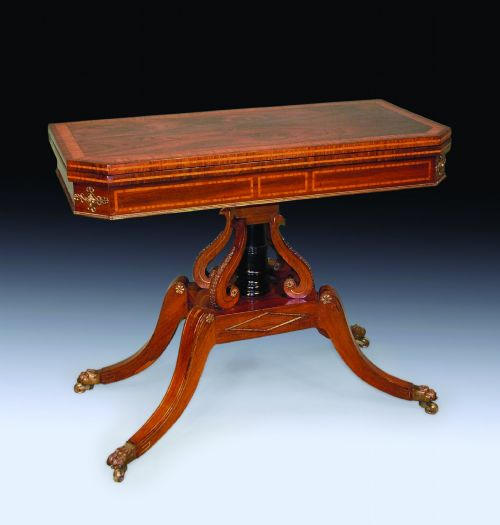
Cabinet makers utilised dense rosewood veneers laid over secondary timbers like mahogany, taking advantage of the rich natural dark grain and contrasting growth rings. Brass inlay, satinwood banding, and boxwood details frequently accent the friezes and table edges.
Solid rosewood was carved for decorative elements such as pedestal collars, scrolled pillar supports, and animal motifs like dolphins. Interiors often incorporate baize for the playing surface and hidden compartments beneath the pivoting fold-over tops.
Object forms include card tables, games tables, tea tables, side tables, dining tables, and centre tables.
What Varies in Quality
The distinction between standard pieces and the finest examples rests on the crispness of the carving and the precision of the brass and satinwood inlay. Heavy pedestal bases require solid joinery and substantial timber to prevent the pivoting top from sagging over time.
Makers known for exceptional production utilised highly figured rosewood veneers matched symmetrically across the fold-over top, whereas simpler items relied on plain timber surfaces and minimal ornamentation.
George Bullock·Gillows
The Rosewood Pedestal Card Table Glossary
- Baize
- A woolen felt fabric used to line the playing surface of card and games tables. It provides a soft, non-slip texture designed for dealing cards.
- Pedestal
- A central vertical pillar supporting the weight of the table top above a plinth base. This form replaced traditional four-legged designs during the Regency period.
- Ormolu
- Gilt bronze mounted onto furniture surfaces for decorative effect. It appears alongside brass inlay on finer Regency examples.
- Satinwood
- A pale exotic timber utilised for contrasting stringing and banding details against the darker rosewood background.
- Frieze
- The horizontal band situated directly beneath the table top, often decorated with brass inlay or wood carvings.
Rosewood Pedestal Card Table: Frequently Asked Questions
How do I use a card table?
The hinged top swivels on its central pivot and folds open to double the surface area, creating a stable platform for evening games. When not in use, the top folds flat against the base and sits neatly against a wall.
Interior spaces beneath the top often served to store cards, counters, and small gaming accessories.
What periods do these tables cover?
The pieces seen here span the Georgian, Regency, William IV, and Victorian eras, stretching from the early nineteenth century through to the mid-Victorian decades. Earlier examples often feature precise brass inlay and scroll pedestals.
Later Victorian versions tend towards heavier carved pedestal bases and distinct proportions while maintaining the core fold-over mechanism.
How do I tell Regency from Victorian?
Regency and George IV tables frequently display refined brass inlay, satinwood banding, and slender pillar supports influenced by classical design. The woodwork tends to be crisp and restrained.
Victorian pieces usually exhibit heavier proportions, bolder carved details on the pedestal, and less reliance on metal inlay for surface decoration.
Can I use it as a console table?
The folded top makes these tables narrow enough to stand against a hallway or drawing room wall as a console or side table. Many examples function equally well as tea tables when closed.
Opening the top instantly converts the piece back into its original gaming configuration.