



Rosewood Ottoman Stool
A rosewood ottoman stool brings substantial timber and versatile seating into a room, offering both a place to rest feet and hidden storage.
Rosewood Ottoman Stool
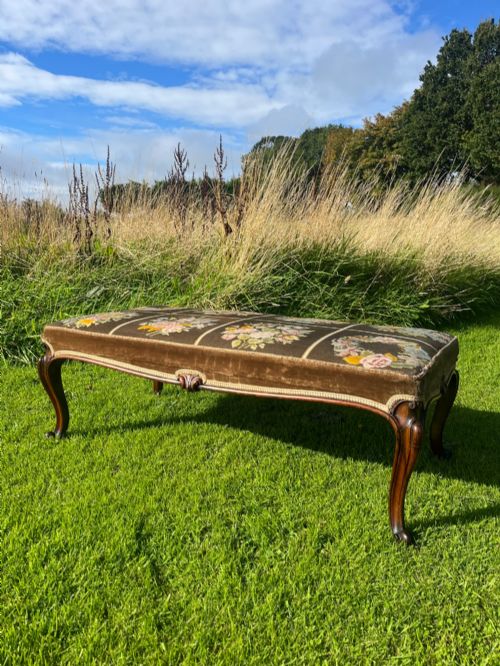
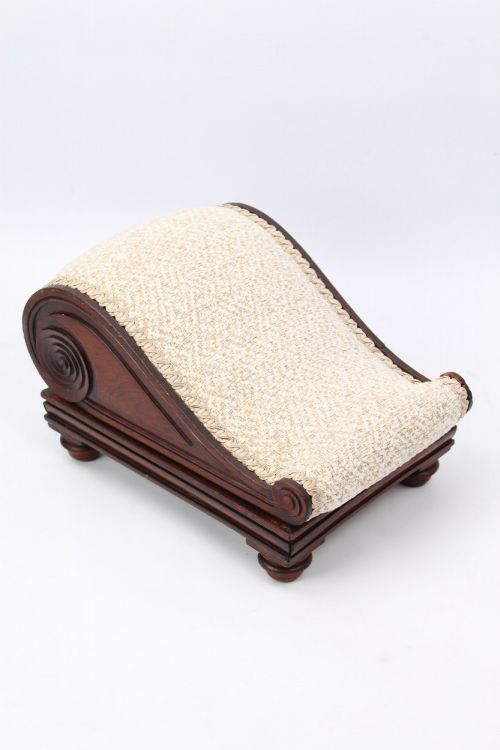
A rosewood ottoman stool is a sturdy timber seat designed for domestic comfort, frequently appearing in forms such as footstools, dressing stools, and box ottomans with lift-out or hinged seats. These pieces emerge predominantly from nineteenth-century workshops, spanning the Regency, George IV, and Victorian eras.
Buyers most frequently encounter Victorian and Regency examples finished in rich dark timber. The selection ranges from compact footstools to large centre stools and box seats intended for piano or dressing rooms.
Materials and construction methods
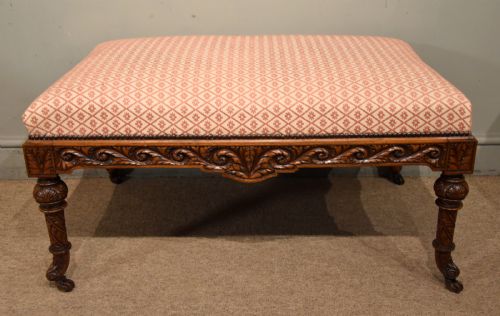
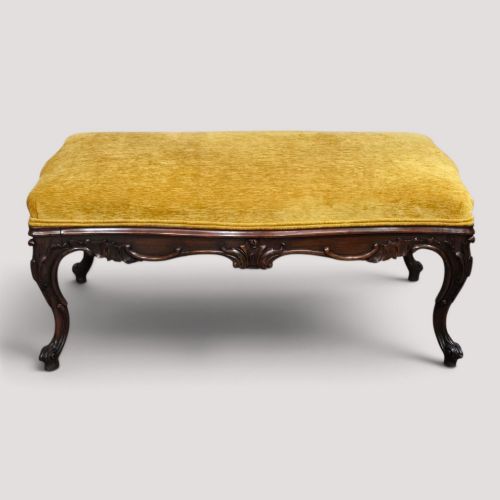
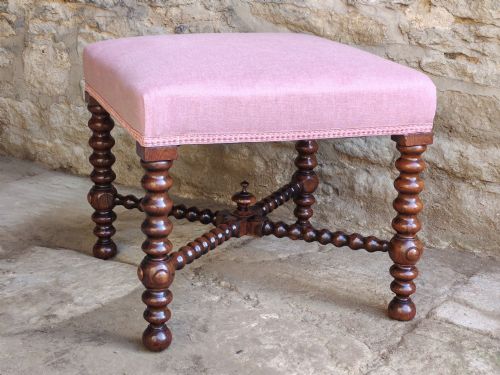
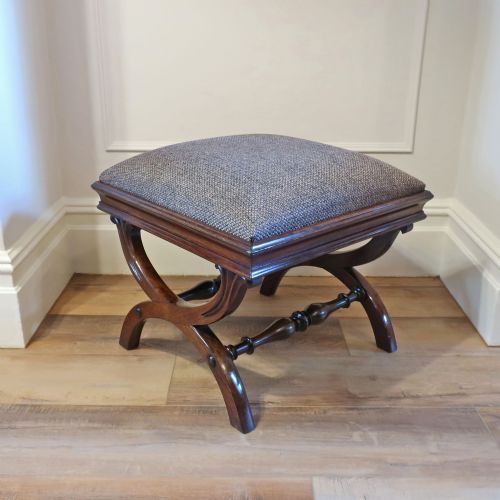
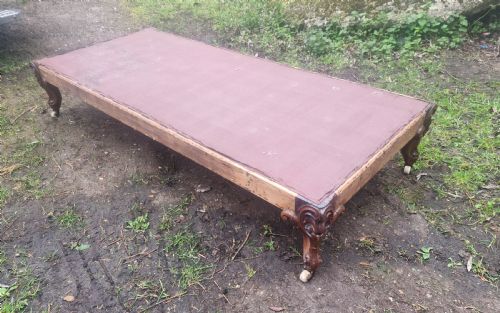
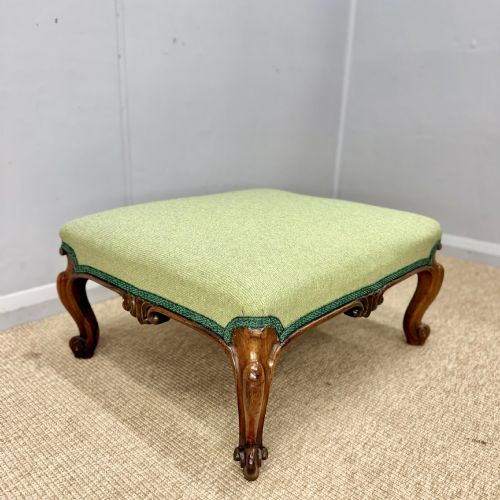
Cabinetmakers utilised dense rosewood for the structural frames, often turning, carving, or shaping the timber into cabriole legs, bobbin legs, or X-frames. Brass castors frequently appear on the feet of larger nineteenth-century examples to ease movement across heavy carpets.
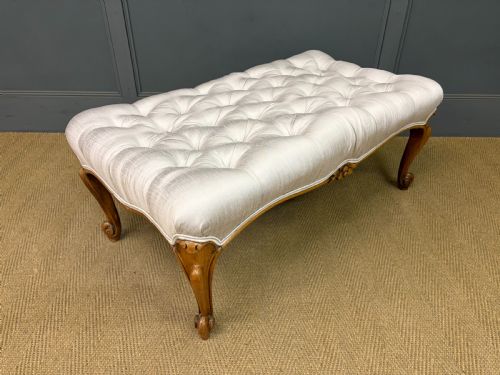
Upholstery forms an integral part of the construction, utilising textiles such as velvet, leather, tapestry, and buttoned fabric over supportive webbing or box frames.
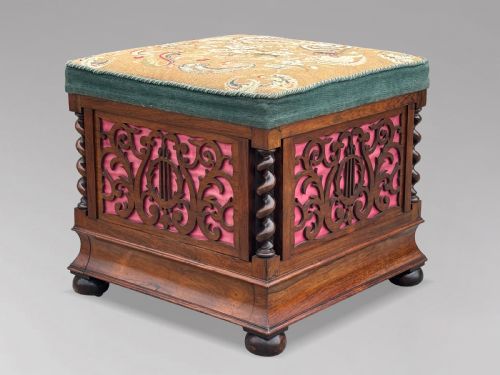
Several nineteenth-century ottomans doubled as secret music storage beside the pianoforte, hiding sheet scores beneath buttoned velvet.
Judging timber and upholstery standards
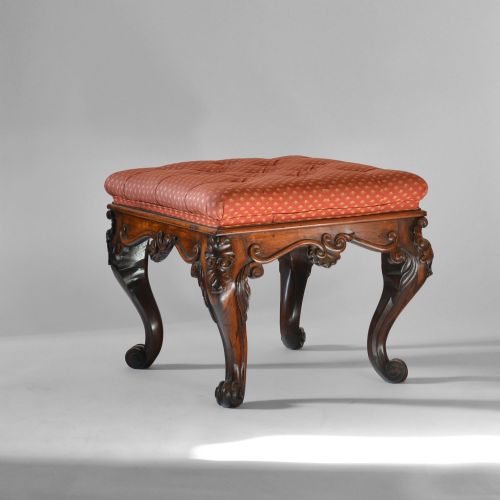
The distinction between standard examples and finer pieces lies in the crispness of the timber carving and the figuration of the rosewood grain. Superior items display deep, hand-carved ornamentation on cabriole or scroll legs rather than simple turned supports.
Structural integrity of the timber frame and the quality of the internal box construction separate everyday utility pieces from high-status nineteenth-century seating.
The Rosewood Ottoman Stool Glossary
- Ottoman
- A low, upholstered seat or footstool, frequently constructed with a hollow interior and a lift-up lid for storage. These versatile items served nineteenth-century dressing rooms and drawing rooms alike.
- Regency
- An English design style spanning the early nineteenth century, characterised by classical restraint, architectural lines, and refined timber work. Pieces from this period often display dark rosewood paired with brass inlay or mounts.
- Cabriole leg
- A furniture leg that curves outward at the knee and tapers inward toward the foot, mimicking animal limbs. This form appears frequently on mid-nineteenth-century Victorian stools.
- Bobbin leg
- A turned furniture leg shaped to resemble a series of wooden reels or bobbins stacked together. This decorative turning technique is common on mid-nineteenth-century timber frames.
- Box seat
- A stool or ottoman featuring a hollow compartment beneath the upper cushion for storage. Nineteenth-century examples often utilised these for sheet music or sewing supplies.
Rosewood Ottoman Stool: Frequently Asked Questions
How do I spot a Regency rosewood stool?
Regency pieces typically exhibit clean classical lines, restrained classical carving, and rich dark timber grains that reflect early nineteenth-century tastes. They often feature saber or turned legs without the heavy ornamentation seen later in the century.
Look closely at the joinery and timber selection, as Regency cabinetmakers favoured dense, highly figured rosewood combined with subtle brass details.
Can I use an antique ottoman daily?
Nineteenth-century rosewood stools are built from dense, durable hardwoods designed for robust daily use. Many survive in solid structural condition.
Buyers intending frequent use should check that the internal frame remains firm and that any modern reupholstery securely anchors to the historical timber.
What is the difference between an ottoman and a footstool?
A standard footstool is designed solely to support seated legs, whereas an ottoman incorporates a hollow interior compartment beneath a lift-out or hinged seat. Both share similar rosewood frames and upholstered tops.
Ottomans provide functional storage space inside the wooden box frame, making them slightly deeper and bulkier than traditional footstools.
How do I date a Victorian rosewood stool?
Dating relies on stylistic shifts from the earlier Regency curves to heavier Victorian proportions, richer carving, and the appearance of cabriole legs or buttoned upholstery. Mid-century examples often date around eighteen-fifties to eighteen-eighties.
Examine the turning style, the upholstery method, and whether brass castors are fitted to the base to narrow down the decade.