
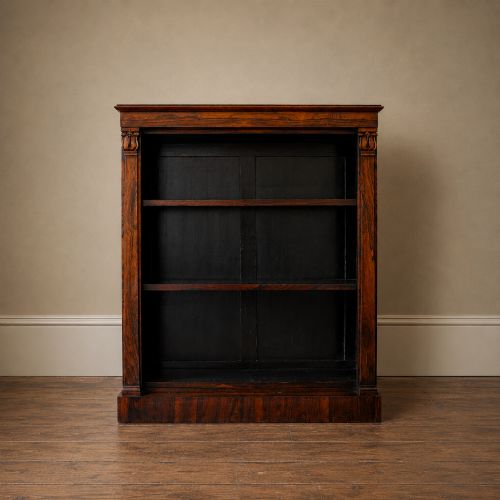
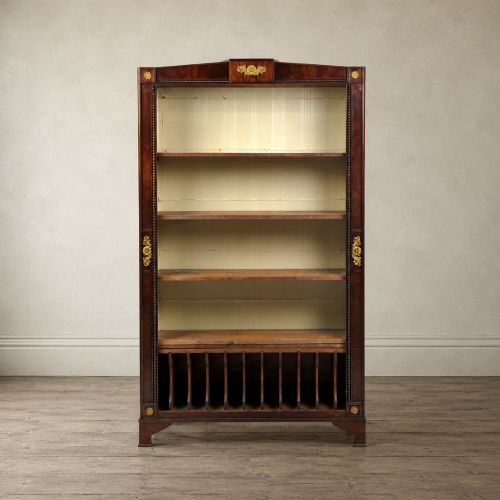
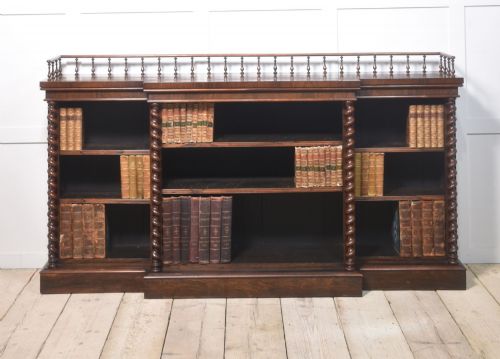
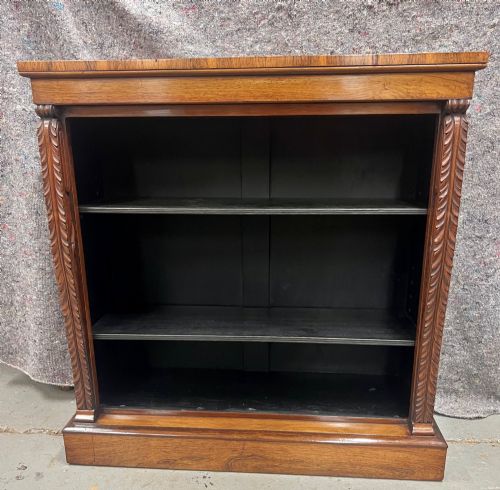


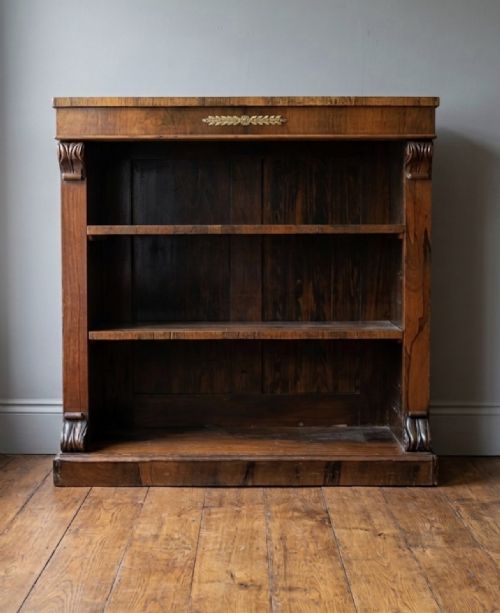


Rosewood Open Bookshelf
A rosewood open bookshelf brings rich timber grain and accessible display space to a room, uniting utility with refined nineteenth-century cabinet-making.
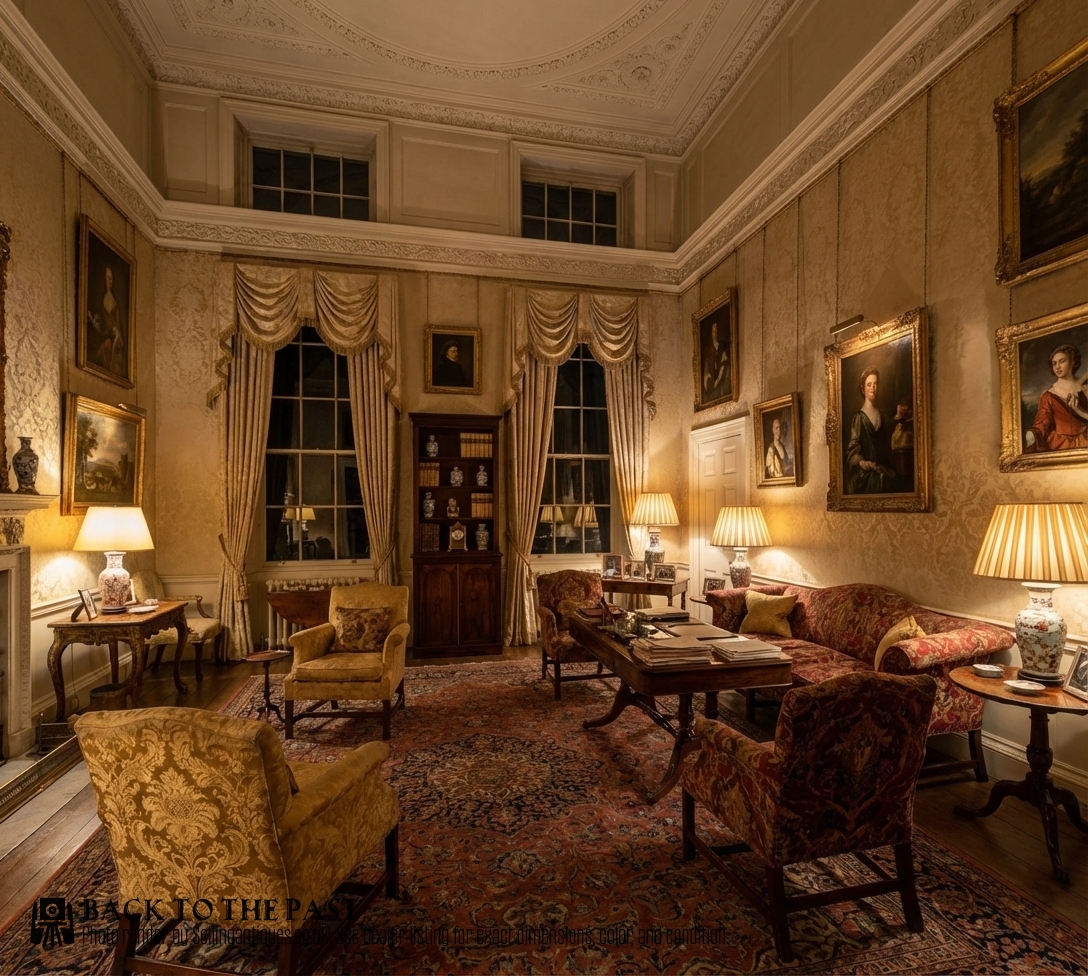
Rosewood Open Bookshelf
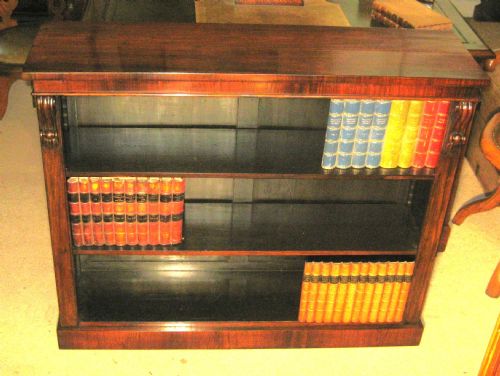
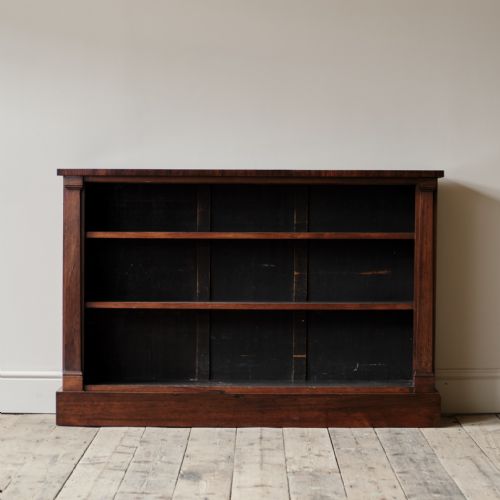
A rosewood open bookshelf functions primarily as a low or tiered standing cabinet designed to hold volumes without obstructing the view of the bindings. These pieces appear most frequently from the nineteenth century, spanning Regency, Victorian, and William IV periods.
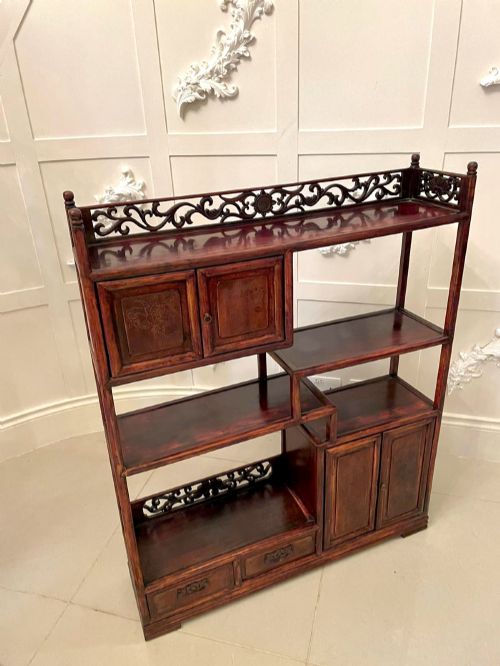
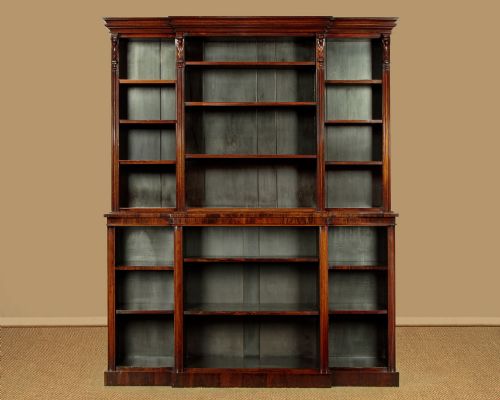
The format ranges from compact waterfall shelves and three-tier etageres to larger breakfront bookcases and low side cabinets. Many examples incorporate adjustable shelving or carved corbels, while others utilise related forms like wall shelves and whatnots.
Materials and Construction
Cabinet-makers relied heavily on solid rosewood and rosewood veneer applied over secondary timbers, often pairing the dark, figured grain with contrasting brass details or parcel gilt accents. Selected pieces integrate patinated marble tops, leather accents, or glass elements.
Structural variations include simulated paint finishes on softwood frames alongside traditional hardwood construction. Carved corbels and tiered platforms demonstrate the joinery techniques typical of Regency and Victorian workshops.
Several bookcases come equipped with leather dummy books, ready to conceal whatever modern clutter you prefer not to display.
Distinctions in Standard
Quality rests significantly on the depth and figuring of the rosewood timber or veneer selected for the visible surfaces, alongside the crispness of any carved corbels or parcel gilding. Superior examples maintain balanced proportions and integrated architectural details like breakfront profiles.
The sophistication of the internal mechanism for adjustable shelves and the integrity of secondary timbers further separate standard production from finer cabinet-making. Pieces retaining original surface patination command stronger consideration among collectors.
The Rosewood Open Bookshelf Glossary
- Rosewood
- A dense, heavily figured timber valued for its dark reddish-brown colour and distinct grain patterns. It forms the primary visual asset of these bookcases.
- Breakfront
- A cabinet design where the central section projects forward from the flanking wings. This architectural layout adds depth to low bookcases.
- Waterfall bookcase
- A set of open shelves that steps back progressively from bottom to top, creating a profile resembling descending water. These pieces often feature graduated tier heights.
- Etagere
- A set of open shelves designed for displaying small objects or books. They appear frequently in multi-tiered formats.
- Corbel
- A projecting bracket carved from wood, used to support upper shelves or cornices. They provide both structural support and decorative emphasis.
Rosewood Open Bookshelf: Frequently Asked Questions
Where should I place a rosewood open bookshelf?
These low or tiered bookcases suit sitting rooms and libraries where accessible book storage is required. Their finished backs and compact profiles also allow placement against open wall spaces.
Ensure the room avoids direct, prolonged sunlight to protect the rich rosewood timber grain and any delicate veneer from fading over time.
How do I adjust the shelves?
Many nineteenth-century pieces utilise traditional wooden support strips or brass rack-and-pinion systems to allow vertical movement of the internal shelves. Care must be taken when sliding shelves along older runners to avoid damaging the interior veneer.
If the mechanism sticks, check for seasonal wood movement rather than forcing the timber into a new position.
How do I distinguish Regency from Victorian examples?
Regency and William IV pieces, dating roughly from the early decades of the nineteenth century, often display cleaner architectural lines, parcel gilt highlights, and classical brass details. Victorian bookcases from the mid to late nineteenth century tend towards heavier proportions and more pronounced carved corbels.
Examining the secondary timbers and the style of the wood grain can offer further clues to the manufacturing decade.