
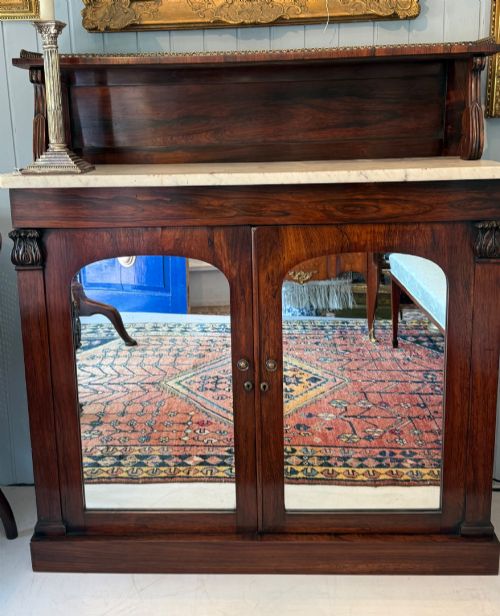
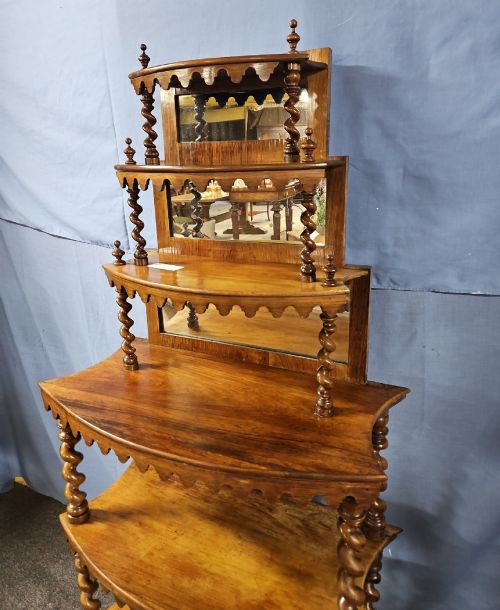
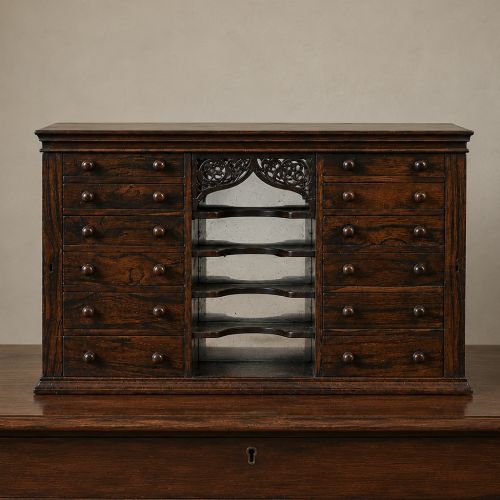
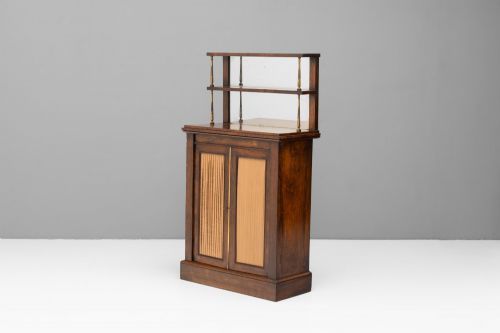

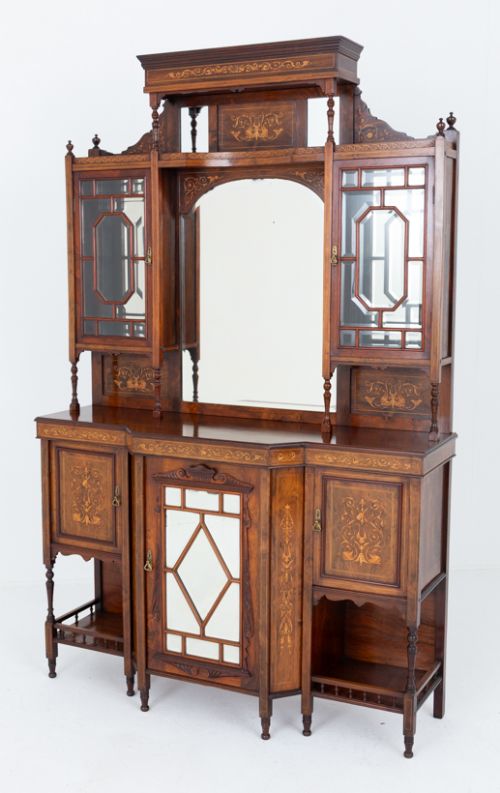


Rosewood Mirrored Cabinet
A rosewood mirrored cabinet brings warmth and polished reflection to a room, uniting rich dark timber with functional display.
Rosewood Mirrored Cabinet
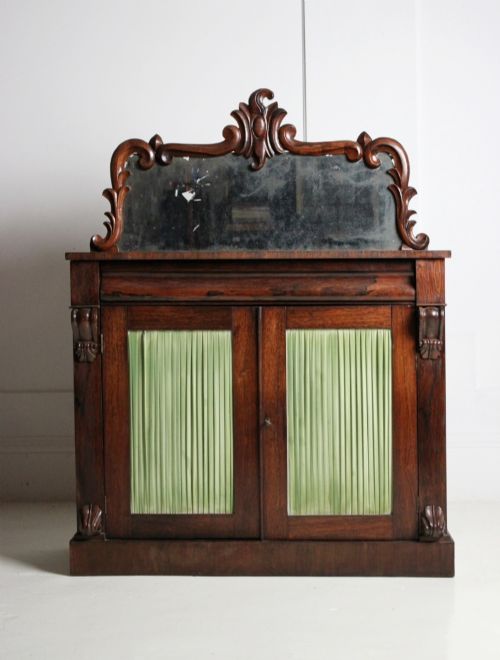
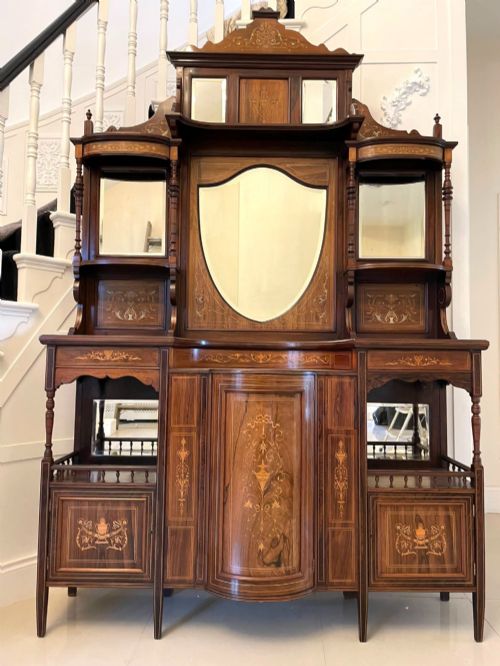
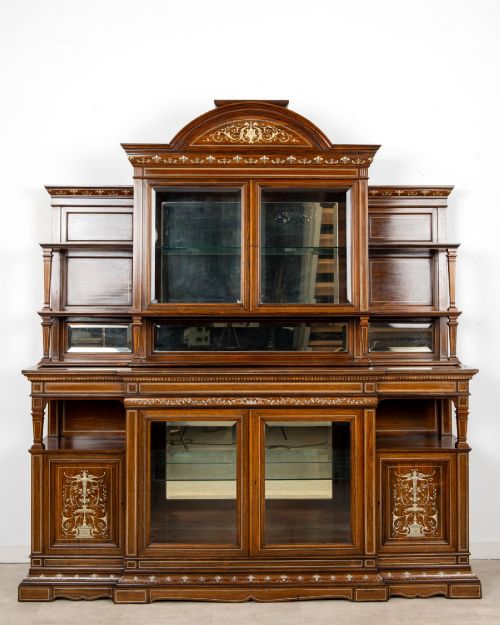
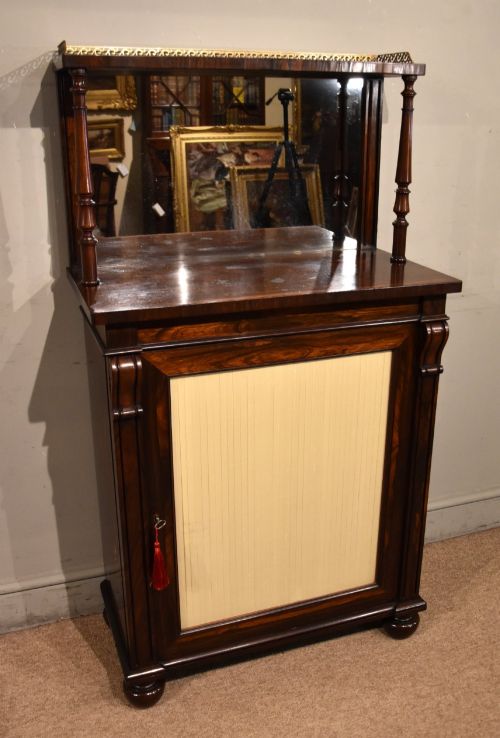
A rosewood mirrored cabinet spans several distinct forms including chiffoniers, side cabinets, display units, and corner cabinets. These pieces emerge across the nineteenth century, covering Regency, Victorian, and Edwardian periods.
Buyers most frequently encounter Victorian and Regency examples configured as chiffoniers or side cabinets. These functional items often incorporate mirrored backs, glass doors, and open shelving designed for display and storage in period interiors.
The assortment draws on nineteenth-century craftsmanship, moving from the refined lines of the Regency era through to the inlaid decorative styles of the late Victorian and Edwardian periods.
Materials and Technique
Makers built these cabinets using dense rosewood timbers, frequently embellished with contrasting boxwood inlay or delicate marquetry. Structural elements often rely on secondary woods like mahogany, whilst brass details add structural and decorative accents.
Glass and mirror plates form central components, set into doors or mounted upright behind display shelves. Craftsmen also utilised ormolu mounts and porcelain plaques on select pieces to enhance the visual richness of the timber.
Listings feature rosewood cabinets spanning the Regency, Victorian, and Edwardian periods, incorporating glass, brass, and boxwood inlay.
Standards of Execution
Quality rests upon the crispness of the boxwood inlay, the precision of the brass work, and the depth of the rosewood grain. Master workshops distinguished their output through refined joinery and well-balanced proportions.
The integration of the mirror glass within the timber frame indicates the standard of manufacture. Finer pieces show careful attention to detail in internal linings, marquetry motifs, and mounting hardware.
Collinson & Lock·Holland & Sons·Gillows·Howard and Sons
The Rosewood Mirrored Cabinet Glossary
- Rosewood
- A dense, heavily grained timber prized for its deep colour and smooth finish. It forms the primary structural and visual surface for these cabinets.
- Chiffonier
- A low sideboard or cabinet equipped with drawers and shelves, often featuring mirrored panels or fabric-backed doors. This form was popular during the Regency and Victorian eras.
- Marquetry
- Decorative patterns formed by fitting together thin veneers of wood and other materials. It appears across late Victorian and Edwardian cabinet doors and surfaces.
- Ormolu
- Gilded bronze used for ornamental mounts and fittings on finer cabinets. This technique adds metallic highlights against the dark rosewood body.
Rosewood Mirrored Cabinet: Frequently Asked Questions
Where should I place a rosewood mirrored cabinet?
These cabinets suit reception rooms, living spaces, or hallways where their reflective glass and polished timber can catch the light.
Position them against interior walls away from direct sunlight to protect the rosewood finish and the silvered backing of the mirror glass.
How do I date a rosewood cabinet?
Dating relies on stylistic markers such as the restrained geometry of Regency pieces compared to the profuse marquetry of late Victorian or Edwardian examples.
Examining the construction methods, secondary timbers, and hardware integration also helps establish the period of manufacture.
What is the difference between a chiffonier and a side cabinet?
A chiffonier typically combines a lower enclosed cupboard with an upper shelf tier or mirrored back, originating in the Regency and early Victorian periods.
Side cabinets generally offer broader enclosed storage with glass or solid doors, spanning a wider variety of nineteenth-century decorative styles.
How do I care for antique rosewood?
Maintain the timber by applying a microcrystalline wax sparingly and buffing gently with a soft cloth to preserve the natural lustre of the grain.
Avoid using liquid polishes or silicone sprays, and keep the cabinet away from extreme temperature fluctuations and damp environments.