

Rosewood Low Bookcase Cabinet
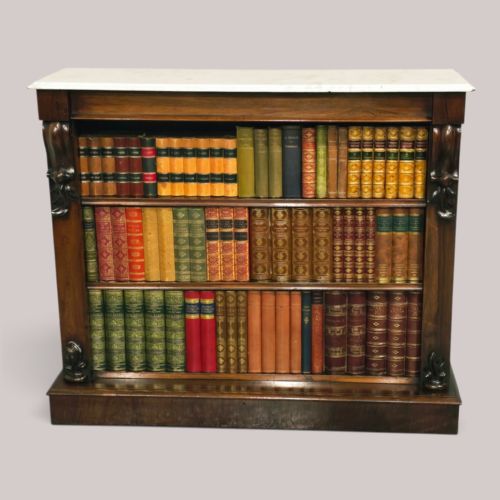
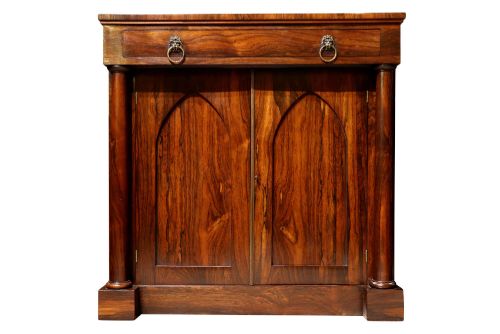
A rosewood low bookcase cabinet brings rich dark timber and low-slung display space into a room.
Rosewood Low Bookcase Cabinet
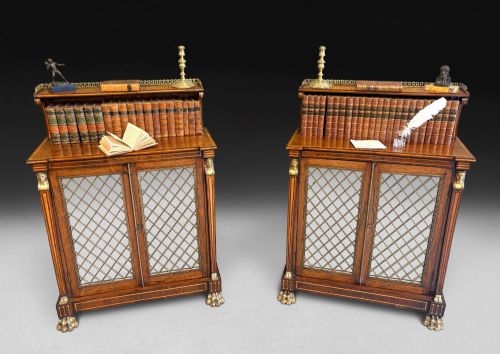
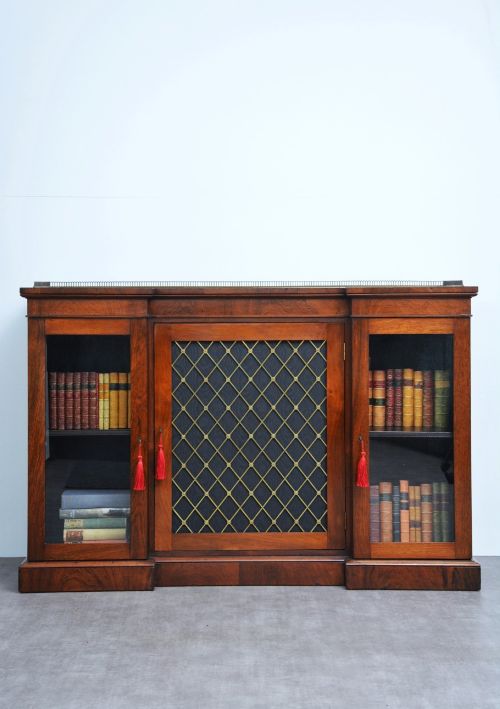
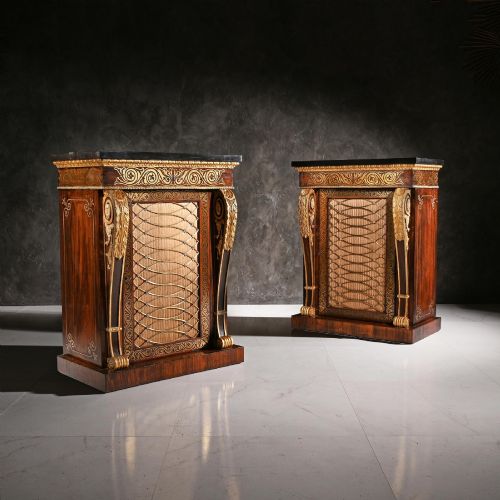
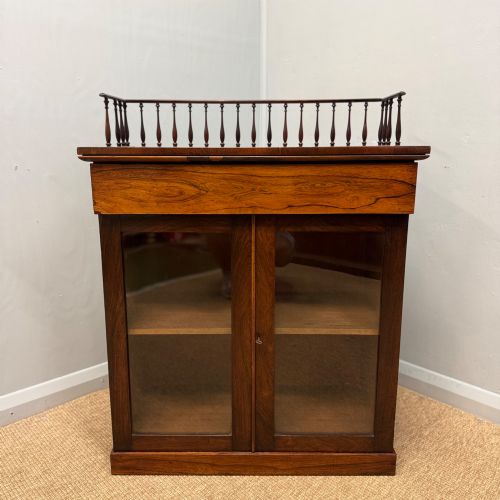
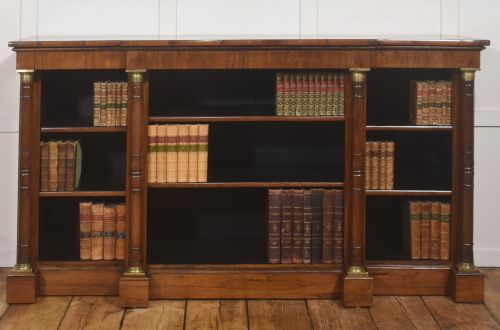
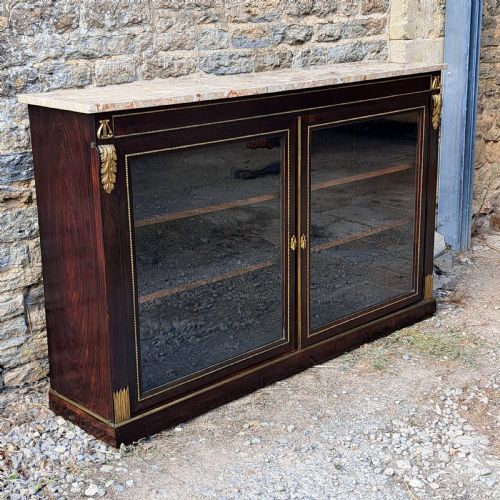
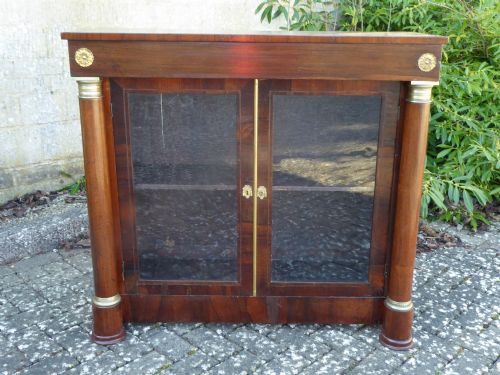
A rosewood low bookcase cabinet combines open shelving or enclosed storage with a compact height suited for modern or traditional rooms. When you search for a rosewood low bookcase cabinet, you encounter forms ranging from open Victorian library shelves to enclosed Regency side cabinets.
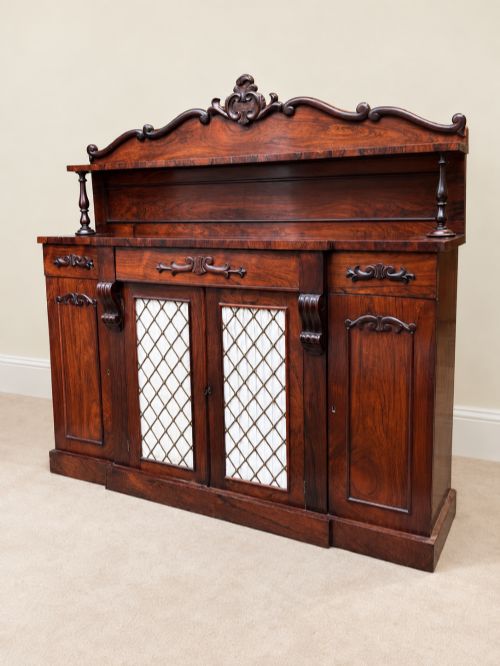
The selections span the Regency, William IV, George IV, and Victorian periods. Pieces frequently appear as open bookcases, side cabinets, chiffoniers, and breakfront units.
Origins stretch across the nineteenth century, capturing the transition from formal Regency elegance to heavier Victorian utility. Most examples serve simultaneously as display furniture and practical storage.
How they were made
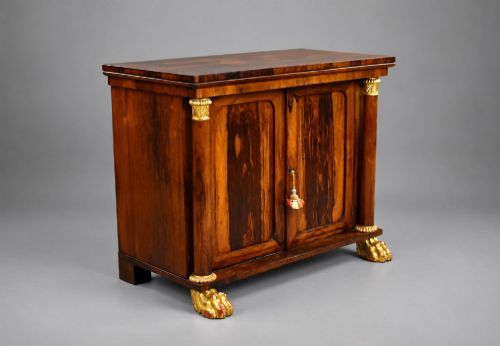
Cabinet makers utilised dense rosewood veneers applied over stable secondary timbers like pine and oak. This technique allowed workshops to display striking grain patterns across wide cabinet doors and shelf fascias.
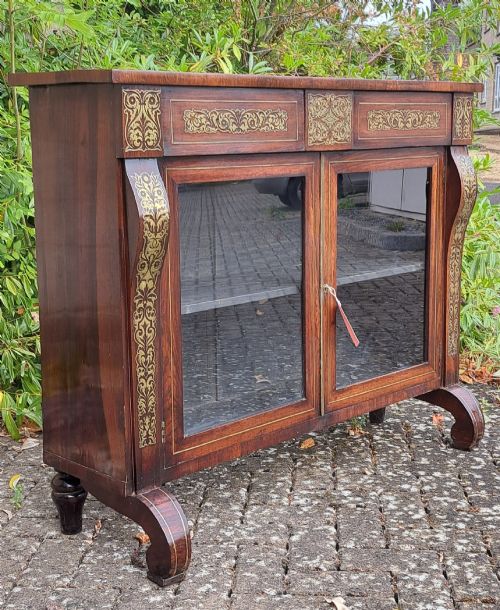
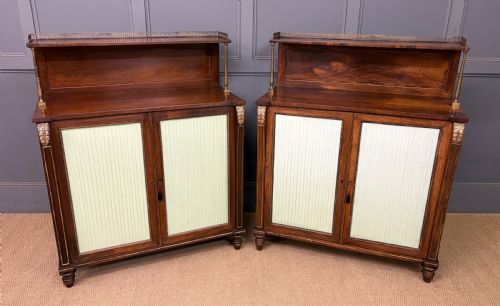
Detailing often incorporates cast brass inlays, gilt bronze mounts, and glazed or fabric-backed panels behind wooden framing. Tops frequently feature polished white or dark marble slabs rather than plain wood.
Adjustable shelving mechanisms appeared in finer workshop productions, relying on wooden ratchets or brass strip supports to alter shelf heights.
Rosewood Low Bookcase Cabinet Retail Price Guide 2026
Typical asking prices for rosewood low bookcase cabinet among the pieces listed under this phrase on Sellingantiques today, from the lower quarter to the upper quarter. They describe what is for sale here now, not the wider market.
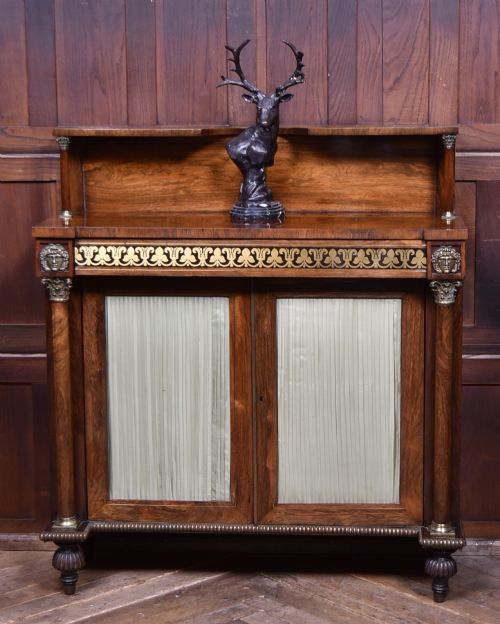
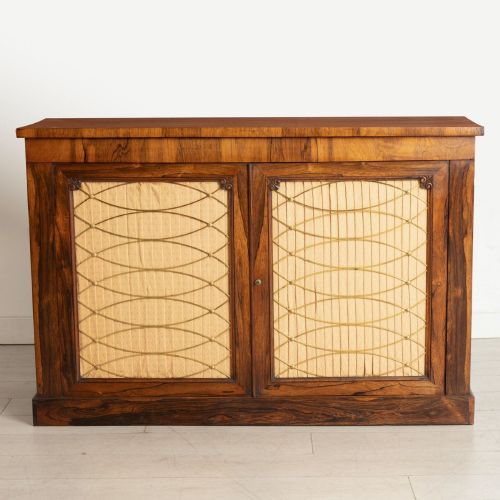
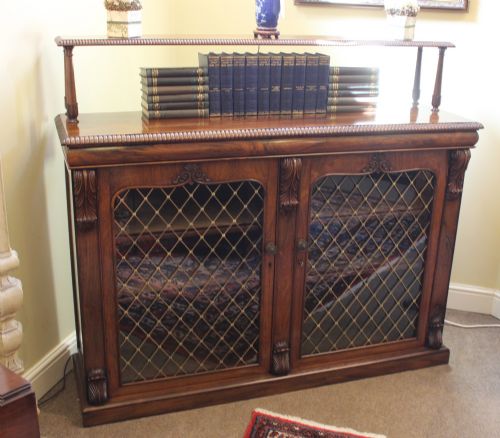
Pleated silk panels behind wooden lattice doors kept nineteenth-century book collections safe from dust while hiding the contents.
What varies in quality
Quality rests primarily on the selection of the rosewood veneer and the continuity of the grain matching across doors and drawer fronts. Superior pieces display deep, natural figuring without heavy artificial staining.
The sophistication of secondary mounts and brass inlay work distinguishes standard workshop output from exceptional cabinet making. Finely cast brass details and crisply carved wooden mouldings elevate a piece considerably.
Structural integrity depends on the stability of the carcase and the precision of the joinery used in framing the low profile.
Gillows of Lancaster
The Rosewood Low Bookcase Cabinet Glossary
- Chiffonier
- A low cabinet featuring enclosed cupboards below, often topped with a shelf or a raised back. They gained popularity during the Regency and Victorian eras for storing books and tableware.
- Breakfront
- A piece of furniture where the central section projects forward from the flanking outer sections. This architectural arrangement creates depth and visual interest in larger cabinets.
- Pier cabinet
- A narrow cabinet designed specifically to fit the wall space between windows. These pieces frequently incorporate glazed doors to protect delicate collections.
- Veneer
- A thin layer of superior wood bonded to a secondary timber base. This method prevents warping while displaying decorative grain surfaces.
- Faux rosewood
- A painted finish imitating the distinctive dark figuring of genuine rosewood timber. Artisans applied this technique to standard woods during periods when exotic materials were scarce or costly.
Rosewood Low Bookcase Cabinet: Frequently Asked Questions
What is a low bookcase cabinet?
A low bookcase cabinet is a piece of furniture designed to sit below eye level, combining bookshelf space with enclosed cabinet storage.
These pieces offer a surface for display on top while keeping books or objects accessible within the lower sections.
How do I identify Regency rosewood?
Regency rosewood furniture usually exhibits crisp architectural lines, brass inlay work, and restrained classical proportions.
Makers from this period often combined dark exotic timbers with gilt mounts and fabric panels behind wooden fretwork.
Where should I place a low cabinet?
Low cabinets fit comfortably beneath windows or along living room walls where tall shelving would overwhelm the space.
Their reduced height allows the wall above to remain open for art or mirrors.