



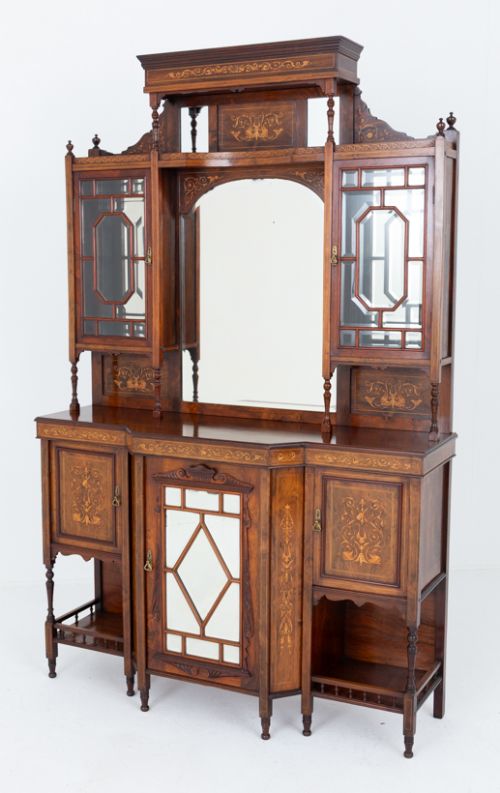


Rosewood Glazed Side Cabinet
A rosewood glazed side cabinet brings rich grain and refined display space to a room, drawing the eye with its deep timber tones.
Rosewood Glazed Side Cabinet
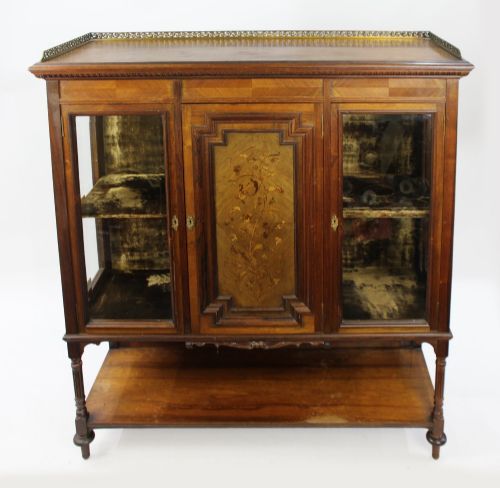
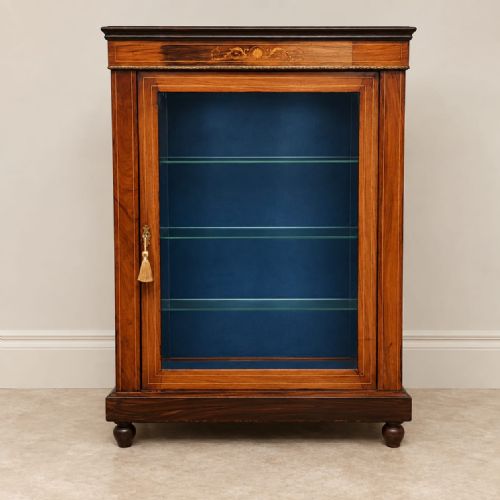
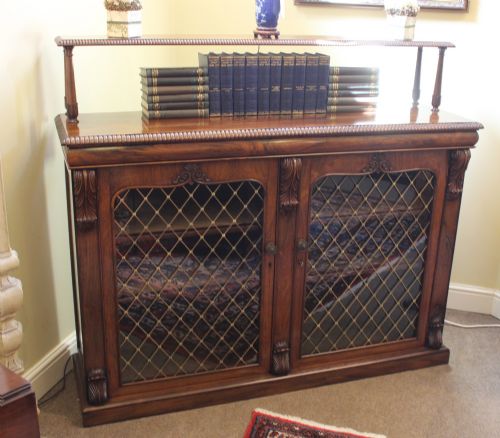
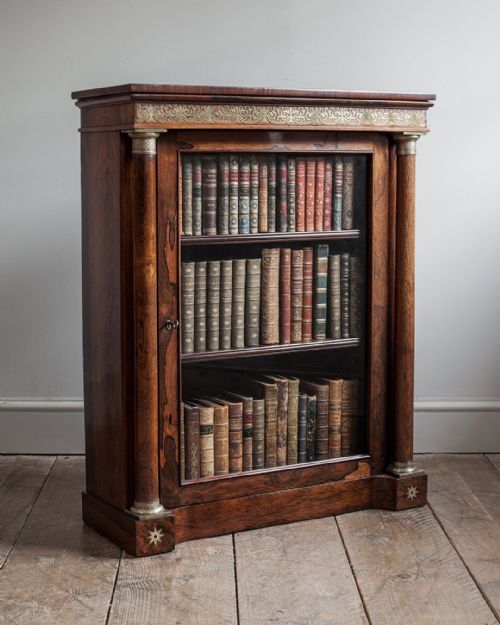
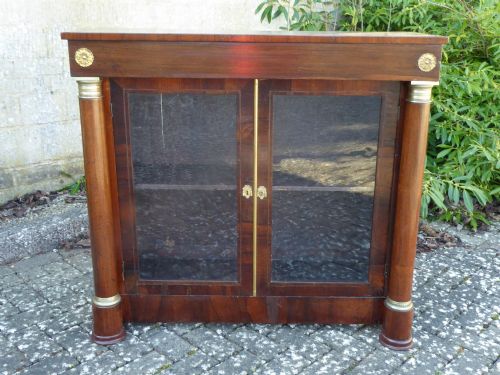
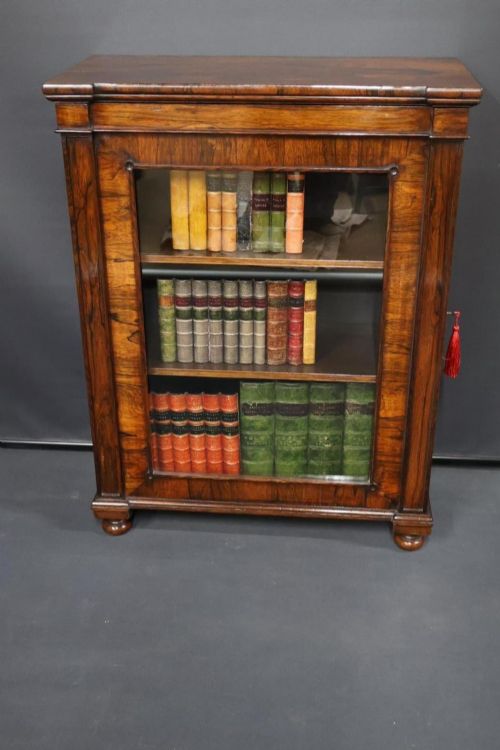
A rosewood glazed side cabinet combines a timber-framed carcass with glass panels, offering enclosed storage alongside a view of the interior shelves. These pieces function as display cabinets, pier cabinets, and bookcases across various historical periods.
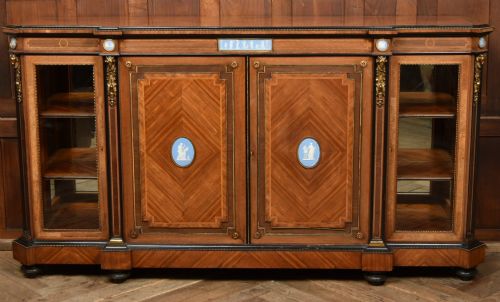
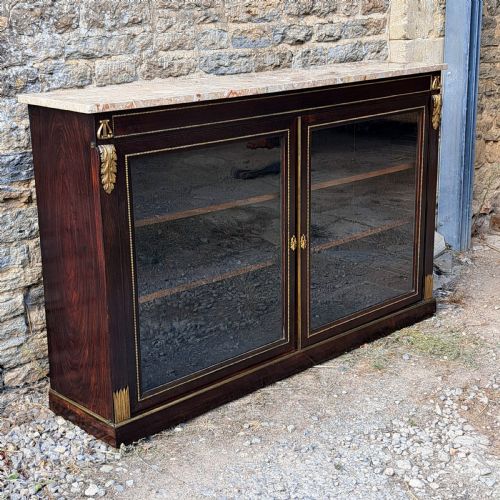
The most common examples encountered on this page stem from the Victorian and Regency eras. Buyers frequently meet compact pier cabinets alongside larger breakfront credenzas and bookcases.
How they were made
Cabinet makers utilised dense rosewood timber, often selecting figured veneers applied to a stable secondary wood foundation. Brass mounts, gilt bronze details, and intricate boxwood or marquetry inlay decorate the exterior surfaces.
Glazing secures the front and side openings, while internal shelving houses books, ceramics, and ornaments. Structural stability relies on traditional joinery, occasionally enhanced by columns or turned supports.
Rosewood Glazed Side Cabinet Retail Price Guide 2026
Typical asking prices for rosewood glazed side cabinet among the pieces listed under this phrase on Sellingantiques today, from the lower quarter to the upper quarter. They describe what is for sale here now, not the wider market.
The listings span the Georgian, Regency, William IV, and Victorian periods, showcasing rosewood alongside brass, marble, and marquetry inlay.
What varies in quality
The sophistication of the inlay work and the richness of the rosewood grain set exceptional pieces apart from standard examples. Hand-cut marquetry and crisp brass mounts indicate superior workshop production.
Proportion and architectural detailing also dictate quality. Pieces with balanced breakfront forms or substantial marble tops reflect higher ambition in design and execution.
Collinson and Lock·James Plunckett Art Furniture Makers
The Rosewood Glazed Side Cabinet Glossary
- Pier cabinet
- A low display cabinet designed specifically to stand against the narrow wall space between windows. These pieces often feature single glazed doors and flat tops.
- Credenza
- A low sideboard or cabinet originating in Italy, adapted in the nineteenth century to include glazed doors and central shelving. They frequently anchor larger reception rooms.
- Marquetry
- The art of forming decorative patterns using thin veneers of different woods and materials. Craftsmen assemble these elements to create floral or geometric tableaus.
- Chiffonier
- A compact sideboard or cabinet equipped with enclosed lower storage and upper shelving. Nineteenth-century examples often incorporate glass doors to protect books or collections.
Rosewood Glazed Side Cabinet: Frequently Asked Questions
Where should I place a side cabinet?
These cabinets suit dining rooms, drawing rooms, or hallways where wall space permits a shallow profile. Their glass doors allow for secure display away from household dust.
Position them out of direct sunlight to protect the rosewood timber from fading over time.
How do I care for rosewood surfaces?
Dust the exterior regularly with a dry, soft cloth and avoid chemical polishes that build up residue on the timber. Maintain stable room humidity to protect the veneer and inlay from shifting.
Keep the cabinet away from direct heat sources such as radiators to prevent wood movement.
How do I distinguish Regency from Victorian pieces?
Regency cabinets often display classical restraint with gilt brass mounts, rosewood grain, and architectural proportions. They date from the early nineteenth century.
Victorian pieces frequently introduce heavier carving, marquetry inlay, and varied display formats like pier cabinets or credenzas later in the century.
What is the purpose of glazed doors?
Glass panels protect books, ceramics, and collectables from dust while keeping them visible within the room. This design turns utilitarian storage into a formal display feature.
Many period cabinets combine glazed upper sections with solid lower doors for hidden storage.