



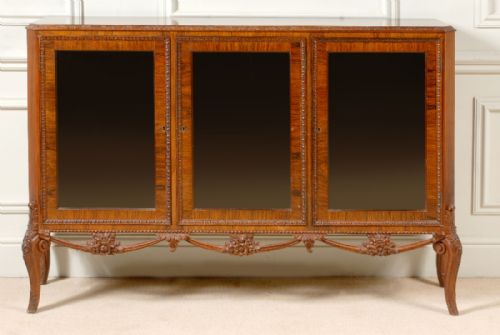

Rosewood Glass Door Cabinet
A rosewood glass door cabinet brings rich grain and transparency together, offering a refined way to display treasured possessions in any room.
Rosewood Glass Door Cabinet
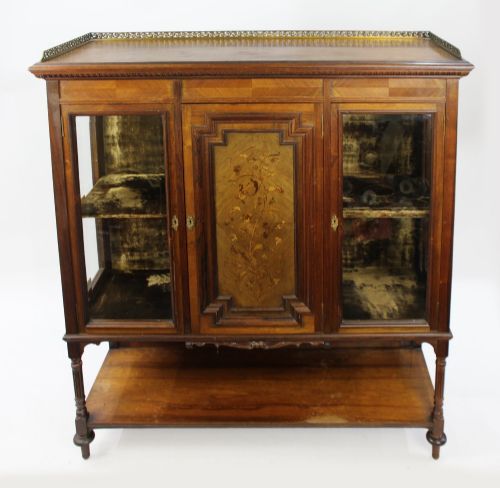
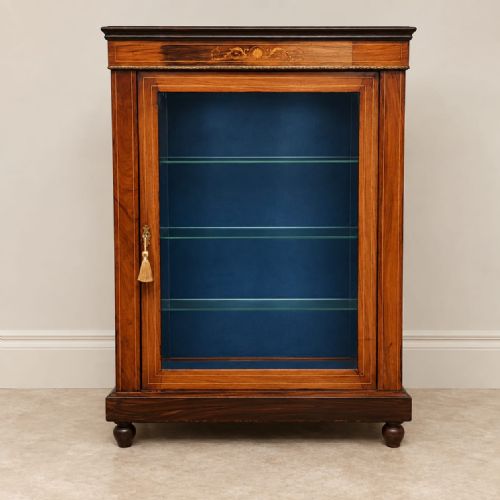
A rosewood glass door cabinet encompasses various forms designed to display and store possessions, primarily emerging through Victorian pier cabinets and credenzas. These pieces combine glazed doors with rich tropical timber frames, appearing alongside occasional bookcases and side cabinets.
The selection on this page leans heavily toward Victorian pier cabinets and mid-nineteenth century credenzas, alongside Georgian and Regency bookcases. Pieces span several decades from the early nineteenth century through to the Edwardian era, featuring styles from plain English cabinet-making to Louis XVI Revival and Chinese Oriental influences.
How they were made
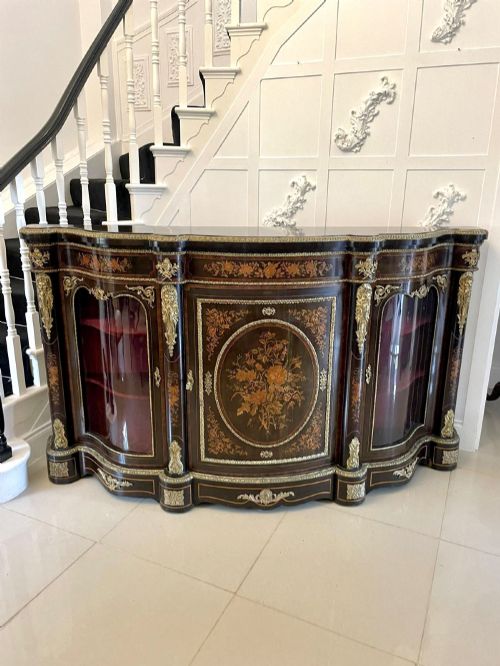
Makers utilised dense rosewood veneers applied to solid carcases, frequently incorporating contrasting timbers such as satinwood, burr walnut, and ebony for intricate inlay work. Brass mounts, ormolu details, and barley twist columns supplement the woodwork on the more elaborate examples.
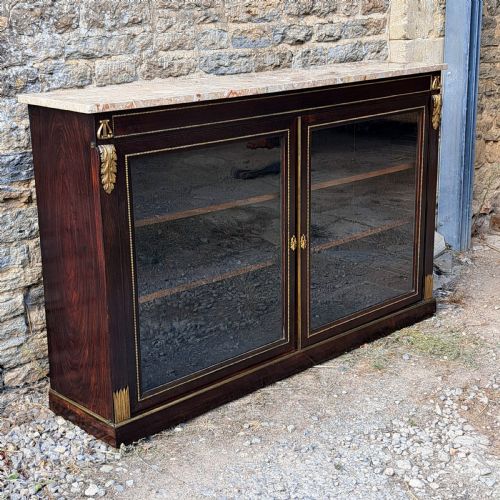
Glazing forms the central visual element of these cabinets, allowing light into shelved interiors that are occasionally lined with velvet or fabric. Marble tops appear on specific credenza and side cabinet variants, adding weight and a contrasting cooling surface to the timber.
Rosewood Glass Door Cabinet Retail Price Guide 2026
Typical asking prices for rosewood glass door cabinet among the pieces listed under this phrase on Sellingantiques today, from the lower quarter to the upper quarter. They describe what is for sale here now, not the wider market.
Listings span the nineteenth and early twentieth centuries, dominated by Victorian examples using rosewood, glass, brass, and ormolu.
What varies in quality
The precision of the marquetry and the depth of the rosewood grain define the visual hierarchy of these cabinets. Subtle differences in the execution of brass inlay, ormolu mounts, and carved columns distinguish standard workshop production from exceptional examples.
Structural integrity rests on the stability of the timber carcase and the original condition of the glass panes and interior linings. Finer pieces demonstrate superior joinery in the serpentine or shaped fronts and tighter tolerances in the door fittings.
François Linke
The Rosewood Glass Door Cabinet Glossary
- Pier cabinet
- A low freestanding display cabinet designed specifically to fit the wall space between windows. These pieces usually feature a single glazed door and flat top.
- Credenza
- A low sideboard or cabinet originating in the nineteenth century, often fitted with central glass doors flanked by curved side cupboards. They frequently incorporate marble tops and intricate marquetry.
- Ormolu
- Gilded bronze cast and chased furniture mounts used to decorate the corners, friezes, and feet of decorative cabinets. This technique became prominent in French Revival furniture.
- Chiffonier
- A compact sideboard or low cabinet typically fitted with shelves enclosed by glass or fabric-backed doors below a small superstructure. The form evolved during the Regency and Victorian periods.
Rosewood Glass Door Cabinet: Frequently Asked Questions
Where were these cabinets placed originally?
Pier cabinets stood specifically in the narrow wall spaces between tall Victorian drawing-room windows to utilise otherwise neglected architectural gaps. Credenzas and side cabinets occupied principal reception rooms to display porcelain and silver behind glass doors.
Smaller side cabinets and chiffoniers found use in parlours and dining spaces for everyday storage and ornament display. Their placement depended entirely on the room's proportions and the availability of natural light.
How do I care for rosewood furniture?
Rosewood requires stable indoor humidity levels and protection from direct sunlight to prevent the timber from fading or splitting. Regular dusting with a soft, dry cloth maintains the finish without needing heavy polishes.
Avoid placing these cabinets near heat sources or damp exterior walls. Professional conservation wax applied sparingly keeps the grain nourished over decades of domestic use.
Are the glass panes original?
Original glass frequently displays subtle imperfections, slight waviness, and tiny air bubbles consistent with nineteenth-century manufacturing methods. These traits distinguish period glazing from modern float glass replacements.
Examining the putty or wooden glazing bars provides further clues regarding authenticity. Older cabinets often show hand-planed rebates holding the glass securely in place.