


Rosewood Framed Picture
These rosewood framed picture pieces bring rich grain and period character to a wall, offering authentic nineteenth-century framing for watercolours, needlework and prints.
Rosewood Framed Picture
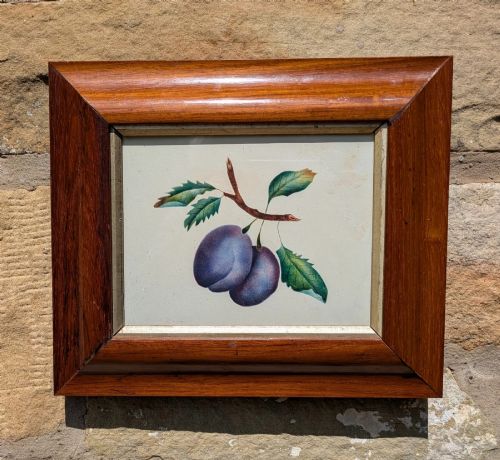
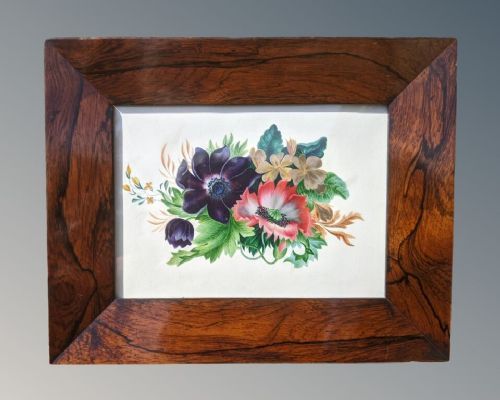
A rosewood framed picture gathers together wall art enclosed in dense, dark timber frames, spanning the nineteenth century and styles from Regency to early Victorian. Buyers searching for a rosewood framed picture encounter diverse artistic expressions, ranging from botanical watercolours and woolwork samplers to silhouette portraits and theatrical tinsel prints.
The pieces listed on this page showcase varied origins and formats, including Scottish needlework, Anglo-Indian mirror frames, Chinese silk table screens, and traditional Georgian silhouettes. Most examples date from the nineteenth century, uniting varied visual media through the distinct warmth and dark figuring of their rosewood surrounds.
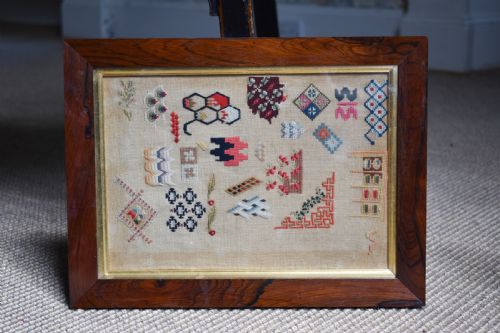
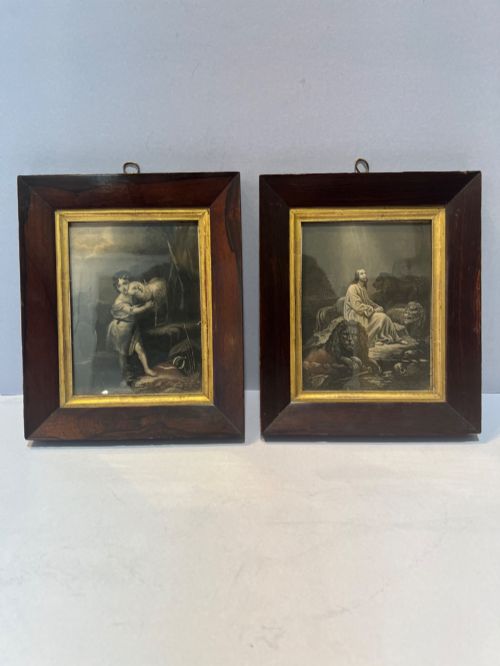
Framed works in these materials encompass textile art such as gros and petit point wool work alongside delicate paper engravings and watercolours under glass. Each piece relies on the dark, polished wooden moulding to frame and anchor the subject matter, whether the focus is botanical illustration, historical portraiture or needlework craftsmanship.
Materials and construction
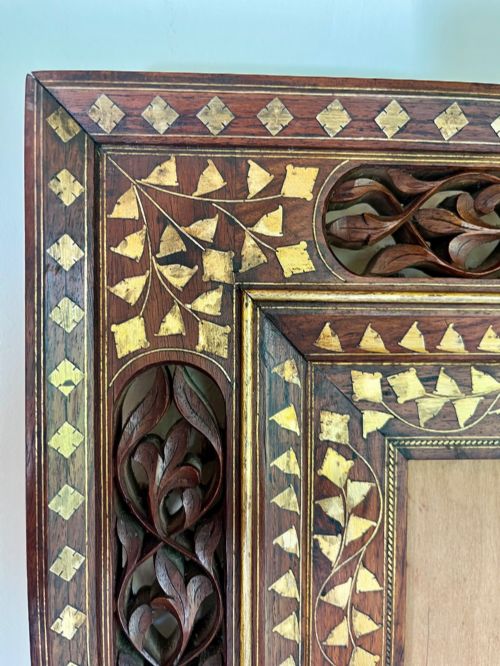
Makers utilised dense rosewood timber to construct frames, frequently pairing the dark wood with glass to protect fragile internal works on paper or textile. The wood was shaped into simple mouldings or carved with intricate detail, as seen in Anglo-Indian and traditional Chinese examples.
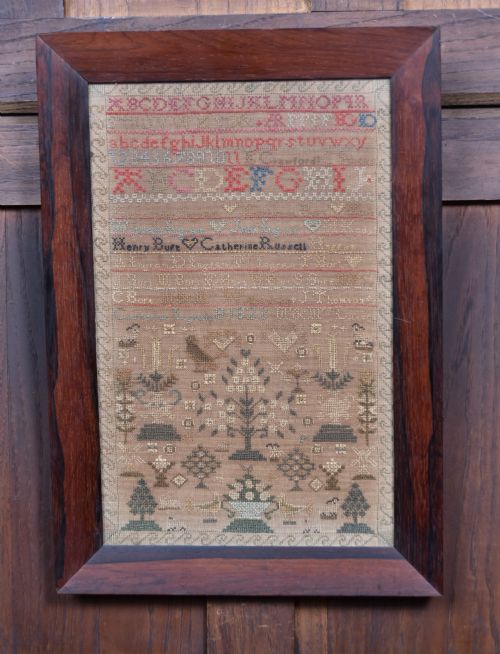
Internal artworks employ traditional techniques including watercolour painting, ink silhouettes, embroidery, wool work, decoupage and engraving. Textiles such as linen, wool and paper form the backing surfaces for needlework samplers and framed prints.
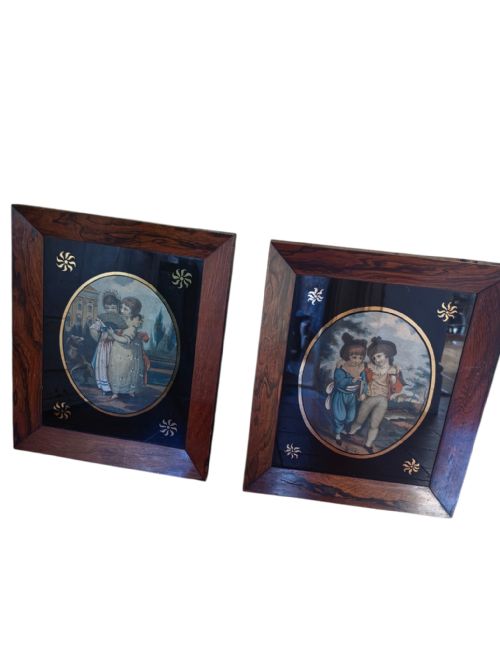
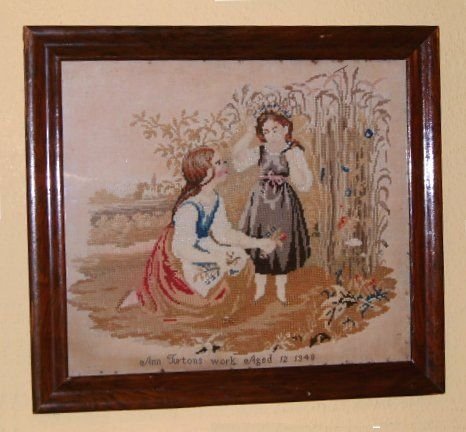
An army officer and children share the page with woolwork tapestries and an assortment of theatrical tinsel prints.
Judging quality and finish
The visual appeal of the rosewood frame itself depends upon the depth of the timber grain, the polish of the surface, and the precision of the mitred corners or carved details. Finer frames display rich, variegated figuring in the wood rather than a flat, uniform stain.
Quality within the artwork is defined by the skill of the execution, whether in the fine brushwork of a botanical watercolour, the neat stitches of a needlework sampler, or the sharp definition of a silhouette portrait. The relationship between the visual weight of the frame and the delicacy of the enclosed art determines the overall harmony of the piece.
The Rosewood Framed Picture Glossary
- Rosewood
- A heavy, durable timber known for its dark colour and prominent grain patterns, frequently used for nineteenth-century furniture and frames. It polishes to a deep lustre.
- Needlework
- Stitched textile art created using yarn or thread on a backing fabric such as linen or canvas. Samplers and tapestries represent common historical forms.
- Silhouette
- A portrait profile filled in with a solid dark colour, typically black, cut from paper or painted against a light background. These were popular in the Georgian and Victorian eras.
- Tinsel print
- A nineteenth-century theatrical print embellished with pieces of tinsel, foil, fabric and watercolour. These decorative works reflect popular stage productions of the period.
- Table screen
- A decorative panel supported on a carved stand, often featuring detailed silk embroidery or carved wood. They were designed for placement on desks and tables.
Rosewood Framed Picture: Frequently Asked Questions
How old are these pictures?
The majority of pieces date from the nineteenth century, encompassing Regency, Georgian and Victorian periods.
Individual items span from around eighteen hundred to the early twentieth century, reflecting the prevailing aesthetics of those decades.
What types of art are framed?
Artworks include watercolours, engravings, silhouette portraits and theatrical prints on paper.
Textile works are also common, featuring wool work, tapestries, needlework samplers and embroidered silk.
How should I hang them?
These pieces require secure picture hooks suited to the weight of dense rosewood frames and glass.
Keep them away from direct sunlight to protect delicate watercolours, paper prints and dyed wool work from fading.
Are the frames original to the art?
Many nineteenth-century pictures retain their original rosewood surrounds, which match the period of the internal artwork.
Distinguishing original pairings involves examining the backboards, fixings and the way the frame fits the art.