
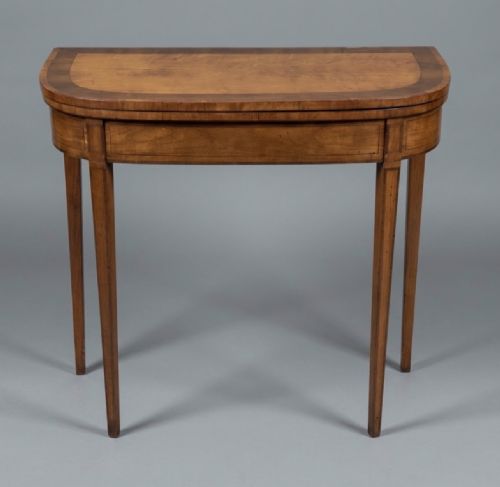
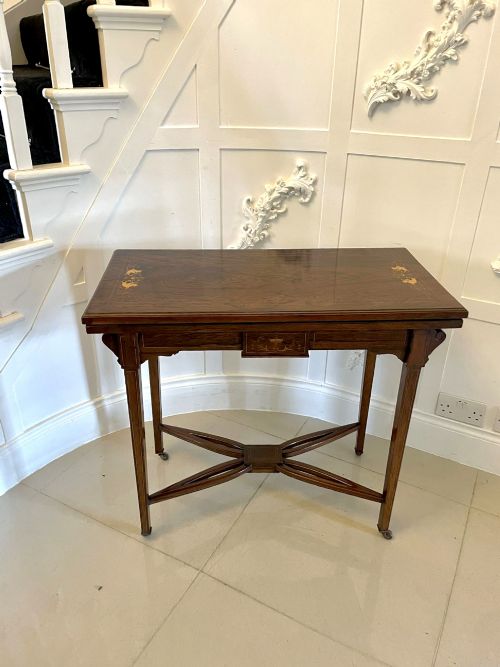
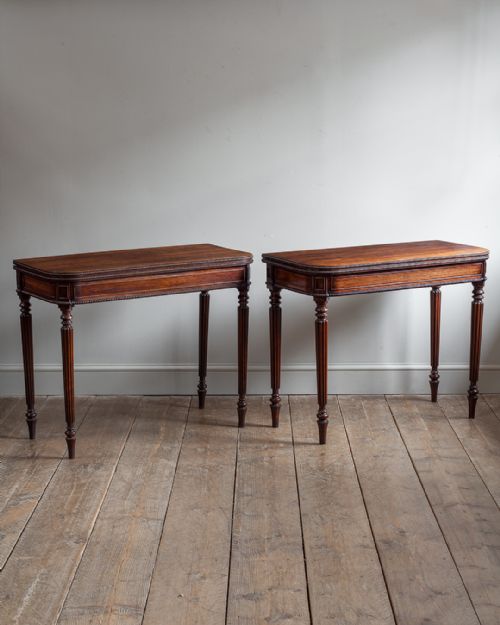
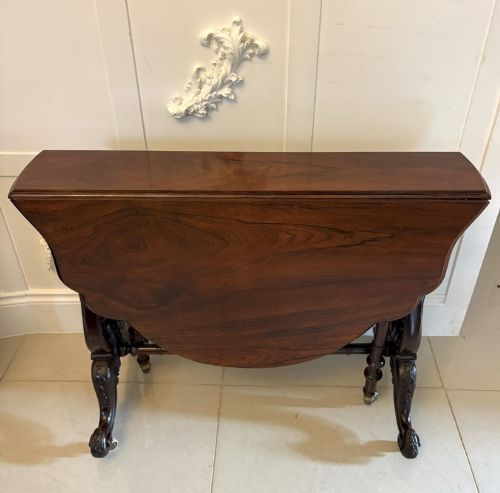
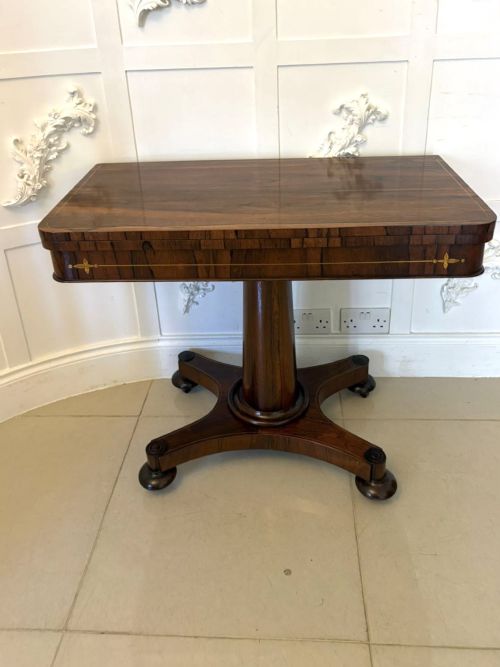
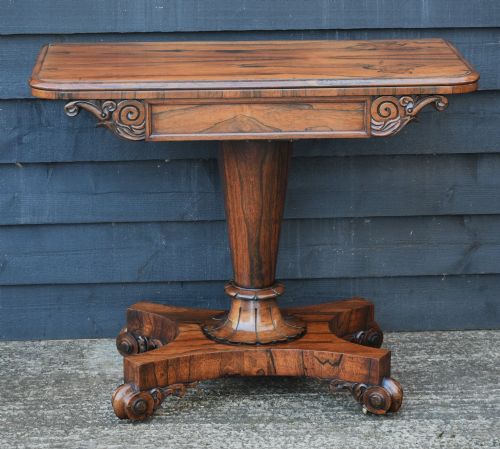
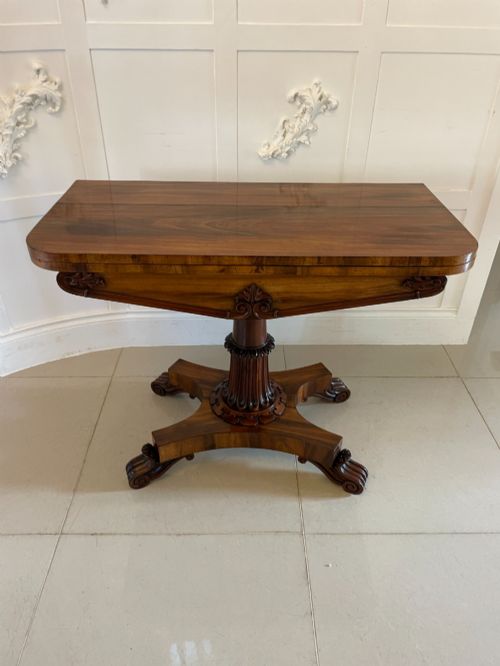
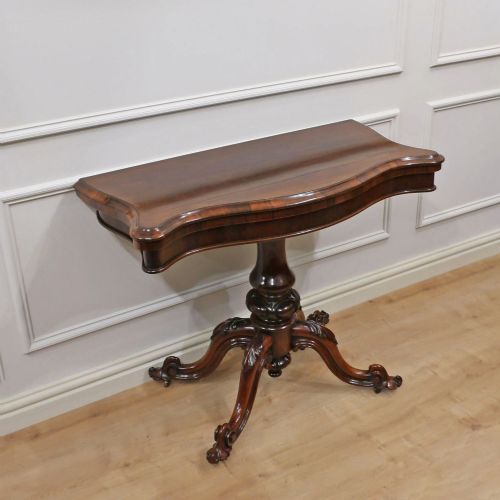


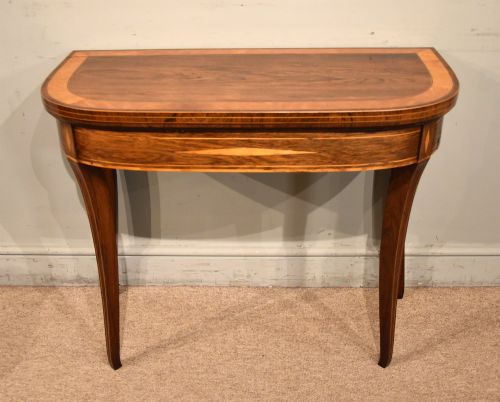
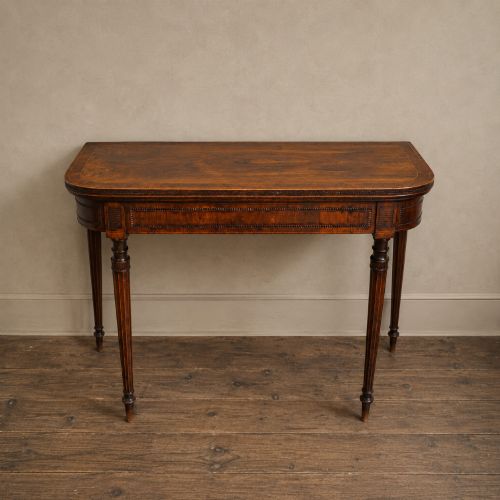
Rosewood Folding Tea Table
These rosewood folding tea table examples combine rich timber with ingenious folding mechanisms designed for hosting and card playing.
Rosewood Folding Tea Table
A rosewood folding tea table is a multifunctional item designed to serve both tea and social pastimes like card games in period interiors. The selections span periods from the Georgian and Regency eras through the William IV and Victorian periods, showcasing notable craftsmanship.
Most entries function dually as tea tables and card tables, featuring clever swivel or fold-over tops that reveal a baize-lined playing surface when opened. Alongside standard tea tables, the listings include related forms such as console tables, side tables, and occasional tables.
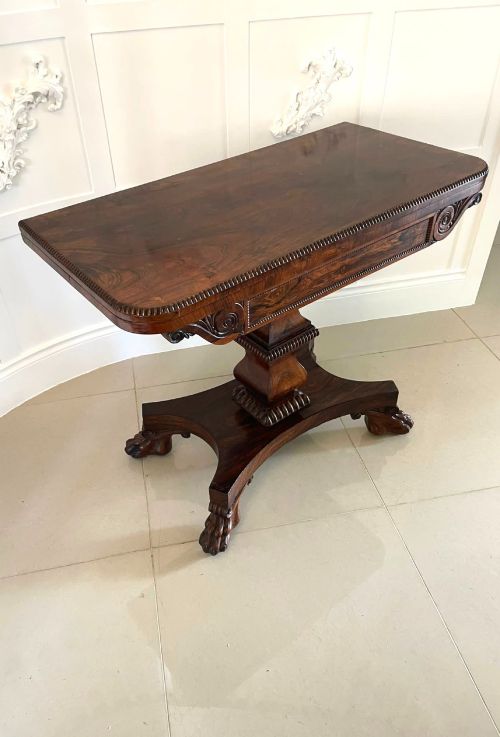
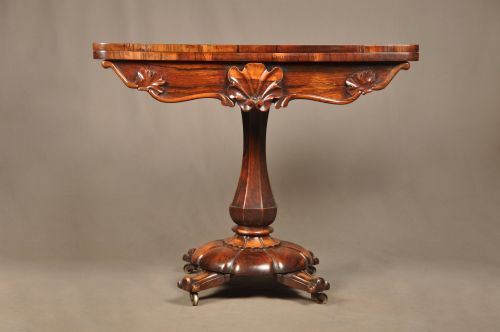
Origins stretch from English workshops to Anglo-Indian productions, reflecting varied regional tastes and decorative influences. Buyers encounter structural variations ranging from pillar-and-scroll pedestals to carved dolphin bases and campaign styles.
How they were made
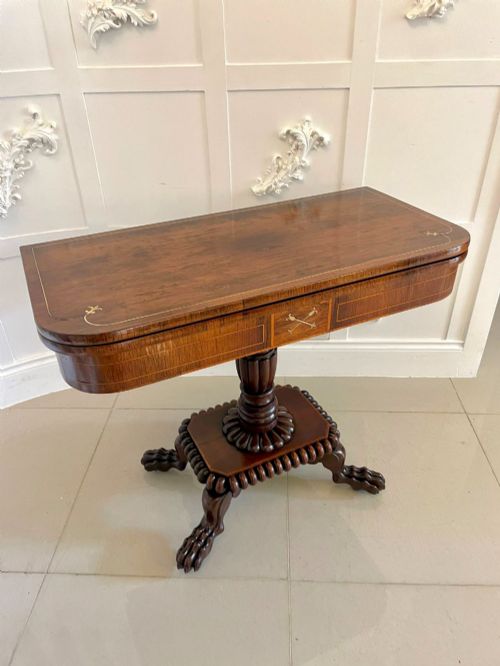
Cabinet makers utilised dense rosewood timbers, frequently incorporating contrasting veneers of satinwood, boxwood, kingswood, and burr yew for crossbanding and decorative borders. These dark tropical hardwoods provided a stable, heavy canvas capable of taking a high polish.
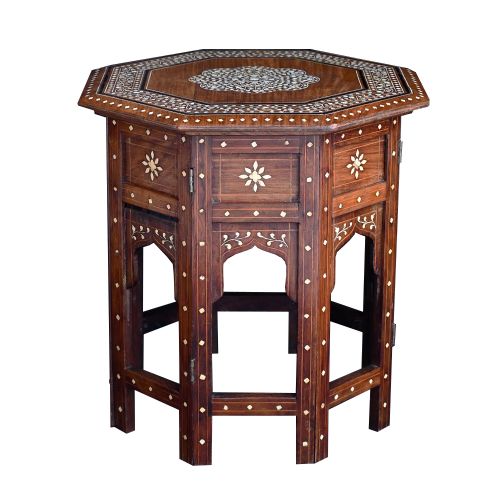
Decoration relied heavily on intricate brass inlay, ormolu mounts, and bone inlay, particularly seen in Anglo-Indian pieces from Hoshiarpur. Carved elements like scroll pedestals and dolphin supports were shaped from solid timber to anchor the heavy top.
Internal folding mechanisms required precise joinery so the swivel and leaf actions operated smoothly without straining the hinge plates or the veneered aprons.
The selection includes Regency, Georgian, Victorian, and Edwardian periods, alongside Anglo-Indian styles.
What varies in quality
Quality rests on the depth of the rosewood grain, the precision of the contrasting satinwood or boxwood crossbanding, and the crispness of any brass inlay or carved detail. Superior examples display thoughtful proportion in the pillar support and harmony between the timber's natural figure and the applied decoration.
The integrity of the folding mechanism dictates daily utility, separating pieces built with robust pivot joints and stable pivoting leaves from those with compromised or loose fittings. Refined execution in secondary woods and internal framing distinguishes workshops of high repute from standard commercial output.
George Bullock·Gillows·William Trotter
The Rosewood Folding Tea Table Glossary
- Rosewood
- A dense, heavy tropical timber prized for its dark purple-brown grain and capacity for a brilliant polish. It formed the primary surface for high-status furniture of the Regency and Victorian periods.
- Baize
- A coarse woolen fabric used to line the playing surfaces of card and games tables. It provides a soft, tactile counter-surface for dealing cards.
- Crossbanding
- A strip of veneer applied perpendicularly to the main grain along the border of a table top. This technique frames the primary timber and highlights the edge.
- Ormolu
- Gilded bronze applied as decorative mounts and trims on furniture. It accentuates the architectural lines of Regency and nineteenth-century pieces.
- Hoshiarpur
- A stylistic designation originating from a centre of intricate woodwork in India. Pieces from here feature dense, geometric bone and wood inlay across octagonal and occasional forms.
Rosewood Folding Tea Table: Frequently Asked Questions
How do I use a folding tea table today?
These tables function well as console or side surfaces against a wall until you need extra space for dining or games.
Opening the leaf transforms the compact unit into a full gaming or display surface for entertaining guests.
What is the difference between a tea table and a card table?
Tea tables were built primarily to hold tea service equipment, while card tables incorporated baize-lined interiors and sometimes wells for gaming counters.
Many surviving examples served both purposes interchangeably through clever folding tops.
How do I distinguish Regency from Victorian examples?
Regency models tend to feature restrained classical lines, brass inlay, and sweeping pedestal bases with brass paw feet or castors.
Victorian iterations often display heavier carved details, darker finishes, and more robust proportions.
Where were Anglo-Indian tables made?
Anglo-Indian tables originated in workshops in regions like Hoshiarpur, combining British furniture forms with traditional Indian craft techniques.
They are instantly recognisable by their dense, all-over bone and contrasting wood inlay.