


Rosewood Fall Front Desk
A rosewood fall front desk brings deep timber grain and a clever drop-down writing flap to a room.
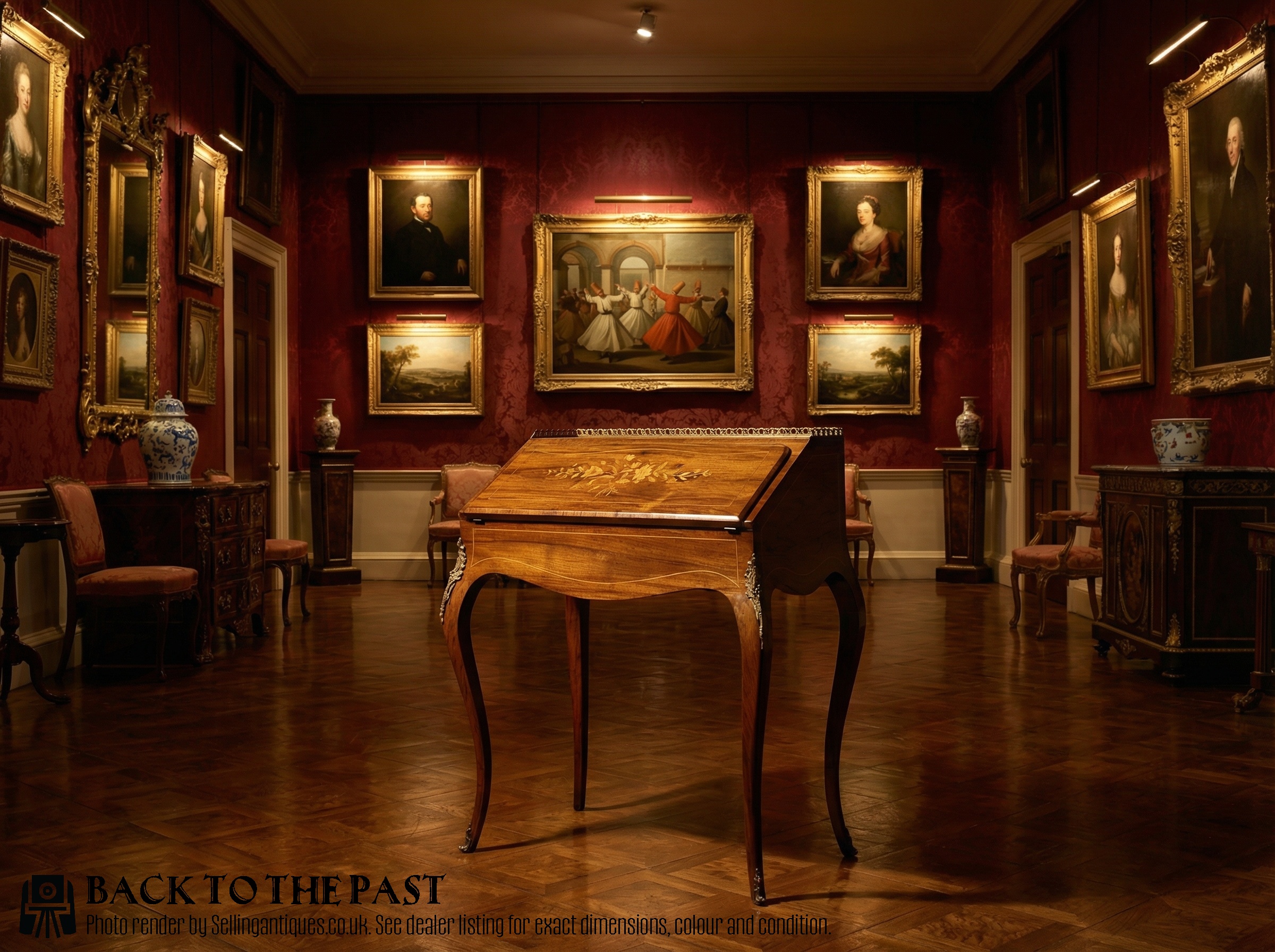
Rosewood Fall Front Desk
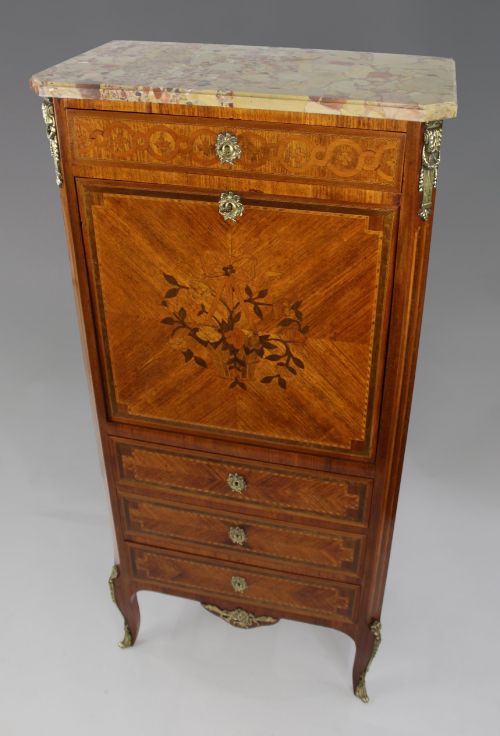
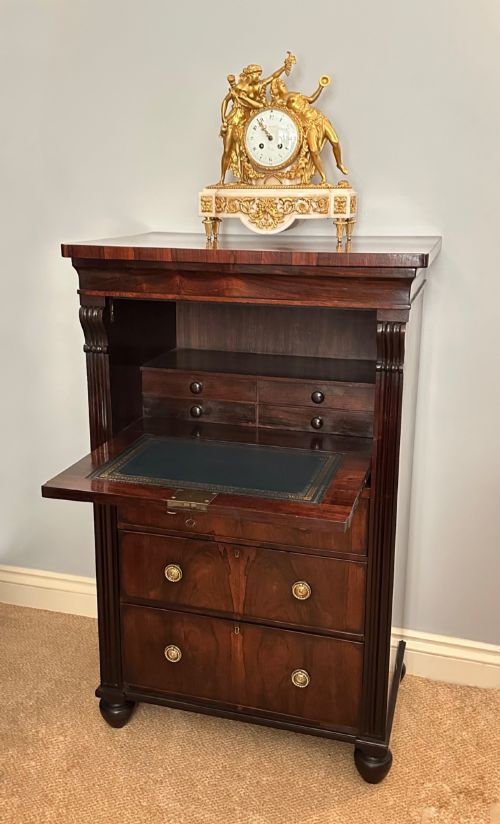
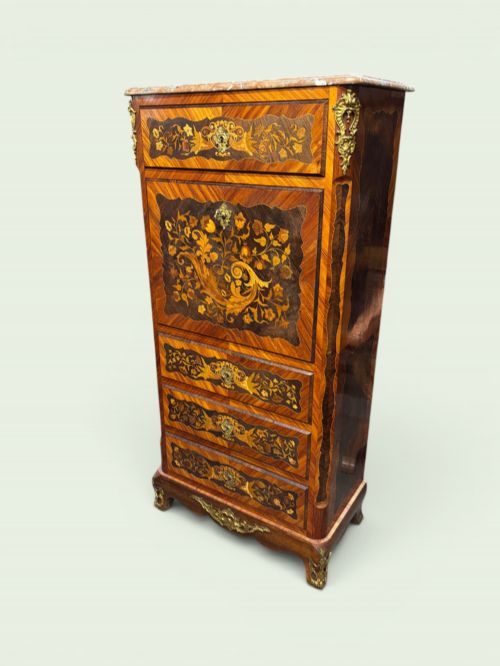
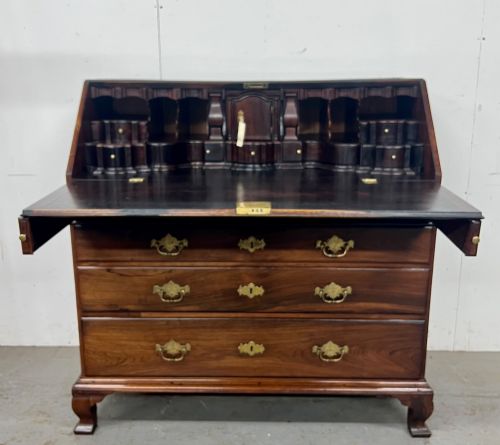
A rosewood fall front desk is a sophisticated writing cabinet designed to conceal paperwork behind a vertical writing flap that drops down to form a surface. Buyers searching for a rosewood fall front desk will encounter various forms, including French secretaire abattants, bureau de dame pieces, and George IV or Victorian variants.
The pieces on this page span the eighteenth, nineteenth, and early twentieth centuries, with a strong representation of nineteenth-century French Louis XV revival and Victorian examples. Formats range from compact ladies bureau cabinets to tall bureau bookcases and Wellington chests with integrated writing compartments.
Origins stretch from English workshops to French cabinet makers and Portuguese ateliers, utilising rich rosewood veneers alongside kingwood and walnut. Most examples combine practical storage drawers below the writing flap with fitted interior pigeonholes and small compartments.
How they were made
Cabinet makers constructed these desks using dense hardwoods like rosewood, kingwood, and mahogany as a solid carcase or as thick veneers laid over secondary timbers. Marquetry and intricate inlay work in lighter woods frequently decorate the exterior fall fronts and drawer panels.
Metal mounts in brass and ormolu reinforce corners and frame panels, while inset leather surfaces often line the interior writing flaps. White marble tops appear on several nineteenth-century French pieces, adding weight and a smooth contrast to the dark timber.
Object types span writing cabinets, secretaire abattants, bureau de dame pieces, and Wellington chests.
What varies in quality
The refinement of the timber selection and the precision of the marquetry inlay set the better examples apart from standard production. Grain matching across the fall front and drawer fronts demonstrates the skill of the original maker.
Hardware execution also defines the hierarchy, from simple brass key escutcheons to chased ormolu mounts and functional interior drawer arrangements. The integration of original marble tops and fitted leather writing surfaces elevates the standing of individual pieces.
The Rosewood Fall Front Desk Glossary
- Escritoire
- A writing cabinet featuring a fall front or sloping lid that opens to reveal internal compartments. This term often applies to French and continental furniture.
- Secretaire abattant
- A tall upright cabinet with a drop-front writing surface that conceals a fitted interior when closed. It typically includes drawers or doors beneath the writing flap.
- Bureau de dame
- A small ladies writing desk, often freestanding and delicately proportioned, produced widely during the nineteenth century. These pieces frequently incorporate marquetry and brass inlay.
- Marquetry
- The art of applying pieces of veneer to a structure to form decorative patterns and pictures. Makers utilised various exotic woods to create floral or geometric motifs.
- Ormolu
- Gilt bronze mounts applied to furniture for decorative effect and edge protection. This technique gained prominence in French eighteenth and nineteenth-century cabinet making.
Rosewood Fall Front Desk: Frequently Asked Questions
What is a fall front desk?
A fall front desk is a cabinet with a hinged writing flap that drops from a vertical position to provide a horizontal surface for writing.
When closed, the flap conceals small drawers and pigeonholes, keeping paperwork out of sight in a neat footprint.
How do I date a rosewood desk?
Dating relies on stylistic clues, construction methods, and materials such as brass mounts or marble tops.
Nineteenth-century pieces often display revival styles like Louis XV or Victorian proportions, whereas eighteenth-century examples show simpler, heavier solid timber construction.
Where were these desks made?
These desks originate from English, French, Portuguese, and Anglo-Indian workshops across different centuries.
French pieces frequently feature marquetry and ormolu, while English examples from the Regency and Victorian eras lean towards brass inlay and rosewood veneers.
How do I care for rosewood furniture?
Rosewood benefits from stable indoor humidity and protection from direct sunlight to prevent timber movement and fading.
Regular dusting with a dry cloth maintains the finish without the need for heavy modern polishes or oils.