




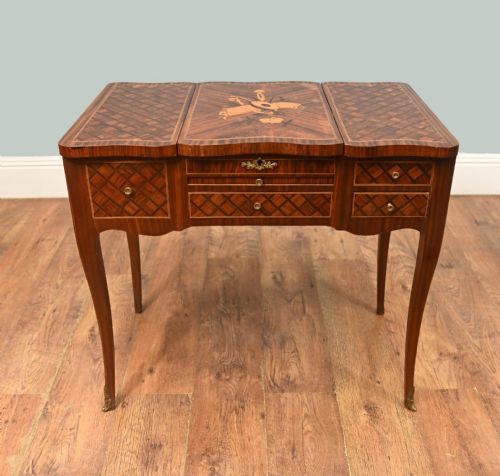


French Rosewood Writing Table
A French rosewood writing table brings warmth and rich grain to a room while offering a practical surface for correspondence.
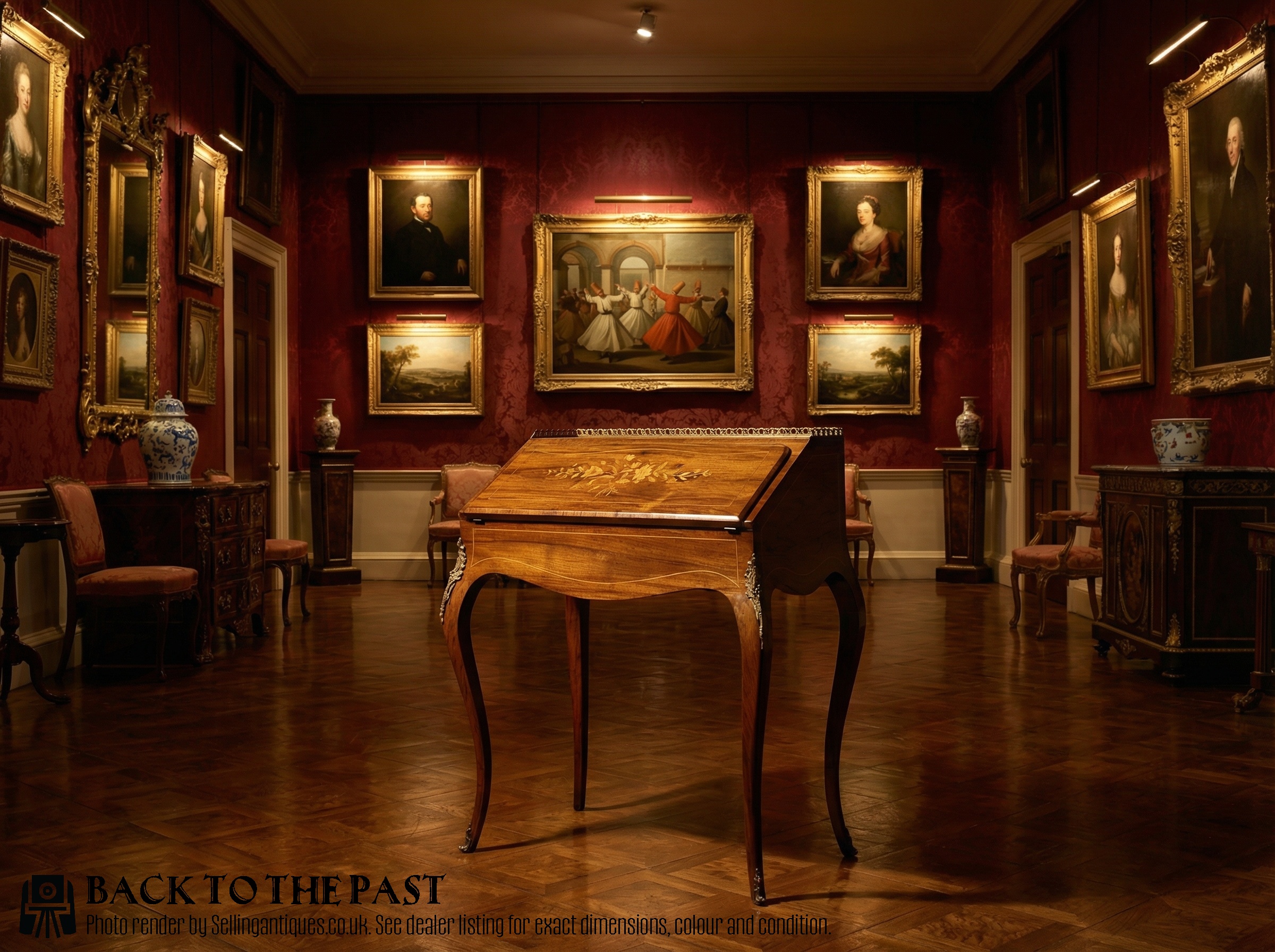
French Rosewood Writing Table
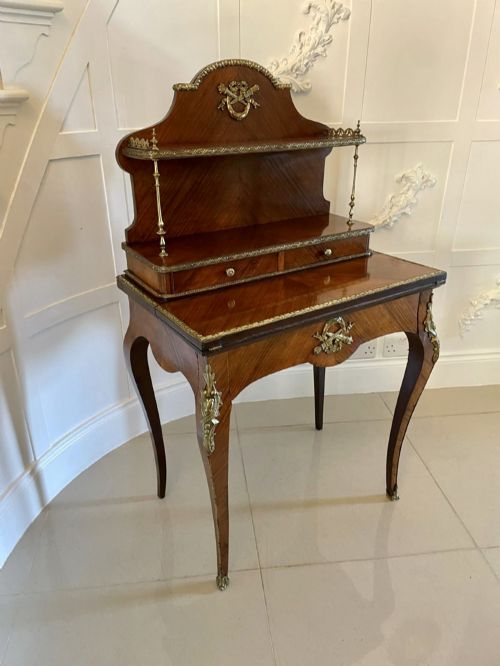
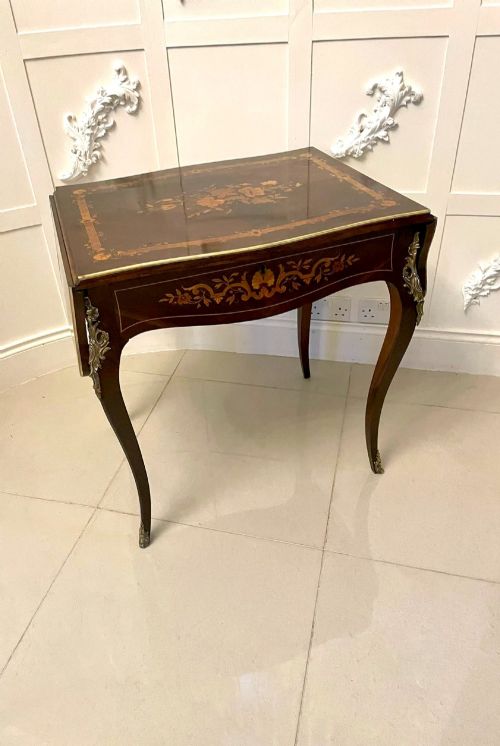
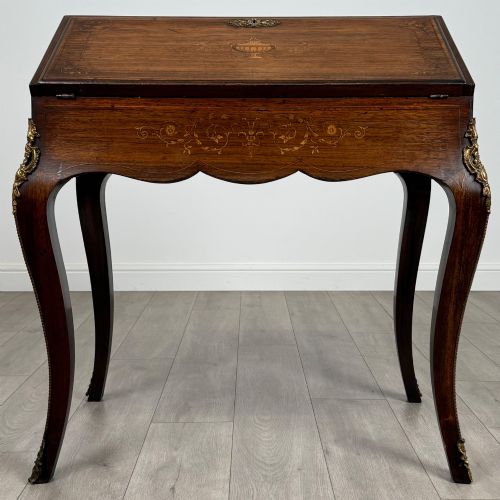
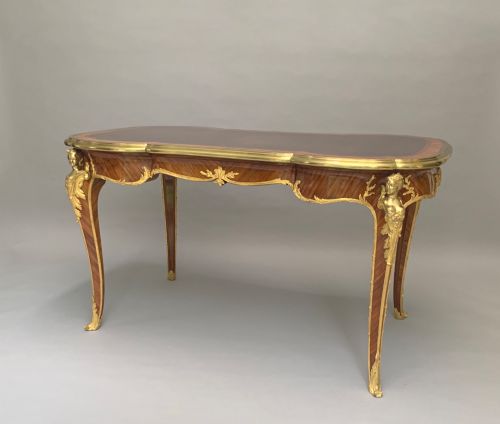
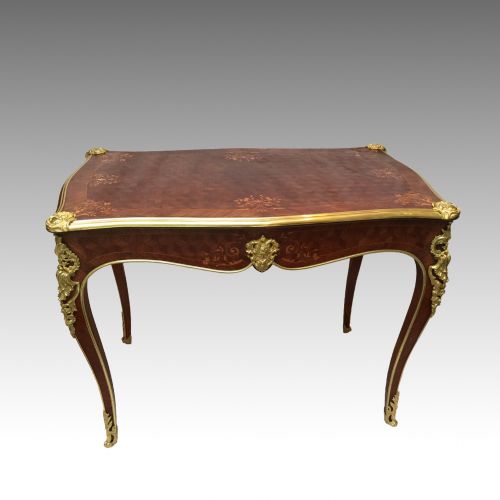
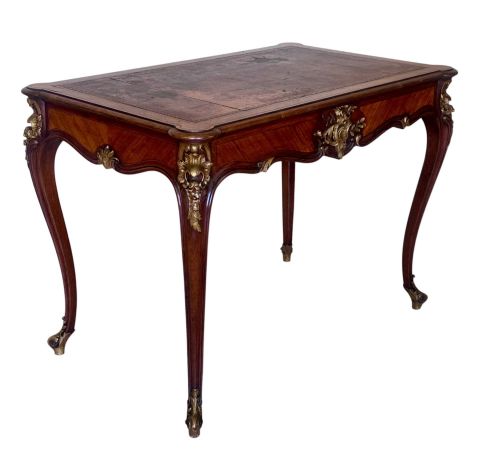
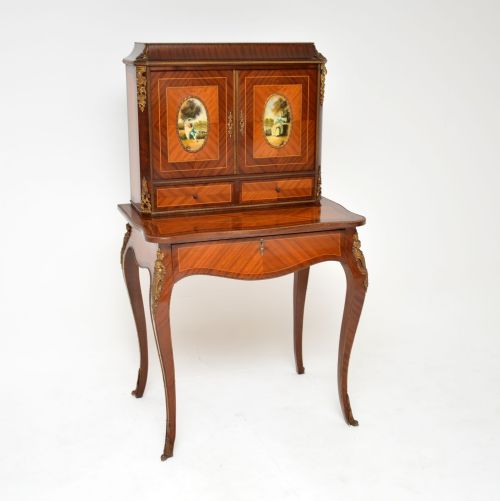
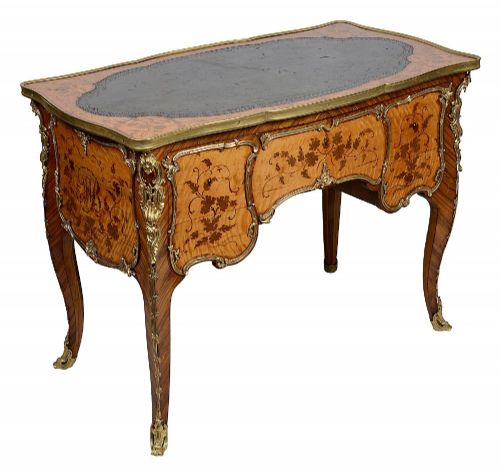
A search for a french rosewood writing table introduces a refined class of nineteenth-century furniture designed for correspondence and light administrative tasks. These pieces range from freestanding centre tables and bureau plat desks to elaborate ladies writing desks such as the bonheur du jour.
The examples seen here lean heavily towards Louis XV and Louis XVI revival styles, incorporating curved cabriole legs or straight tapered supports. Many pieces double as freestanding centre tables intended to sit proudly in the middle of a room rather than against a wall.
Makers often integrated compartments, small drawers, and fitted ledges for writing materials, particularly within the bureau de dame and bonheur du jour formats. The prevailing aesthetic balances utility with decorative marquetry and parquetry patterns.
Materials and Construction
Makers relied on a carcase of secondary timbers veneered in figured rosewood, kingwood, tulipwood, and walnut to create geometric parquetry or intricate floral marquetry designs. These veneers were sliced thin and laid carefully over curved and flat surfaces alike.
Gilt bronze and ormolu mounts were cast and chased to edge the tops, frame the drawer fronts, and protect the vulnerable corners and feet of the tables. Brass stringing and inlay frequently bordered the panels to accentuate the natural grain of the rosewood.
Leather inserts, often tooled with gold, were traditionally glued into the writing surfaces of bureau plat desks to provide a smooth plane for writing with ink and quill.
The furniture spans Louis XV and Louis XVI revival styles alongside Art Deco interpretations.
Distinctions in Quality
The tier of a piece rests heavily on the crispness of the bronze casting and the precision of the marquetry cutter. Superior workshops employed heavy, deeply chased ormolu mounts that fit the contours of the rosewood carcase without gaps.
Cabinetmaking standards reveal themselves in the choice of secondary woods inside the drawers and the seamless alignment of the veneer across moving parts. Finer examples balance rich, symmetrical grain patterns across the top surface, demonstrating careful timber selection by the maker.
Francois Linke·CH. Jeanselme & Co·Donald Ross·Maurice Dufrêne·John McLean
The French Rosewood Writing Table Glossary
- Ormolu
- Gilt bronze mounts applied to furniture for decoration and edge protection. This technique involved coating cast bronze with a mercury and gold amalgam before heating.
- Marquetry
- Inlaid patterns formed from different coloured veneers creating pictorial designs. Craftsmen cut these decorative motifs out of thin sheets of wood to fit flush into a background veneer.
- Bureau Plat
- A flat-topped freestanding writing desk typically fitted with one or more drawers in the frieze. These tables were designed to be viewed from all sides in the middle of a study or salon.
- Bonheur Du Jour
- A light lady's writing desk featuring a tiered superstructure with shelves, drawers, or a small cupboard above the main writing surface. The form emerged in France during the mid-eighteenth century.
- Parquetry
- Geometric patterns formed by small pieces of contrasting veneer arranged in grids or chequerboard designs. It differs from marquetry by relying on angular geometry rather than curved pictorial shapes.
French Rosewood Writing Table: Frequently Asked Questions
Where should a bureau plat be placed?
A bureau plat is designed as a freestanding piece with finished decoration on all sides, making it ideal for the centre of a study or drawing room.
Positioning it away from walls allows the ormolu mounts and rosewood grain to be appreciated from every angle.
What is a bonheur du jour used for?
This specialised desk served as a private writing and correspondence station for ladies in the nineteenth century.
The upper tiers and small cupboards provided secure storage for stationery, letters, and personal items.
How do I care for rosewood furniture?
Rosewood requires stable humidity levels and protection from direct sunlight to prevent the timber from fading and the veneer from lifting.
Applying a traditional wax polish occasionally helps nourish the wood and maintain its natural lustre.