


Rosewood Breakfront Bookcase
A rosewood breakfront bookcase offers architectural presence and rich grain, grounding a room with traditional cabinet-making.
Rosewood Breakfront Bookcase
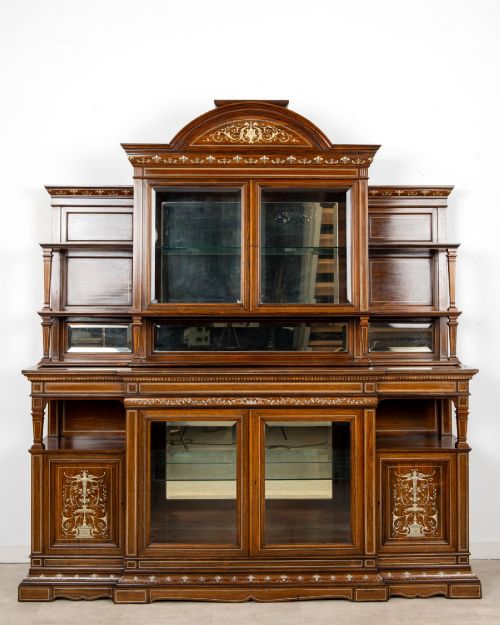
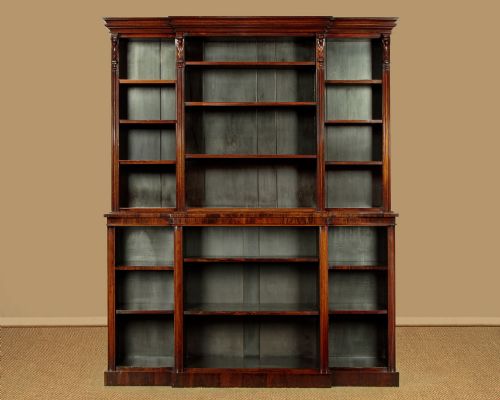
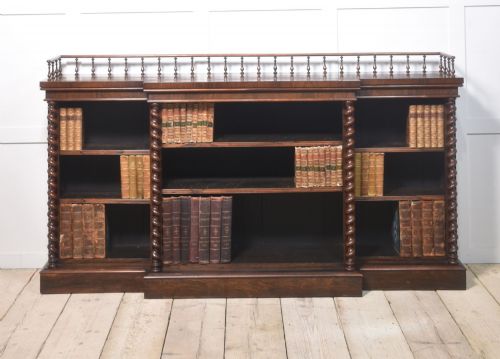
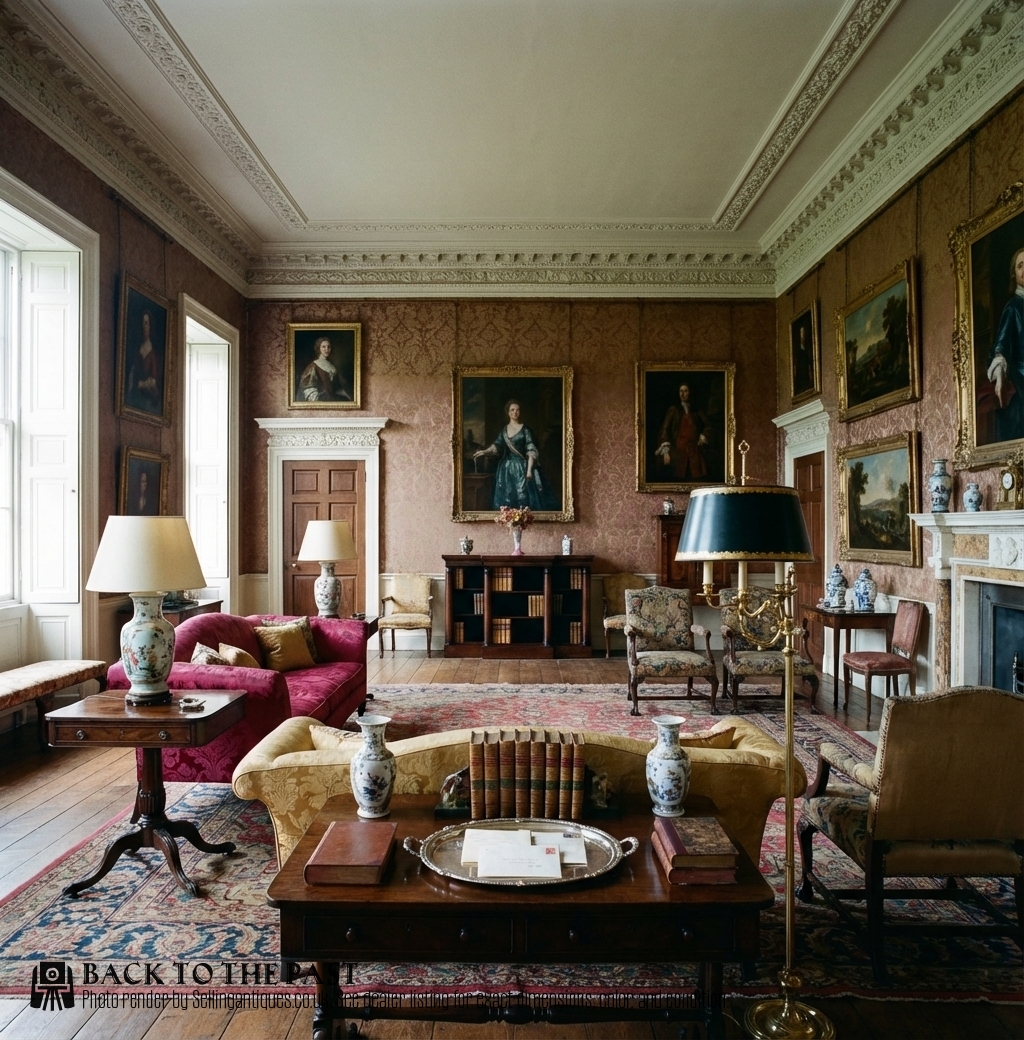
A rosewood breakfront bookcase projects a formal silhouette with a central section that extends forward from the flanking wings. These pieces span the Regency, William IV, and Victorian periods, often appearing as low open bookshelves or glazed display cabinets.
The versions most common on this page date from the early nineteenth century and the Victorian era, utilising open shelving or enclosed doors. They serve to organise libraries and display decorative objects with balanced proportions.
Makers constructed these cabinets with recessed central bays to break up long runs of timber. This configuration creates visual depth and anchors grand interiors.
Materials and Construction
Craftsmen built these cabinets using dense tropical rosewood veneers laid over secondary timbers, often accentuating the figured grain on flat door panels. Brass inlay, glass panes, and parcel gilt details frequently highlight the architectural lines.
Turned columns, marquetry, and mirror glass appear on later Victorian examples to soften the rigid geometry. Joinery relies on traditional carcase construction designed to support heavy volumes.
Makers occasionally incorporated leather dummy books or fabric linings behind glazed doors to conceal storage. These varied structural elements reflect the shifts in taste across the nineteenth century.
Some nineteenth-century makers installed clever leather dummy books to hide cabinet contents.
Judging Quality
The value of a rosewood breakfront bookcase rests on the choice of timber and the harmony of its proportions. Pieces with strongly figured veneers command attention for their visual movement.
Refined brass work and crisp mouldings distinguish superior pieces from utilitarian storage. The integrity of the breakfront projection defines the architectural success of the design.
Collinson & Lock·Gillow
The Rosewood Breakfront Bookcase Glossary
- Breakfront
- A cabinet design where the central section projects forward from the two flanking ends. This architectural layout creates shadow lines and rhythmic depth.
- Dwarf bookcase
- A low bookcase designed to sit beneath dado height, keeping the upper wall space free. These pieces often feature open shelves rather than glazed doors.
- Regency
- An English design period spanning the early nineteenth century defined by classical restraint and archaeological revival. Furniture from this era often incorporates brass inlay and parcel gilt.
- Marquetry
- The art of applying decorative veneer pieces to form geometric or floral patterns. Victorian examples utilise this technique on flat cabinet surfaces.
- Credenza
- A low side cabinet or sideboard originating in the nineteenth century, frequently fitted with doors and columns. They function alongside bookcases in formal reception rooms.
Rosewood Breakfront Bookcase: Frequently Asked Questions
How do I date a rosewood bookcase?
Dating relies on stylistic markers such as brass inlay, column turns, and the presence of open versus glazed shelving. Regency pieces lean toward classical restraint, while Victorian examples often incorporate rich marquetry and barley twist columns.
Timber choice also provides clues, as early nineteenth-century pieces frequently display dense, dark rosewood grains.
Where should I place a low bookcase?
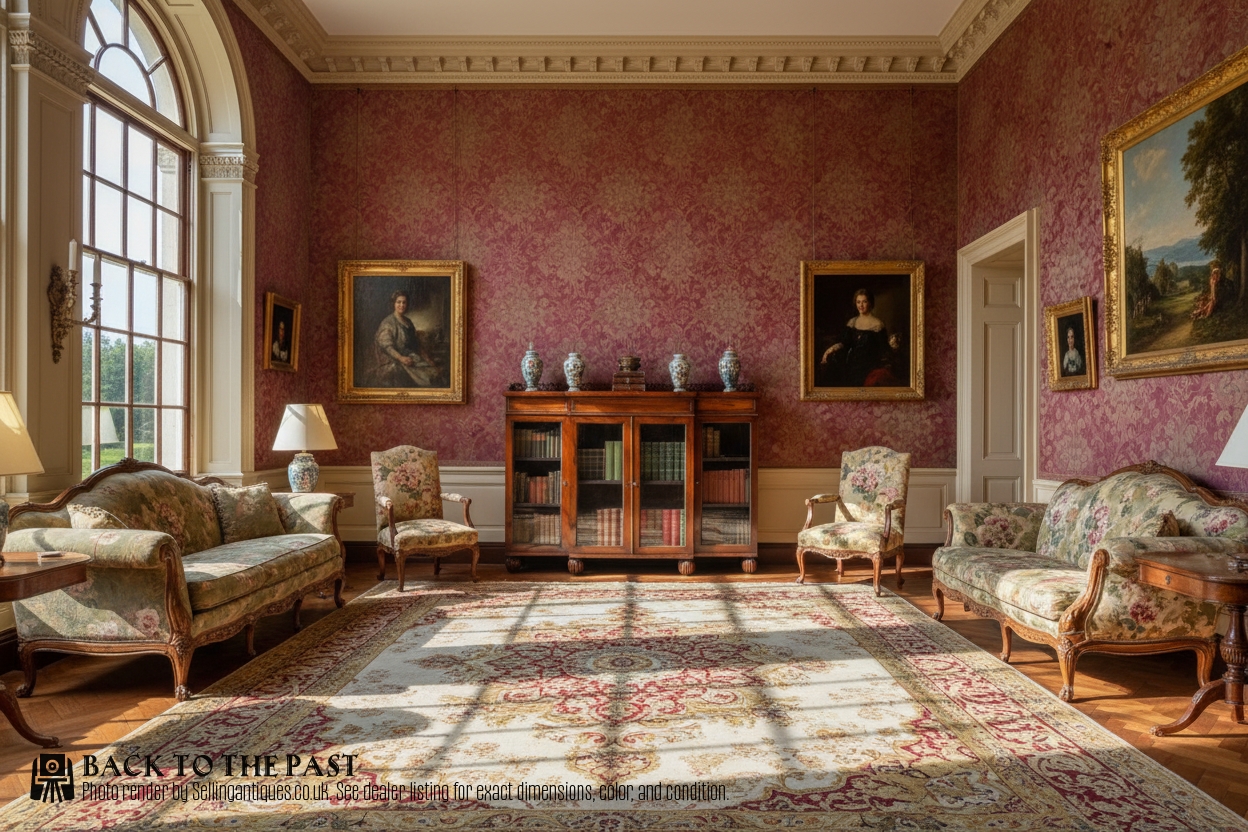
Low or dwarf bookcases suit studies, libraries, and drawing rooms where wall space above the dado needs to remain open. Their height allows art or mirrors to hang directly above them.
These pieces provide accessible open shelving for everyday reading without overwhelming the scale of a room.
Are these bookcases suitable for modern homes?
These cabinets anchor contemporary spaces by introducing dark, figured wood tones and traditional craftsmanship. They function effectively as display units for books and collections in living areas.
The restrained proportions of nineteenth-century models integrate easily into rooms with high ceilings.