
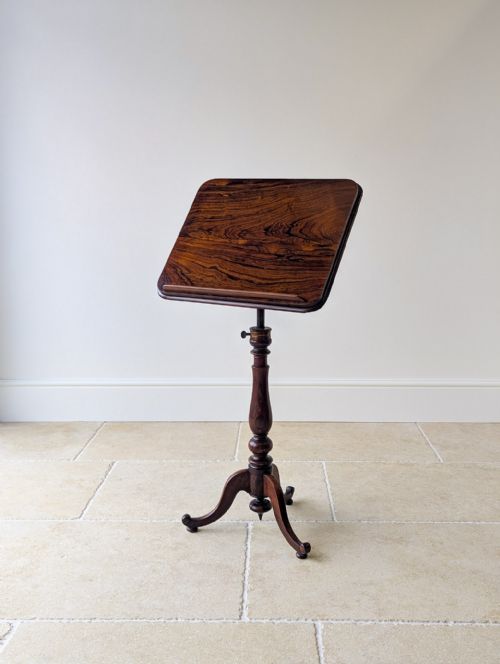
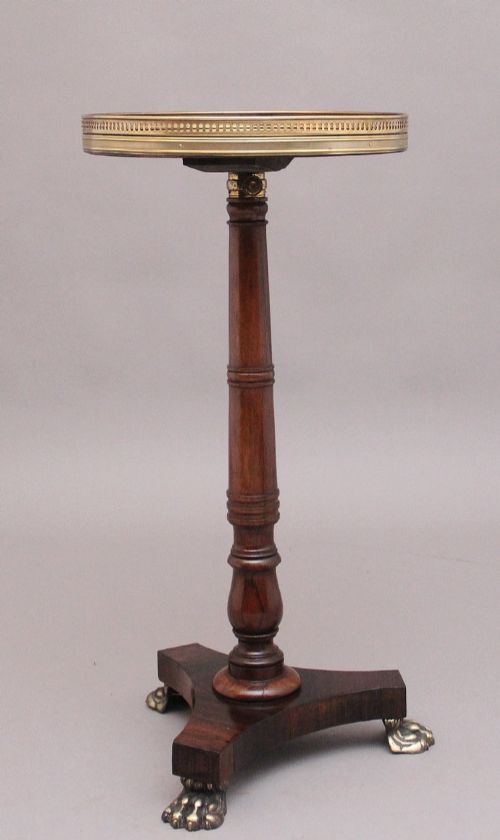


Rosewood Adjustable Table
A rosewood adjustable table offers the serious collector a versatile piece of nineteenth-century furniture built for writing, reading or music.
Rosewood Adjustable Table
When you search for a rosewood adjustable table, you encounter versatile nineteenth-century furniture designed for writing, reading, music, and sewing. The pieces span the Regency, William IV, and Victorian periods, often taking the form of reading stands, writing tables, and occasional tables with mechanical functions.
You are most likely to meet reading stands, music stands, and writing tables featuring telescopic actions or revolving mechanisms. These items reflect the domestic pursuits of the nineteenth century, combining utility with fine cabinet-making in solid or veneered rosewood.
The selection includes specialised forms such as sewing tables and library desks incorporating adjustable tops or folio stands. Each variation demonstrates the period focus on adaptable furniture for the study, drawing room, or music room.
Materials and Construction
Cabinet-makers relied heavily on rich rosewood veneers and solid rosewood timbers, often paired with brass mechanisms to achieve the adjustable movement. Secondary woods and structural elements support the heavier tops used for reading and writing.
Makers integrated brass screws, ratchets, and telescopic columns to allow height and angle alterations on reading stands and music tables. Inlay, leather inserts, and textile elements such as tapestry and velvet further enrich the surfaces of writing desks and sewing tables.
The archive records reading stands, writing tables, music stands, and piano stools equipped with adjustable mechanisms.
Assessing Quality and Craftsmanship
The sophistication of the adjustable mechanism distinguishes standard pieces from superior examples. Smooth operation in telescopic columns, screw threads, and ratchets indicates skilled workshop production.
The selection of rosewood figures and the precision of brass or inlaid details determine the overall visual success of a piece. Original upholstery, intact leather writing surfaces, and robust joinery separate refined library and music furniture from simpler utilitarian items.
GILLOWS of LANCASTER
The Rosewood Adjustable Table Glossary
- Rosewood
- A dense, heavily figured timber prized for its dark grain and reddish-brown coloration. It served as the primary exterior material for fine nineteenth-century cabinet-making.
- Telescopic
- A sliding mechanism allowing vertical adjustment of height. It commonly appears in music stands, piano stools, and reading tables.
- William IV
- A transitional design style spanning the 1830s, characterised by robust classical proportions and bold scrolling supports. Pieces from this era often incorporate heavy rosewood timbers.
- Regency
- An English stylistic period extending from the early nineteenth century through the 1820s, known for classical restraint and refined brass mounts. Tables and stands from this era frequently utilise simulated or solid rosewood.
- Folio Stand
- An attached vertical rack designed for holding sheet music, prints, or large books. It frequently accompanies nineteenth-century writing and reading tables.
Rosewood Adjustable Table: Frequently Asked Questions
What function does a rosewood adjustable table serve?
These pieces served multiple domestic tasks including writing, reading, and music practice in nineteenth-century homes. Their mechanical adjustments allowed users to alter height and angle for comfort during daily tasks.
Today, they function as versatile accent furniture in studies, libraries, and living spaces. Their adjustable nature makes them practical for modern display and everyday use.
How do I identify a Victorian rosewood adjustable table?
Victorian examples typically date from around 1850 onward, often displaying ornate carving or robust pedestal bases. Look for heavier proportions and darker rosewood veneers compared to earlier Regency pieces.
Patent marks and mechanical stamps can also help confirm the Victorian date of production. The integration of brass screws and revolving mechanisms is characteristic of this era.
How should I care for antique rosewood furniture?
Keep rosewood pieces away from direct sunlight and strong heat sources to prevent the wood and veneers from drying out. Maintain a stable room humidity to protect both the timber and internal brass mechanisms.
Dust gently with a dry, soft cloth and avoid commercial silicone polishes. Periodic waxing with appropriate beeswax preserves the natural lustre of the rosewood grain.