





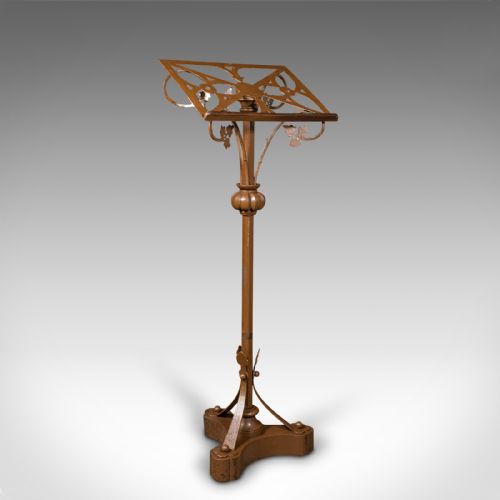

Victorian Reading Easel
These victorian reading easel pieces are adjustable stands and desks designed to hold books and folios comfortably for study.
Victorian Reading Easel
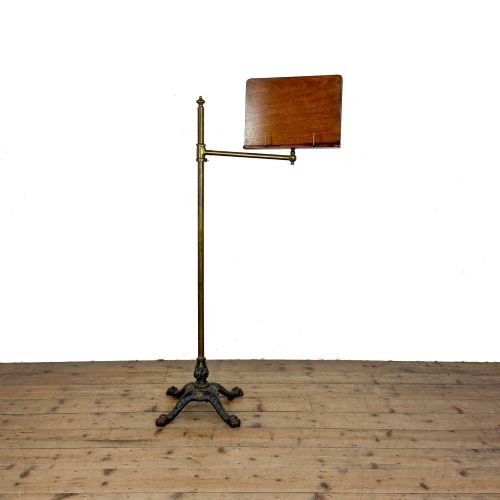
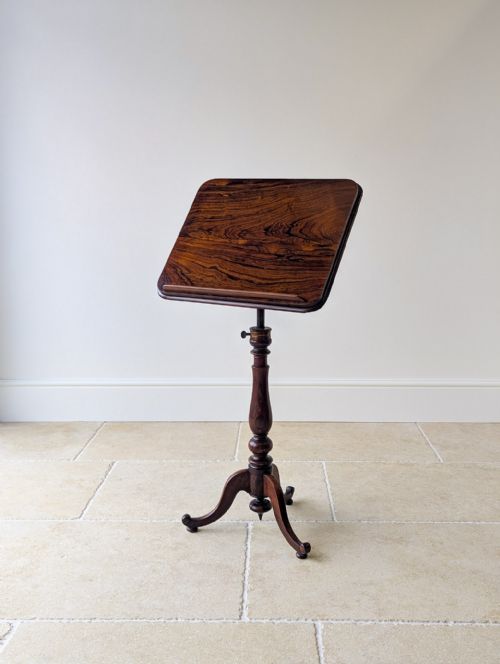
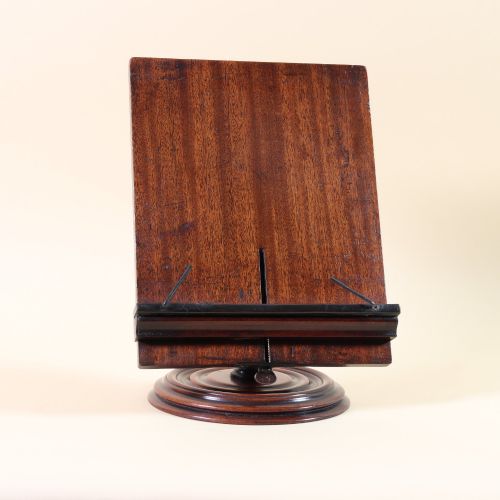
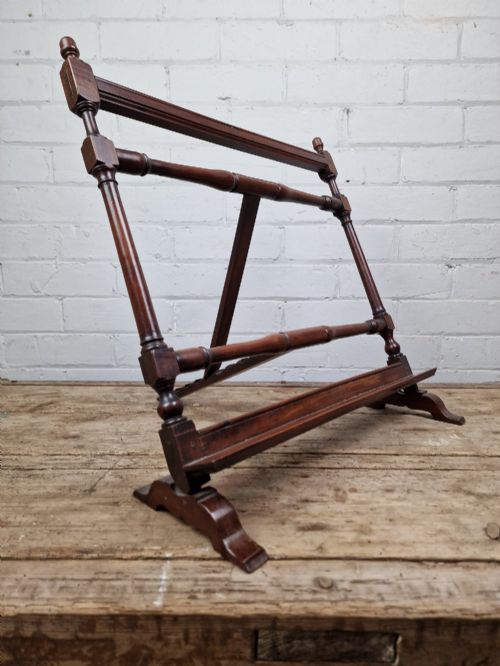
A victorian reading easel provides a stable, angled surface for holding volumes, folios and music sheets during study or performance. These pieces appear in forms ranging from simple table-top book rests to complex adjustable reading stands and combined occasional tables.
The selection on this page includes examples executed in mahogany, rosewood, oak and walnut, alongside brass, cast iron and whitewood pieces. Makers utilised various woods and metals to create functional furniture for the Victorian library and study.
Materials and construction
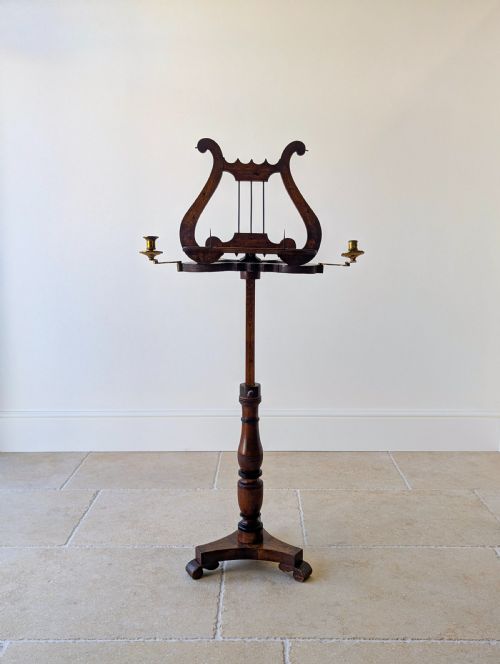
Cabinet makers worked with dense hardwoods like mahogany and rosewood, often shaping them into table-top rests, lyre-form music stands and folding bookstands. Oak and walnut also appear frequently, utilised for heavier library furniture and desks.
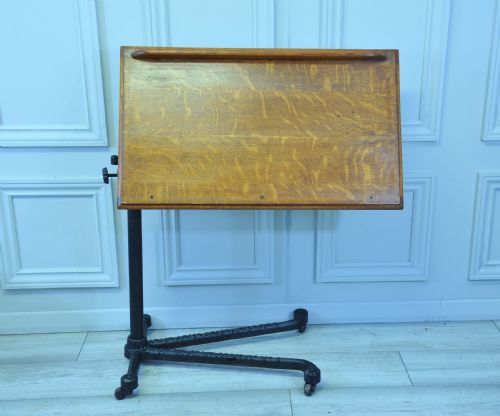
Metal components in brass and cast iron provided the mechanical strength needed for fully adjustable reading stands and tables. Detail work encompasses turned supports, carved folios and transfer-printed whitewood finishes.
Judging quality
Quality rests on the sophistication of the adjustment mechanisms and the selection of cabinet timbers. Pieces featuring complex brass ratchets, screws and folding struts demonstrate superior utility.
The choice of figured mahogany, rosewood or quarter-sawn oak elevates a piece above standard utility versions. Integration with broader furniture forms, such as library chairs or occasional tables, also distinguishes the design.
Benjamin Taylor & Sons·Carters Of London
The Victorian Reading Easel Glossary
- Reading stand
- A piece of furniture designed to support a book at an adjustable angle for easier viewing. These items often feature a ratcheted ledge to prevent the volume from slipping.
- Lyre-form
- A decorative shape resembling an ancient Greek lyre, commonly used for the central column or support of music stands and occasional tables. This motif appears frequently in Regency and William IV pieces.
- Gothic Revival
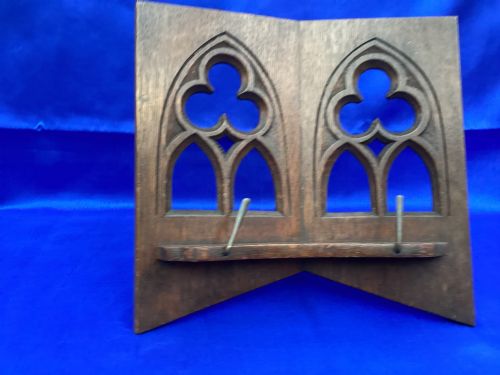
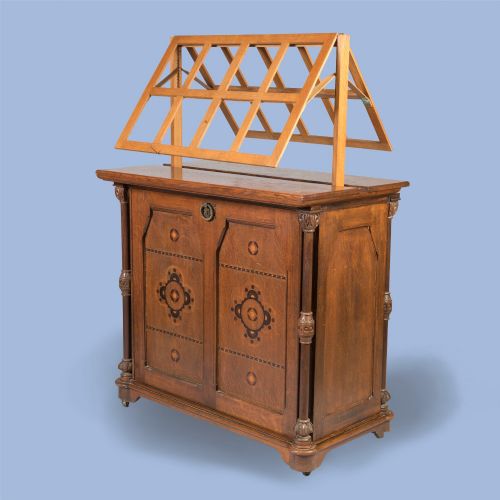
- An architectural and decorative style drawing inspiration from medieval forms, characterised by pointed arches and robust oak construction. Pieces in this taste often display heavy carving.
- Mauchline ware
- Small wooden souvenirs and household items decorated with photographic transfers of British scenery, typically produced in Scotland from white woods like sycamore. These items frequently take the form of small book stands.
- Bergère
- An enclosed upholstered armchair with wooden framing and cane sides, designed for comfort in the library or drawing room. This seating form often dates to the nineteenth century.
Victorian Reading Easel: Frequently Asked Questions
What is a reading easel?
A reading easel is a dedicated stand or desk designed to support books, music or folios at a comfortable angle for reading. They emerged in various forms to assist scholars, musicians and readers in nineteenth-century interiors.
Most examples allow the user to adjust the viewing angle using wooden ratchets or brass mechanisms. They sit on tables or stand independently depending on the specific design.
How do I adjust the stand?
Adjustment typically relies on a hinged wooden support resting within a series of stepped notches on the back of the book ledge. Brass ratchets and screw mechanisms also appear on mechanical stands from the period.
Care should be taken when altering the angle of older wooden struts to prevent strain on the hinges. Metal components should be moved smoothly without forcing stuck joints.
Where were these pieces used?
These pieces found a place in Victorian libraries, studies, music rooms and drawing rooms where books and folios required steady support. Scholars, musicians and architects utilised them for daily work and reference.
Smaller table-top versions suited domestic sitting rooms, while heavier adjustable stands served specialised study spaces. Music stands specifically catered to instruments and vocal scores.
How do I identify a Victorian piece?
Identification involves examining the timber selection, construction methods and hardware conventions typical of the nineteenth century. Woods like mahogany, rosewood and walnut predominate alongside brass fittings.
Stylistic cues such as Gothic Revival motifs, William IV proportions or Arts and Crafts simplicity help narrow the date. Makers' marks or patent stamps occasionally provide specific attribution.