


Rose Gold Brooch
A rose gold brooch brings a warm, coppery glow from past centuries straight to the lapel.
Rose Gold Brooch
A rose gold brooch encompasses delicate bar pins, intricate floral sprays, and convertible pendant designs spanning the Victorian, Edwardian, and Art Deco periods.
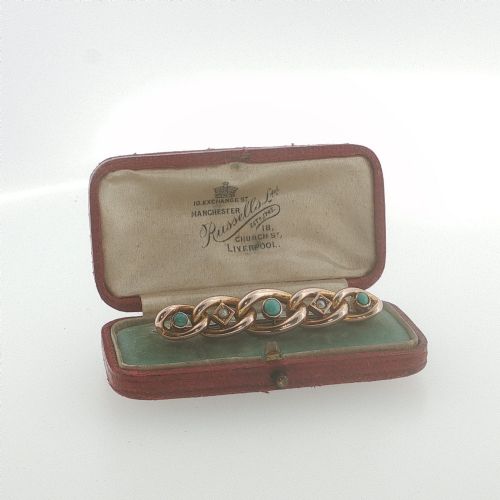
The selections here feature characteristic nineteenth-century motifs including swallows, crescent moons, stars, and insects rendered in distinctively tinted gold.
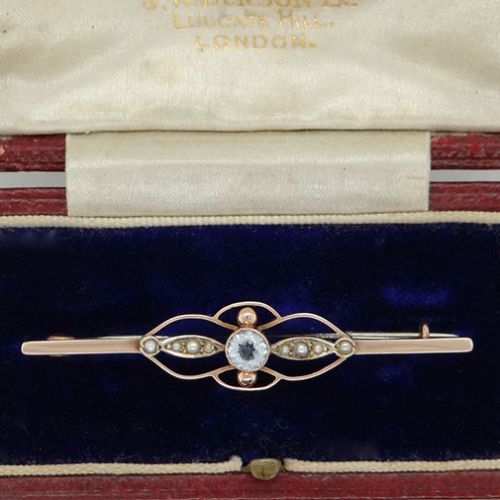
Buyers frequently encounter Edwardian bar brooches and Victorian cluster pins set with diamonds, garnets, seed pearls, and turquoise alongside the warm metal.
How they were made
Goldsmiths combined copper with yellow gold to achieve the characteristic reddish hue, shaping the alloy into bar pins, cast floral clusters, and hollow settings.
Jewellers mounted stones directly into silver-topped gold or used closed-back foil settings in earlier pieces to maximise the candlelight sparkle of rose-cut and old-cut diamonds.
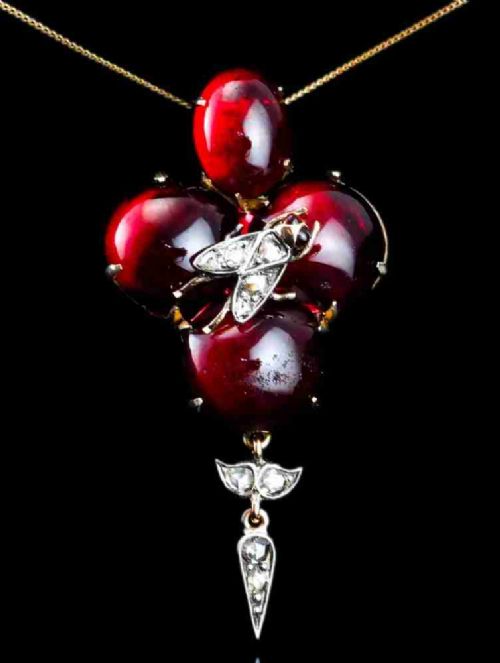
Craftsmen applied specialised techniques such as plique-à-jour enamel, hand engraving, and delicate collet settings to secure gemstones ranging from tiny seed pearls to large cabochon garnets.
Fluttering past the floral sprays, tiny insect brooches shaped as bees, flies, and cockerels bring a lively menagerie to antique jewellery collections.
What varies in quality
The standard of a rose gold brooch depends upon the crispness of the hand engraving, the symmetry of the stone arrangement, and the integrity of any convertible pendant loops or safety catches.
Superior examples display well-matched, natural gemstones securely held by hand-beaded claws rather than modern replacements, maintaining their original period character and hallmarks.
Artisanal precision in delicate enamel work, balanced proportions in winged insect or floral motifs, and substantial metal weight distinguish finer workshop output from simpler mass-produced pieces.
The Rose Gold Brooch Glossary
- Rose gold
- An alloy of gold and copper known for its warm reddish tint. It gained widespread popularity during the Victorian and Edwardian eras.
- Bar brooch
- A slender horizontal pin featuring a central gemstone cluster or decorative motif. This form dominated everyday wear in the late nineteenth and early twentieth centuries.
- Plique-à-jour
- An enamelling technique resembling miniature stained glass where enamel is fired without a backing, allowing light to shine through the translucent colours.
- Rose-cut diamond
- A vintage diamond cut featuring a flat base and a domed crown with triangular facets. This style produces a soft, glittering reflection reminiscent of opening rose petals.
- Cabochon
- A gemstone shaped and polished with a smooth, convex surface rather than faceted edges. This cut is commonly seen on garnets, turquoises, and opals from the period.
Rose Gold Brooch: Frequently Asked Questions
Can I date a rose gold brooch by its colour?
The specific hue of rose gold offers a general clue to the manufacturing era because different proportions of copper alloy were favoured at different times. Victorian and Edwardian pieces often display a deeper, richer coppery tone.
However, alloy mixtures varied widely between workshops and countries. Hallmarks, pin mechanisms, and stone-setting styles remain the most reliable methods for determining the exact period of manufacture.
What is a convertible brooch pendant?
A convertible brooch pendant is a versatile piece of jewellery designed to function as both a lapel ornament and a necklace centrepiece. A hidden loop or fold-down bail on the reverse accommodates a chain.
This dual functionality was particularly popular during the Victorian and Edwardian periods when women sought adaptable jewellery for day and evening wear.
How should I clean my antique brooch?
Clean your piece gently using a soft, dry microfibre cloth to remove surface oils and dust. Avoid harsh chemical dips, ultrasonic cleaners, and abrasive brushes which can damage seed pearls, enamel, and softer gemstones.
If the metal requires deeper cleaning, a damp cloth with mild soapy water followed by immediate drying is sufficient. Professional jewellers should service antique prong settings periodically to ensure stones remain secure.