

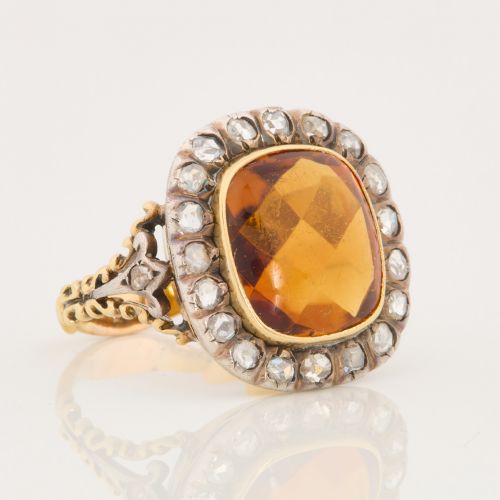
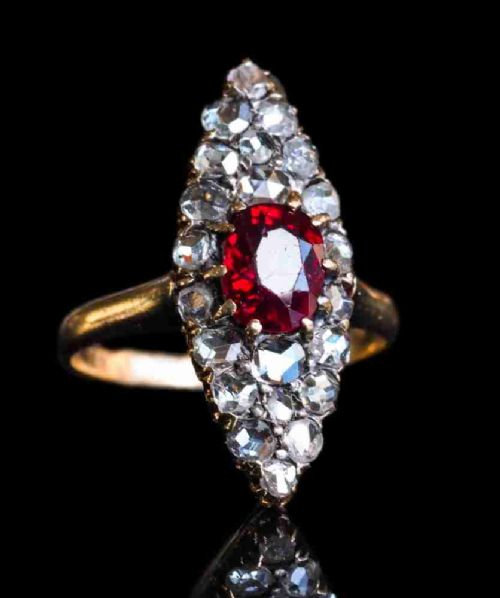


Rose Diamond Cocktail Ring
A rose diamond cocktail ring brings together soft, flat-faceted stones and striking historical settings designed to catch the evening light.
Rose Diamond Cocktail Ring
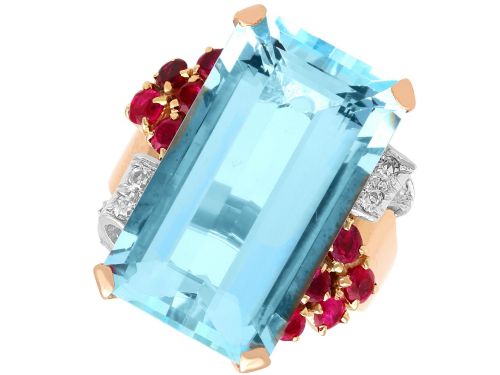
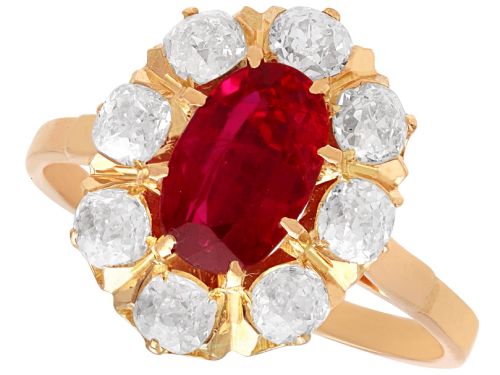
When you search for a rose diamond cocktail ring, you enter a world of cluster and navette forms spanning the Georgian, Victorian, Edwardian, and Art Deco eras. These statement pieces were originally intended for evening wear, drawing the eye with pronounced central gems surrounded by smaller stones.
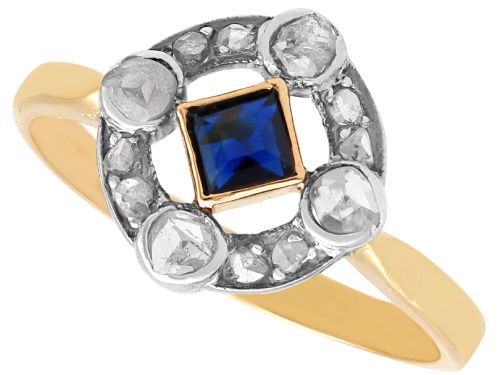
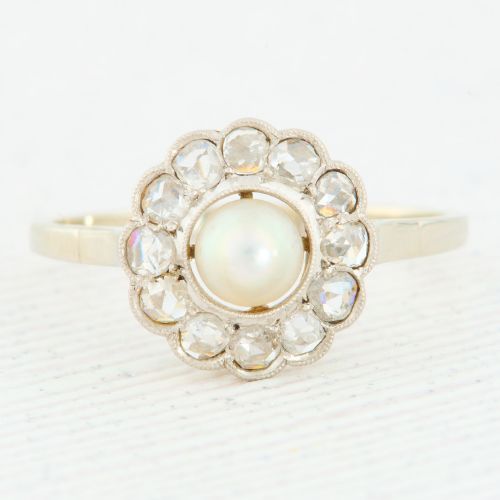
The versions you meet most frequently on this page combine rose cut diamonds with gold and silver settings, alongside colourful supporting stones like sapphire, ruby, emerald, opal, and pearl. They range from compact Edwardian platinum designs to substantial mid-century clusters.
Makers across the nineteenth and twentieth centuries utilised these flat-backed stones to create low-profile yet brilliant faces on the hand. Each piece carries the distinct structural hallmarks of its period, from early silver-on-gold work to later platinum mountings.
How they were made
The materials recorded here centre on precious metals paired with diamonds, rubies, sapphires, and opals. Artisans frequently combined silver and gold in earlier pieces, setting stones directly into silver atop a gold shank to preserve the bright white sparkle against dark backgrounds.
Later periods introduced platinum and white gold, allowing for finer, stronger settings that held rose cut diamonds securely without heavy metal surrounds. These techniques required careful hand-cutting of each flat-bottomed, domed diamond to maximise reflection under candlelight.
Rose Diamond Cocktail Ring Retail Price Guide 2026
Typical asking prices for rose diamond cocktail ring among the pieces listed under this phrase on Sellingantiques today, from the lower quarter to the upper quarter. They describe what is for sale here now, not the wider market.
Listings feature pieces spanning from the sixteenth century through the Georgian, Victorian, Edwardian, and Art Deco periods up to the mid-twentieth century.
What varies in quality
The distinction between standard examples and the finest pieces rests on the harmony of the stones and the crispness of the metalwork. Superior rings display well-matched rose cut diamonds with balanced proportions and secure, delicate claw or bezel work that does not overpower the gems.
Condition and originality also dictate the standing of a piece, particularly in how well the original foil backs or silver-and-gold fusions survive intact. Higher quality manifests in clean lines, legible hallmarks or untouched settings, and stones that sit flush and undisturbed in their mounts.
The Rose Diamond Cocktail Ring Glossary
- Rose cut diamond
- A historic diamond cut featuring a flat base and a domed crown with triangular facets that resemble an unopened rosebud. This cut predates the modern brilliant and gives a softer, broader gleam.
- Navette
- A boat-shaped ring setting that tapers to sharp points at either end, sometimes called a marquise shape. It creates an elongated silhouette across the finger.
- Cluster ring
- A ring design featuring a prominent central stone encircled by a border of smaller gems. This layout maximises visual impact and light reflection.
- Cabochon
- A gemstone shaped and polished with a smooth, convex surface rather than faceted. Opals and sapphires are frequently cut this way in these periods.
- Silver-on-gold
- A historical technique where silver is soldered to a gold backing or shank. It allowed jewellers to set diamonds against a bright white metal while retaining the structural strength of gold underneath.
Rose Diamond Cocktail Ring: Frequently Asked Questions
How do I wear a cocktail ring?
These prominent cluster and navette designs suit the middle or ring finger, where their width can be displayed without obstruction. Because of their historical settings, they are best reserved for evening events or careful daily wear.
Avoid wearing them while lifting heavy objects or gardening to protect the antique gold and silver mountings from knocks.
What is a rose cut diamond?
A rose cut diamond is an antique stone shape with a flat bottom and a faceted dome on top. Unlike modern brilliant cuts, it relies on a few large facets to catch the light.
This cut produces a gentle, glassy shimmer rather than intense fire, which defines the character of Georgian and Victorian jewellery.
How do I tell Victorian from Edwardian rings?
Victorian rings often feature warmer yellow gold or silver-on-gold combinations with rich cluster or navette forms. Motifs tend to be romantic or heavily detailed.
Edwardian pieces shift towards platinum and white gold, favouring lighter, airier lace-like metalwork that reflects the transition into the twentieth century.
Are these rings suitable for daily wear?
While these pieces were built to last, antique settings require more care than modern jewellery. The older claws and silver-topped golds are softer and can wear down over time.
Regular checks by a jeweller ensure the stones remain secure in their original mountings during regular use.