






Rose Cut Diamond Drops
Rose cut diamond drops bring a flat-faceted sparkle to the ear, catching candle and gaslight with a quiet grey fire.
Rose Cut Diamond Drops
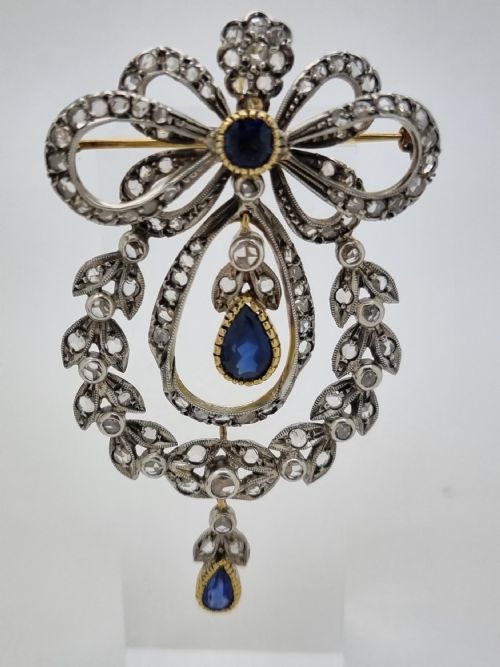
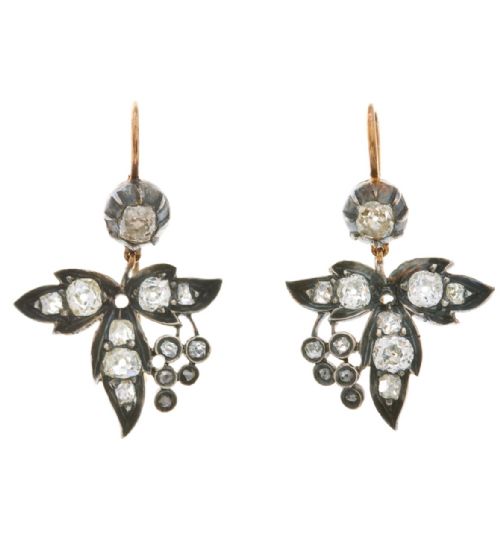
When you search for rose cut diamond drops, you are looking at antique earrings and pendants spanning the Georgian, Victorian, Edwardian, and Art Deco eras, alongside eighteenth-century work. Most pieces you meet on this page take the form of drop earrings, often paired with pearls, sapphires, or moonstones.
The materials holding these stones range from silver and platinum to yellow gold, fifteen-carat yellow gold, and rose gold. Pieces frequently originate from French workshops or British makers working across the nineteenth and early twentieth centuries.
While earrings dominate the selection, you will also encounter necklaces and pendants configured with drop sections. These jewels trace a stylistic arc from heavy Georgian and eighteenth-century cluster settings through to delicate Edwardian bows and geometric Art Deco lines.
What varies in quality
The refinement of the hand-cut facets and the symmetry of the dome dictate the optical performance of each diamond. Superior examples display crisp, well-aligned facets that catch low light evenly without dull spots.
The integrity of the original metal settings and the matching of natural pearls or coloured gems determine the overall coherence of the piece. Integrated conversions and untouched original backings separate standard items from finer survivals.
Listings span six distinct periods from the eighteenth century through to Art Deco, combining diamonds with silver, platinum, yellow gold, and natural pearls.
The Rose Cut Diamond Drops Glossary
- Rose cut
- A diamond cut featuring a flat base and a domed crown covered in triangular facets. This historic form predates modern brilliant cutting and produces a softer, broader reflection.
- Collet setting
- A band of metal enclosing the girdle of a gemstone to hold it securely in place. It forms a clean, continuous border around antique stones.
- Millegrain
- A decorative technique creating a raised line of tiny metal beads along the edge of a setting. Edwardian jewellers used this to soften metal outlines.
- Night and day earrings
- Convertible drop earrings designed with detachable lower sections. The wearer can remove the dangling drops for daytime and wear the upper cluster alone by night.
Rose Cut Diamond Drops: Frequently Asked Questions
Are rose cut diamond drops fragile?
These antique jewels require sensible handling during wear and storage due to their delicate settings and closed-back foils where present. Avoid exposing them to water or harsh ultrasonic cleaning.
Store each pair separately in a lined box to prevent metal friction and stone abrasion against other pieces in your collection.
How do I date rose cut diamond drops?
Dating relies on the mounting style, metal combinations, and cutting characteristics visible through a loupe. Georgian and eighteenth-century pieces often use silver on gold with closed backs.
Edwardian and later pieces utilise platinum, yellow gold, and fine millegrain work, showing lighter gallery structures and distinct geometric layouts.
Can I wear antique drop earrings daily?
Many buyers wear antique drops for special occasions rather than daily tasks to preserve their fragile settings and original hooks. Regular checking by a specialist ensures the stones remain secure.
Consider the weight of the drops and the condition of the ear wires before committing to continuous, everyday wear.
What is the difference between old cut and rose cut?
Rose cuts have flat bottoms and faceted domes without a deep pavilion or small table facet. They yield a translucent, subtle shimmer rather than the intense brilliance of modern or old mine cuts.
Old cut diamonds possess deep lower pavilions and multiple facets designed to maximise light return through the top of the stone.