




Silver Gold Diamond Earrings
Silver gold diamond earrings bring together two distinct metals and glittering stones across Georgian, Victorian, and Edwardian periods.
Silver Gold Diamond Earrings
Silver gold diamond earrings span several eras, appearing most frequently in Victorian, Edwardian, and Georgian designs alongside mid-century pieces. Buyers encounter various forms, with drop earrings, cluster earrings, and dangle designs dominating the selection.
The combination of silver and gold served a practical purpose in older jewellery by using silver on the face to reflect light into diamonds whilst yellow gold, white gold, or platinum formed the secure rear structure and mount.
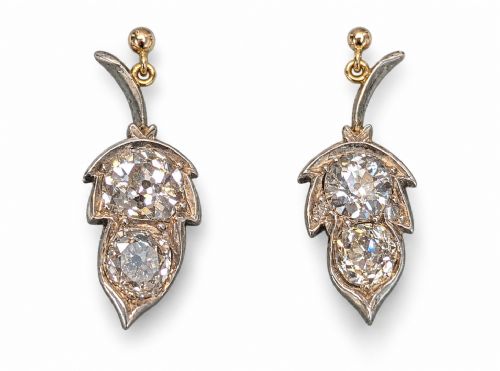
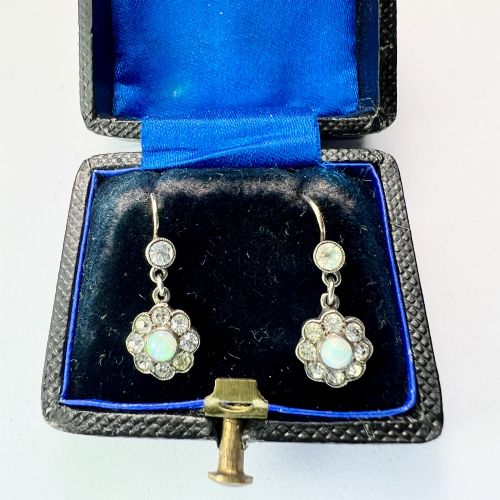
Earrings in this category range from elaborate floral cluster motifs and foliate mounts to delicate teardrops and night and day configurations. Natural pearls, rock crystal, turquoise, and paste occasionally accompany the diamonds within these historic settings.
Materials and construction
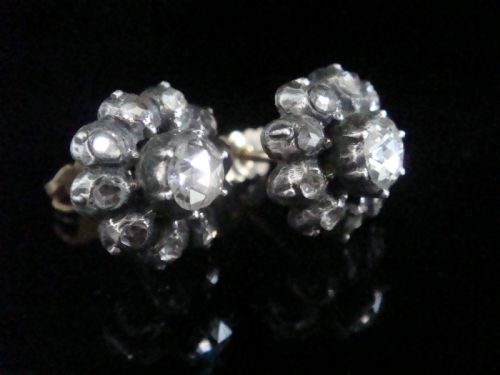
Craftsmen paired silver with gold, including 9ct, 15ct, and 18ct yellow gold, to mount old cut, rose cut, and European cut diamonds. Silver provided a bright reflective surface for the stones on the front of the piece whilst gold offered structural strength behind.
Jewellers utilised specialised techniques such as pavé settings and foliate mounts to secure diamonds alongside natural pearls and enamel work. Metal components were shaped by hand to create intricate cluster, bow, and drop configurations.
Gemstones documented in these listings include natural pearls, aquamarines, turquoise, rock crystal, and paste alongside various diamond cuts.
Quality variations
The standard of gem-cutting and the matching of stones dictate the visual harmony of silver gold diamond earrings. Older rose and old European cut diamonds display individual hand-cut facets that interact differently with ambient light compared to later brilliant cuts.
The integrity of the dual-metal construction determines the resilience of the piece over time. Finer examples maintain crisp detailing in the silver foliate mounts and secure integration between the silver face and the gold backing.
Knoll & Pregizer
The Silver Gold Diamond Earrings Glossary
- Old cut diamond
- A hand-faceted diamond shape typical of older periods designed to catch candlelight rather than electric illumination. These stones often possess higher crowns and smaller tables than modern brilliant cuts.
- Rose cut diamond
- A historic gemstone cut featuring a flat base and a domed crown with triangular facets arranged in a symmetrical pattern. This style produces a soft, shimmering reflection.
- Night and day earrings
- Convertible historic earrings featuring removable drop sections that transform day wear studs into elaborate evening wear dangling designs. This clever engineering allowed wearers to adapt their jewellery between settings.
- Paste
- Hand-cut lead glass used historically to imitate diamonds or coloured gemstones in fine settings. High-quality paste exhibits considerable brilliance and meticulous individual faceting.
- Pavé
- A setting technique where small diamonds are closely set together and held by tiny metal beads, creating a continuous pavement of stones. This method maximises surface sparkle.
- Screwback
- A mechanical earring fastening utilising a threaded post and a small nut that turns down against the lobe. This design provided security for non-pierced ears before modern clip mechanisms became widespread.
Silver Gold Diamond Earrings: Frequently Asked Questions
How do I care for silver gold diamond earrings?
Clean these pieces gently with a soft dry cloth to protect the delicate combination of silver and gold metals. Avoid harsh chemical dips because historic pastes, natural pearls, and blackened enamel accents require careful handling.
Store each pair separately in a lined box to prevent the harder diamonds from scratching the softer silver mounts or adjacent gemstones.
Were these earrings made for pierced ears?
Historic earrings utilise various fastenings depending on the decade of creation and the preferences of the original owner. While many older examples feature traditional wires for pierced lobes, surviving pieces also incorporate screwback mechanisms and mid-century clip-ons.
Conversion work is common in antique jewellery where original hooks or wires were altered to accommodate different types of fasteners over generations of use.
Why use both silver and gold together?
Jewellers combined silver and gold to exploit the distinct visual and structural properties of both precious metals. Silver tarnished slowly against clothing but provided a bright, white backdrop that enhanced the appearance of old cut diamonds.
Gold provided the necessary durability and prevented the silver from coming into direct contact with the skin, reducing unwanted tarnishing from body oils.
How can I distinguish Victorian from Edwardian styles?
Victorian earrings often feature heavier yellow gold mounts, robust floral cluster designs, and rock crystal or rose cut diamonds. The aesthetic tends toward rich, substantial forms that celebrate romantic symbolism and natural motifs.
Edwardian pieces generally shift toward lighter, more delicate platinum and silver work over gold, frequently incorporating intricate pierced metalwork, foliate motifs, and fine milgrain detailing around the diamonds.