

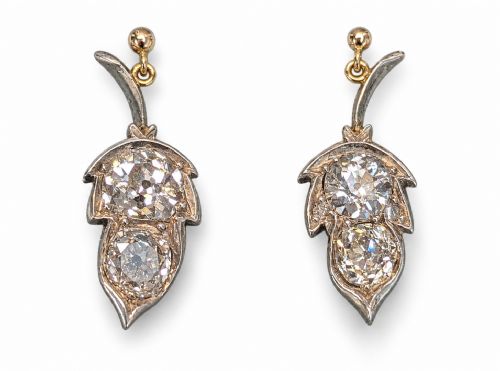


Antique Diamond Ear Pendants
Antique diamond ear pendants bring movement and fire to the face, uniting centuries of goldsmithing with old cut stones.
Antique Diamond Ear Pendants
These antique diamond ear pendants span Georgian, Victorian, Edwardian, and Art Deco periods, taking the form of drop earrings and jewellery sets. A buyer searching for antique diamond ear pendants encounters articulated drops designed to catch the candlelight or electric light in movement.
The most common examples on this page combine platinum settings with old cut diamonds, alongside pieces set in gold, silver, and palladium. Makers of these drops frequently incorporated aquamarine, sapphire, pearl, moonstone, and rose cut diamonds into the composition.
Materials and construction
Goldsmiths constructed these drop earrings using platinum, silver, and yellow gold, often combining metals such as 18ct gold and platinum to secure stones effectively. Platinum gained favour in the Edwardian and Art Deco eras for its strength, allowing delicate pierced work without bulk.
Stones are predominantly old cut and rose cut diamonds, hand-set alongside coloured gems like aquamarines and sapphires. Artisans articulated the drops to ensure the stones moved independently, maximising the light return from each facet.
Antique Diamond Ear Pendants Retail Price Guide 2026
Typical asking prices for diamond ear pendants among the pieces listed under this phrase on Sellingantiques today, from the lower quarter to the upper quarter. They describe what is for sale here now, not the wider market.
Listings feature platinum, gold, silver, and palladium alongside diamonds, aquamarines, sapphires, pearls, and moonstones.
Judging quality in ear pendants
Quality rests in the harmony of the stone cutting and the delicacy of the metalwork, where hand-pierced platinum or gold shows crisp execution rather than soft edges. The integration of supporting gems, such as natural pearls or cleanly saturated aquamarines, elevates the overall piece.
Construction integrity matters significantly in drop earrings, where hinges and fittings must remain robust yet subtle. Superior examples maintain original components and secure settings that hold old cut diamonds firmly without obscuring their facets.
The Antique Diamond Ear Pendants Glossary
- Old cut diamond
- A hand-faceted diamond shape from the eighteenth to early twentieth centuries, characterised by a high crown and small table designed to catch candlelight.
- Drop earrings
- Earrings that suspend below the earlobe, moving as the wearer turns their head. They range from simple suspended stones to elaborate multi-tiered clusters.
- Platinum
- A dense, durable white metal used extensively in Edwardian and Art Deco jewellery for intricate pierced settings. It holds small stones securely without heavy prongs.
- Rose cut diamond
- A vintage stone cut with a flat base and a dome faceted into triangles, lacking a pavilion. This cut produces a soft, translucent glow rather than sharp brilliance.
Antique Diamond Ear Pendants: Frequently Asked Questions
How do I wear antique drop earrings?
These pendants suspend below the earlobe and suit evening wear or elevated daytime attire where movement enhances the stones. Ensure the ear wires or posts fit securely in the piercing.
Store them flat in a lined box to protect the articulated drops and prevent scratching against other jewellery.
What is the difference between Georgian and Art Deco styles?
Georgian pieces often feature foiled stones set in closed backs designed to catch candlelight, utilising hand-cut diamonds with organic outlines. Art Deco designs from the 1920s and 1930s favour platinum, geometric symmetry, and open-back settings that let daylight pass straight through.
Examining the metalwork and the shape of the diamond facets quickly reveals which era produced the piece.
Can these earrings be converted for unpierced ears?
Most drop earrings on this page are designed for pierced ears, as seen in the Edwardian examples. Altering original antique findings is generally discouraged by collectors to preserve historical integrity.
Consult a specialist jeweller if adaptation is necessary, though finding pieces matching your specific ear fastening type is the safest approach.
How should I clean antique diamond jewellery?
Use warm water with a mild detergent and a very soft brush to remove dust from behind the settings. Avoid harsh ultrasonic cleaners, which can loosen fragile old cut stones or damage softer accent gems like pearls and moonstones.
Dry them thoroughly with a lint-free cloth before storing.