
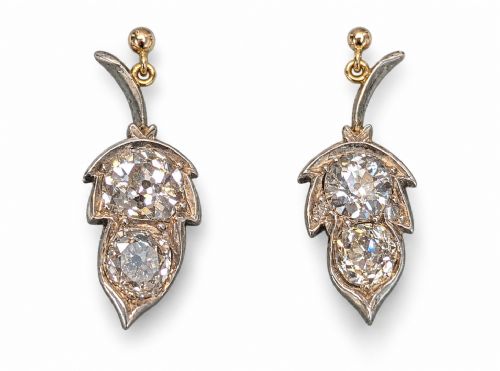


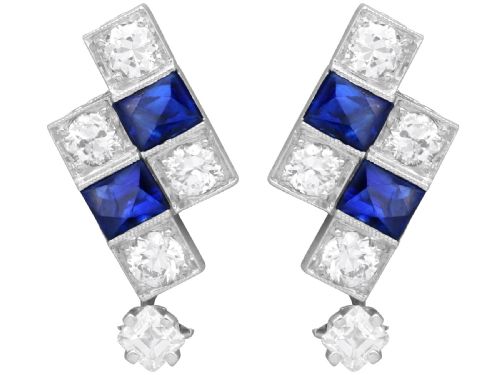


Antique Diamond Ear Drops
Antique diamond ear drops bring immediate sparkle to the face, caught in delicate platinum, silver and gold settings that span centuries of fine jewellery design.
Antique Diamond Ear Drops
Antique diamond ear drops encompass a variety of dangling styles designed to catch the light with every movement of the head. When exploring antique diamond ear drops, buyers encounter pieces ranging from early Georgian clusters to streamlined Art Deco pendants.
Art Deco and mid-century examples sit alongside earlier Victorian and Edwardian iterations, offering a broad spectrum of historical aesthetics. Pierced ears accommodate many designs, while lever-backs and alternative fastenings appear among mid-century creations.
Materials and construction methods
Goldsmiths and platinumsmiths utilised precious metals such as platinum, silver, and 18ct gold to mount stones securely while keeping the overall weight manageable for the wearer. Silver often topped gold in earlier periods to brighten the appearance of the metalwork surrounding the gems.
Diamonds were predominantly old cut or rose cut, shaped by hand to maximise scintillation under candlelight or gaslight. These stones are combined with sapphire, aquamarine, and moonstone using claw settings, bezel settings, and intricate pierced metalwork.
Georgian night and day earrings let wearers shorten their sparkle for the morning commute.
Distinctions in craftsmanship and design
Quality rests in the precision of the metalwork and the integration of the stones within the drop design. Superior pieces demonstrate meticulous hand-piercing and symmetrical stone arrangement that enhances the natural fire of the diamonds.
The harmony between the central gems, such as sapphires or aquamarines, and the supporting diamond cluster defines the aesthetic success of the piece. Heavier platinum or gold mounts balance the drop length to ensure graceful movement.
The Antique Diamond Ear Drops Glossary
- Old cut
- A diamond cutting style prevalent before the modern brilliant cut, characterised by a smaller table, higher crown, and open culet. These stones display a softer, chunkier light return.
- Rose cut
- A historic diamond cut featuring a flat base and a domed crown faceted with triangular shapes. It resembles an unopened rosebud.
- Platinum
- A dense, durable white metal utilised extensively in Edwardian and Art Deco jewellery for delicate, strong settings. It allows for minimal metal visibility around stones.
- Lever-back
- An earring fastening featuring a hinged curved wire that clasps behind the earlobe for security. This mechanism became common in mid-century designs.
- Night and day earrings
- Convertible drop earrings designed with detachable lower sections. Wearers remove the dangling elements for daytime and attach them for evening wear.
Antique Diamond Ear Drops: Frequently Asked Questions
How do I care for antique diamond ear drops?
Clean these pieces gently using warm soapy water and a soft brush to remove dust from behind the stones. Avoid harsh chemical dips that might harm softer gems like moonstones or pearls.
Store each pair separately in a lined box to prevent the metal and stones from scratching neighbouring items in your collection.
Can antique earrings be converted for unpierced ears?
Most drop earrings rely on posts or wires intended for pierced lobes, as seen across Edwardian and Art Deco examples. Converting them requires delicate modification by a specialist jeweller.
Non-destructive converters exist, though they alter the original hang and balance of the drop.
What defines Art Deco diamond drops?
Art Deco pieces utilise geometric layouts, strong vertical lines, and platinum settings. They often pair diamonds with calibre-cut sapphires or aquamarines.
These designs reflect the modernist aesthetic of the 1920s and 1930s, prioritising symmetry and abstract motifs over organic Victorian curves.
How do Georgian earrings differ from Victorian ones?
Georgian pieces frequently employ foil-backing beneath stones to enhance colour and reflection under artificial light. The metalwork often involves closed-back settings in gold or silver.
Victorian designs introduced more varied gemstone combinations and open-backed settings as diamond cutting techniques evolved.