
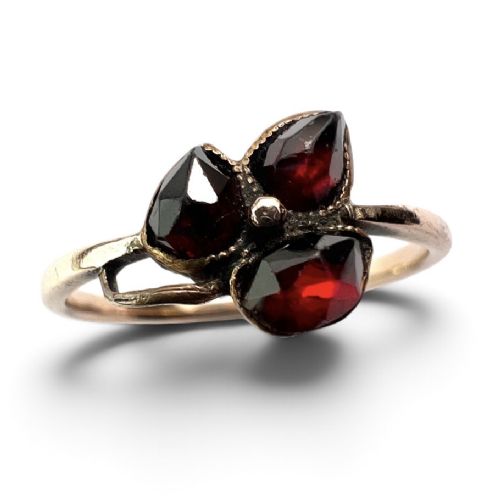
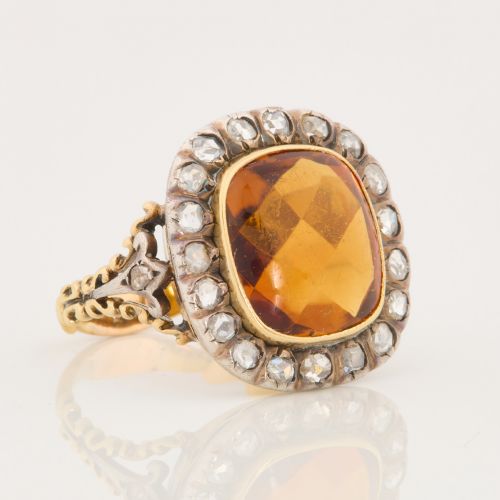
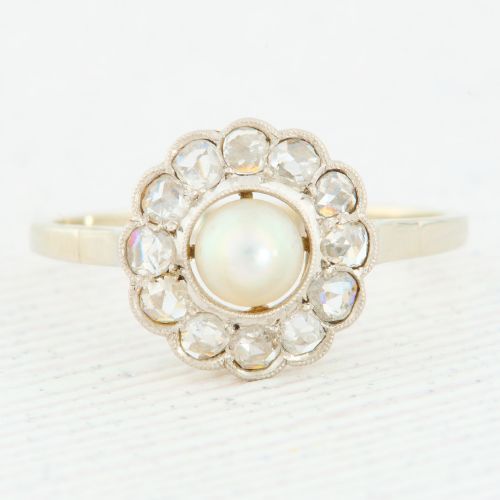
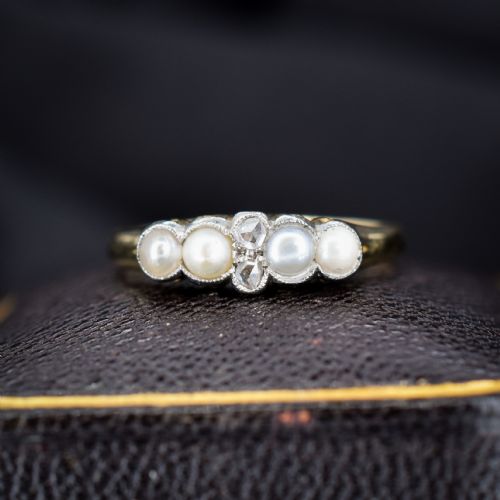
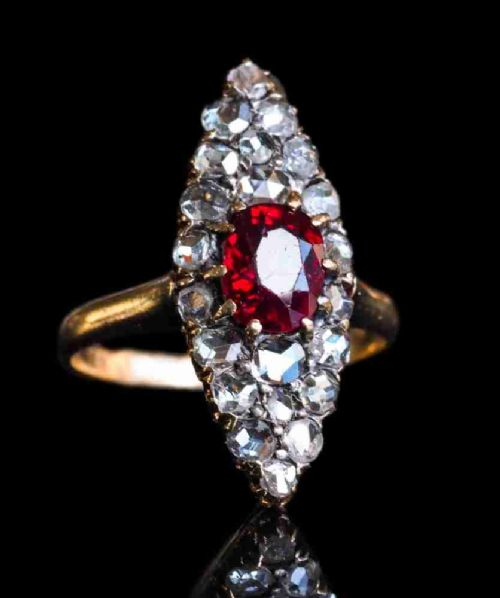


Rose Cut Cluster Ring
A rose cut cluster ring brings together flat-bottomed, domed diamonds and colourful gems in arrangements spanning from the Georgian era through to the mid-twentieth century.
Rose Cut Cluster Ring
When you search for a rose cut cluster ring, you encounter antique and vintage jewels featuring a central stone surrounded by smaller gems. These pieces showcase a distinctive low-profile silhouette designed to catch the candlelight of earlier centuries or the brighter illumination of the Art Deco period.
Originating across British, French, and European workshops, these rings reflect shifting aesthetic values over centuries of jewellery design. Each period brings its own characteristic mounting style, from heavy nineteenth-century gold bezels to delicate platinum settings of the 1920s and 1930s.
How They Were Made
The construction of these jewels relies heavily on precious metals combined with hand-cut stones shaped before the rise of modern brilliant faceting. Goldsmiths utilised yellow gold and silver-topped gold in earlier eras to enhance the whiteness of the diamonds, transitioning later to platinum and white gold as metallurgical techniques evolved.
Stones are typically secured in closed-back or open-backed collet settings, where the flat base of the rose cut diamond rests above a reflective foil or directly onto the metal. Master artisans arranged surrounding gems in tight floral or geometric clusters, soldering the intricate wirework and basket mounts by hand.
The inventory spans from sixteenth-century Glasgow bands and Georgian foil-backed designs through to Victorian, Edwardian, Art Deco, and mid-century aesthetic movements.
What Varies in Quality
The distinction between average and exceptional pieces rests upon the harmony of the central stone and its surrounding border. Superior examples display balanced proportions where the central gem commands attention without overpowering the delicate symmetry of the cluster.
Craftsmanship in the metalwork further dictates value, visible in the precision of the claw or bezel settings and the fineness of the gallery wirework. Original condition, intact foiled backs in older pieces, and the absence of clumsy resizing or metal replacement preserve the integrity of the design.
The Rose Cut Cluster Ring Glossary
- Rose cut
- A diamond cut featuring a flat base and a domed crown composed of triangular facets that meet in a central point. This historic style produces a soft, translucent gleam rather than the sharp brilliance of modern stones.
- Cluster ring
- A ring design featuring a central gemstone encircled by a group of smaller stones. This configuration maximises visual impact and coloured contrast on the hand.
- Navette
- A boat-shaped ring setting that tapers to points at either end along the finger. This elongated style was favoured during the Georgian and Victorian periods for dramatic hand presence.
- Collet
- A band or collar of metal that holds a gemstone in place within a setting. Early examples are often thick and hand-shaped around the girdle of the stone.
- Old mine cut
- An early diamond cut with a roughly square or cushion shape, high crown, and small table facet. These stones frequently accompany rose cut diamonds in transitional nineteenth-century pieces.
Rose Cut Cluster Ring: Frequently Asked Questions
How do I care for an antique cluster ring?
These historic jewels require gentle handling because closed-back settings and older gold alloys are sensitive to moisture and harsh chemicals. Remove the ring before washing hands, swimming, or using household cleaners to protect the delicate foils and natural pearls.
Store each piece individually in a lined box to prevent scratching between stones. Periodic professional checks by a specialist jeweller ensure the tiny claws holding the rose cut diamonds remain secure.
Can I wear a rose cut cluster ring daily?
Daily wear is certainly possible for sturdier Edwardian and mid-century platinum or gold mountings, provided you remain mindful of their age. Georgian and early Victorian pieces, however, often feature softer silver-topped settings that benefit from being reserved for occasional rather than continuous wear.
Consider the mounting depth and the presence of softer organic gems like pearls or turquoise when deciding how often to wear the ring. Selecting periods with heavier gold or platinum construction offers greater resilience for regular rotation.
What is the difference between rose cut and brilliant cut diamonds?
Rose cut diamonds possess a flat underside and a faceted dome, lacking the deep pavilion and 58 facets standard in modern brilliant cuts. This historic faceting style gives them a gentle, watery lustre that responds distinctively to low lighting conditions.
Brilliant cut stones are engineered to maximise internal light return and high-intensity sparkle. In contrast, rose cut diamonds emphasise subtle transparency and outline symmetry within their cluster arrangements.
How can I tell which era a cluster ring is from?
Dating relies on examining the combination of metal types, gemstone treatments, and structural underpinnings of the mount. Georgian and early Victorian examples frequently utilise silver-topped gold with closed backs and hand-cut foiled stones, while Edwardian pieces introduce airy platinum work and delicate millegrain edges.
Later Art Deco and mid-century rings display bolder geometric symmetry, platinum-topped gold bands, and calibrated coloured gems. Hallmarks, where present, provide official stamps that narrow down the exact decade and assay office of manufacture.